
When a perennial bed looks tired, it is tempting to blame the weather, the fertilizer, or your watering schedule. Sometimes you are right. But a surprising number of midsummer meltdowns come down to leaf diseases that start small, spread quietly, and then seem to show up everywhere overnight.
This guide focuses on three of the most common troublemakers you will see on perennial foliage: rust, leaf spot, and botrytis blight. I will walk you through what they look like, what conditions invite them in, and what to do today to slow them down.
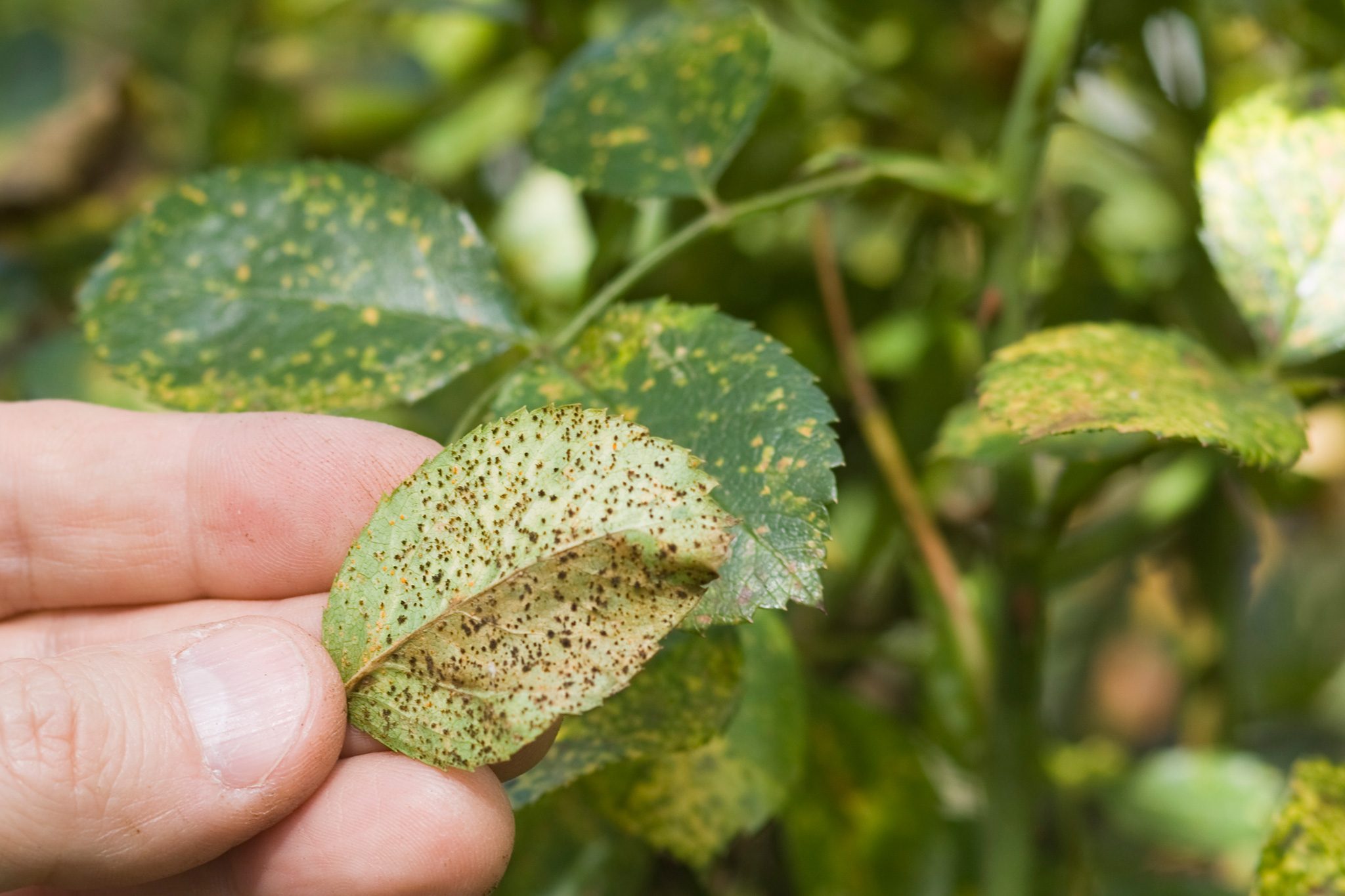
First, a quick visual triage
Before you treat anything, take 60 seconds to answer three questions. This tiny routine saves a lot of guesswork.
- Is the damage mostly on older lower leaves? Many leaf diseases begin low where airflow is worst and splash-back from soil is highest.
- Do you see fuzzy growth, powdery spores, or raised bumps? Texture matters. Rust tends to form raised pustules. Botrytis tends to look fuzzy. Many leaf spots are flat lesions.
- Did it start after a stretch of wet weather or overhead watering? Moisture sitting on leaves is a common trigger for all three.
Helpful rule of thumb: If you can rub orange or cinnamon-colored dust onto your finger, think rust. If you see gray fuzz on dying tissue, think botrytis. If you see distinct spots with darker margins, think leaf spot.
Rust on perennials
Rust is one of those diseases that looks almost decorative from a distance. Up close, it is a spore factory. Rust fungi are often fairly host-specific, so you may see it on one plant while a neighbor right beside it looks perfect. A quick nuance: some rusts have alternate hosts as part of their life cycle, and others stick mostly to a plant group rather than a single species.
What rust looks like
- Small yellow speckles on the top of leaves at first
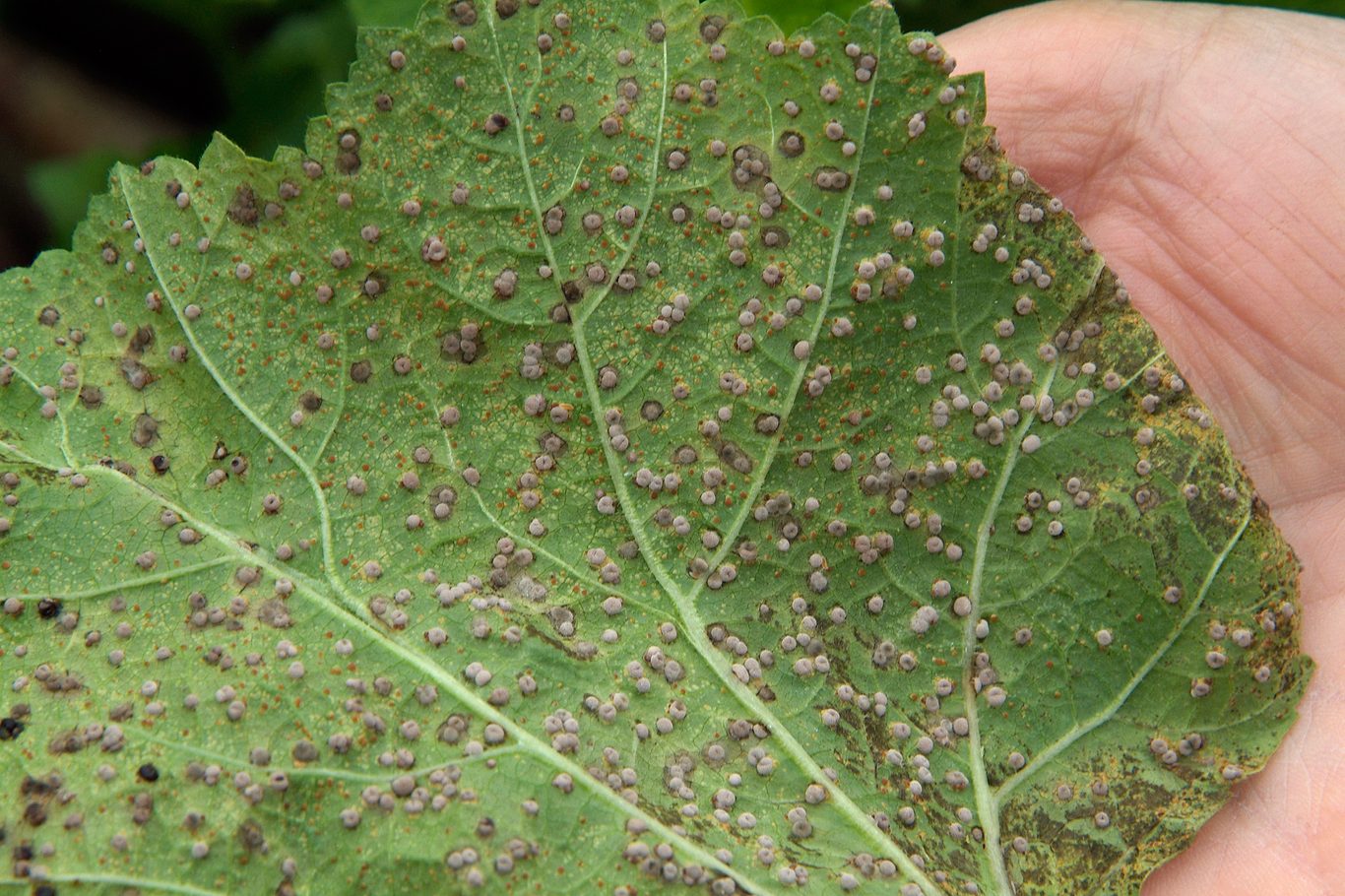
- Orange, rusty, or brown raised pustules on the underside of leaves
- Pustules can break open and leave dusty spores that smear
- As it progresses, leaves may yellow, curl, and drop
Perennials that commonly get rust
Rust shows up often on hollyhock, snapdragon, and some asters. It can also be seen on daylily, mint family plants, and occasionally coneflower, depending on your region, the cultivar, and what else is going around that season. If you are unsure, flip a leaf and look for those classic raised pustules.
Why rust takes hold
- Humid weather and crowded growth that slows drying
- Overhead watering that keeps leaves wet
- Old infected foliage left in place, especially in mild-winter climates
What to do right now (cultural controls)
- Remove the worst leaves. Snip heavily infected foliage and bag it. Do not compost it unless your compost gets reliably hot.
- Water at the soil line. Drip irrigation or a watering wand aimed low makes a huge difference.
- Thin for airflow. If a clump is packed tight, selectively remove a few stems so the center can breathe.
- Clean up at season end. In fall, remove infected leaves and spent stems so spores have fewer places to overwinter.
Treatment options (when cultural fixes are not enough)
If rust is spreading fast on a plant you really want to save, fungicides can help, but timing matters. They work best when applied early, before a plant is covered. Product availability and labels vary by region, so always follow local directions.
- Low-impact options: sulfur or copper-based products can suppress rust on some ornamentals. Always check the label for plant sensitivity and temperature restrictions.
- Systemic options: products labeled for rust that contain myclobutanil, propiconazole, or tebuconazole are commonly used on ornamentals in many areas. Follow label directions carefully and rotate modes of action to reduce resistance.
My real-world take: For a perennial that is nearly done blooming, I often skip spraying and focus on cleanup plus better watering. For a plant like hollyhock that is a rust magnet, I decide ahead of time whether I am willing to spray preventively, or I grow rust-tolerant varieties and accept a little leaf loss.
Leaf spot on perennials
Leaf spot is a category, not a single disease. Some leaf spots are fungal, some are bacterial, and some are caused by environmental stress that looks similar. The good news is that the first-line management is the same: reduce leaf wetness, reduce splash, remove infected tissue, and avoid spreading it with your hands and tools.
What leaf spot looks like
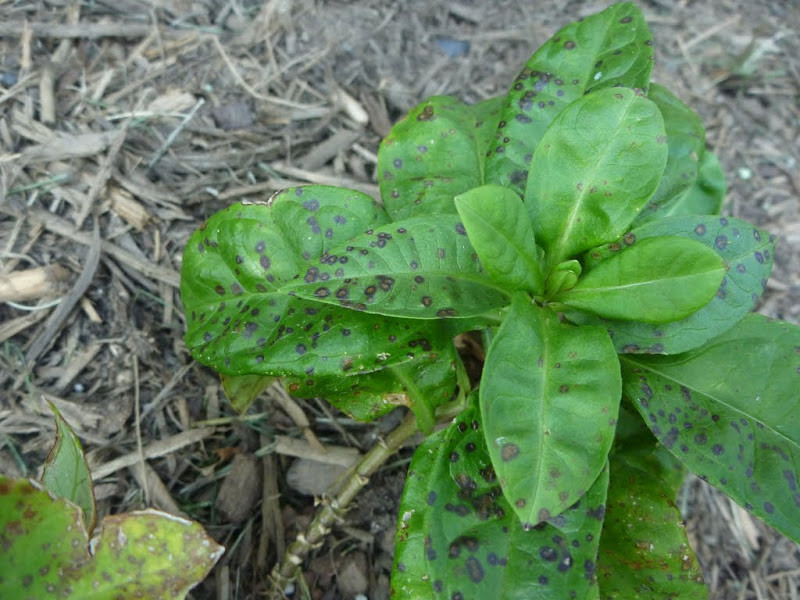
- Distinct spots that are brown, black, tan, or purplish
- Often a darker border or a faint yellow halo
- Spots may merge into larger blotches
- Heavier infections lead to leaf yellowing and drop, usually starting low
Common hosts in perennial beds
Leaf spot is frequent on phlox, bee balm, coreopsis, rudbeckia, peonies, iris, and many other perennials during wet summers. You can also see leaf spot patterns on shrubs like roses, but here we are focusing on the herbaceous perennial bed where airflow and splash are the usual drivers.
Fungal vs bacterial leaf spot (quick clues)
- Fungal leaf spots often have more defined margins and can show tiny dark specks (fruiting bodies) inside older lesions.
- Bacterial leaf spots can look water-soaked at first and may be more angular, limited by leaf veins.
You do not have to perfectly diagnose which microbe it is to make progress. Start with sanitation and moisture control, then decide if a labeled product is worth it for that plant.
What to do right now (cultural controls)
- Pick off spotted leaves early. This is easiest right when you notice it, before many leaves are affected.
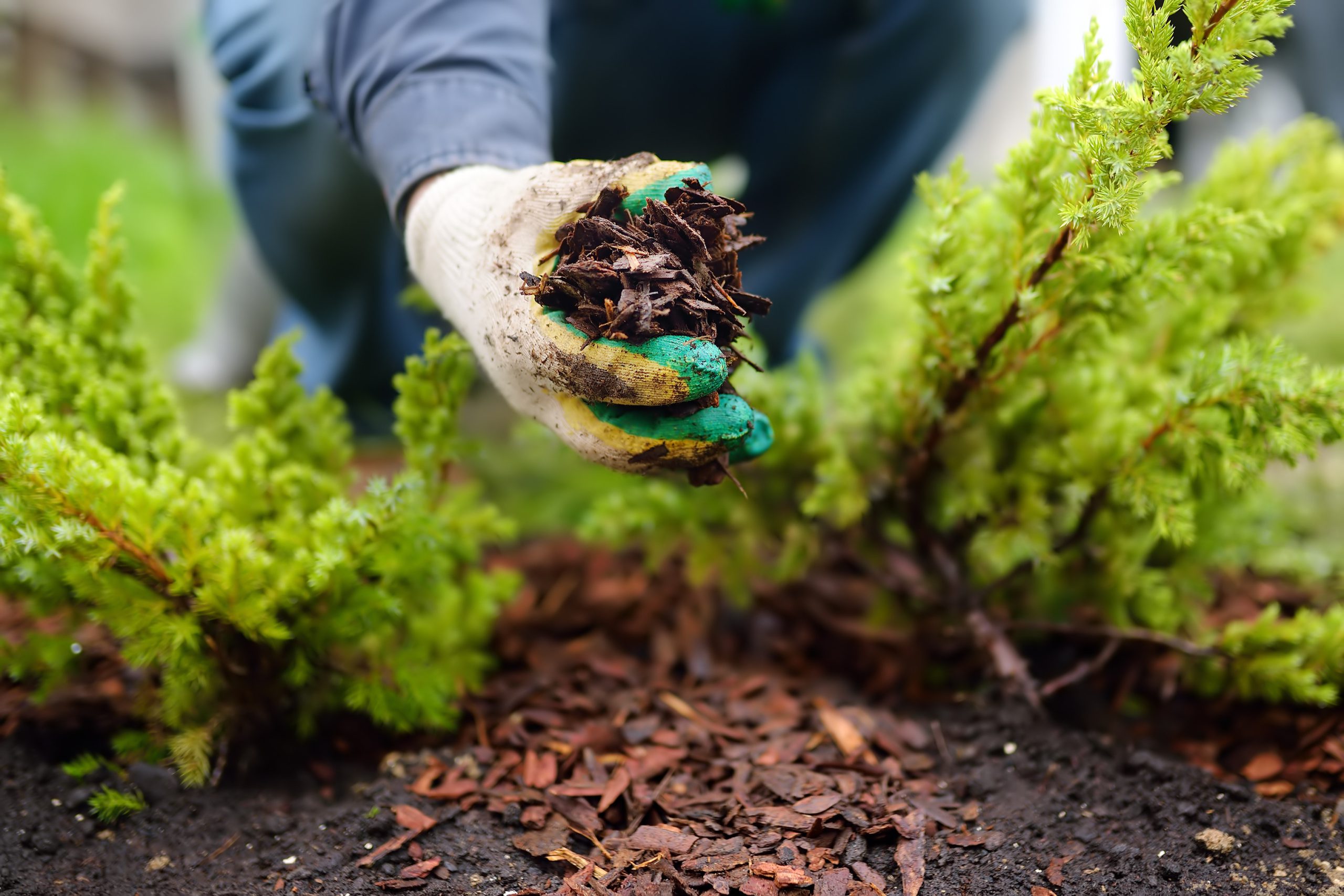
- Mulch to reduce splash. A 2 to 3 inch layer of clean mulch helps keep soil and spores from bouncing onto leaves.
- Space and divide as needed. Many perennials naturally thicken over time. Crowding is an invitation to leaf spot.
- Disinfect pruners between plants if you suspect bacterial spot. A quick wipe with 70% isopropyl alcohol works well.
- Avoid pruning when foliage is wet. Wet leaves are easier to spread pathogens across, especially when you are moving quickly bed to bed.
Treatment options
- Copper is commonly used for bacterial leaf spot suppression and can help with some fungal spots. It is mostly preventative and works best when used early.
- Broad-spectrum fungicides labeled for ornamental leaf spots (often chlorothalonil in some regions, or other labeled protectants) can slow fungal leaf spots when applied early and repeated as directed.
- Systemic fungicides may help with stubborn fungal leaf spots, especially when weather stays wet for weeks.
Important: Always confirm the product is labeled for your specific plant and problem. Some plants, especially in hot weather, can be sensitive to certain sprays.
Botrytis blight (gray mold)
Botrytis is the one I associate with cool, damp stretches, packed growth, and fading flowers that cling instead of dropping cleanly. It is most famous for attacking blooms, but it can absolutely damage leaves and stems too.
What botrytis looks like
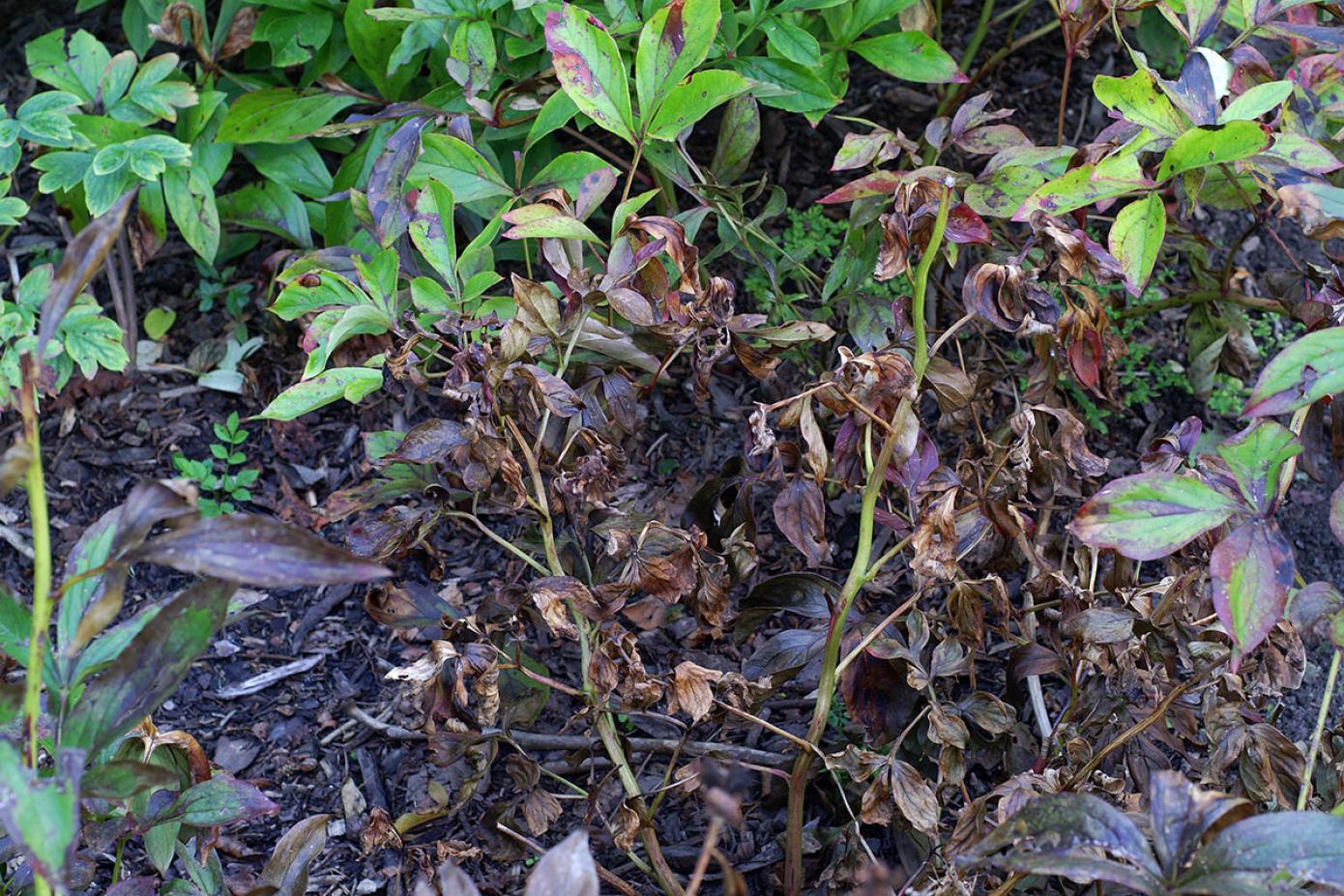
- Soft brown or tan patches on leaves, buds, or petals
- Gray fuzzy mold on dying tissue, especially in humid weather
- Bud blast, bent stems, or collapsed flower heads
- In severe cases, stems can develop lesions and lodge or break
Perennials that commonly struggle with botrytis
You will see botrytis often on peonies, garden phlox, delphinium, hosta (on damaged tissue), bee balm, and many plants with dense flower clusters or heavy canopies.
Why botrytis takes hold
- Cool nights, high humidity, frequent rain, or overhead watering
- Spent blooms and damaged leaves left on the plant
- Dense plantings with poor airflow
- High nitrogen feeding that pushes soft, lush growth
What to do right now (cultural controls)
- Deadhead aggressively. Remove fading flowers promptly. Botrytis loves old petals stuck to the plant.
- Remove infected material immediately. Cut back to healthy tissue, bag it, and discard.
- Open up the canopy. Thin stems, stake floppy plants, and avoid letting foliage sit in a wet heap.
- Water early in the day at soil level. Faster drying means fewer botrytis outbreaks.
Treatment options
Botrytis can become resistant if the same product is used repeatedly. If you choose to spray, rotate labeled fungicides by mode of action and focus on prevention during the weather pattern that triggers it. Labels and availability vary by region, so use what is actually approved where you live.
- Protectant fungicides labeled for botrytis can help prevent new infections when applied before extended wet periods.
- Systemic fungicides labeled for botrytis may be used when pressure is high, especially on valuable ornamentals.
If botrytis is hitting the same plant every year, the best long-term fix is usually more spacing and earlier cleanup, not stronger chemistry.
Rust vs leaf spot vs botrytis
| What you see | Most likely | Fastest helpful action |
|---|---|---|
| Orange or cinnamon dust that rubs off; raised bumps on leaf undersides | Rust | Remove worst leaves, improve airflow, water at soil level |
| Defined dark spots, sometimes with halos; mostly flat lesions | Leaf spot | Pick off spotted leaves early, mulch, reduce splash and leaf wetness |
| Gray fuzzy mold on dying petals or leaves; soft brown patches | Botrytis blight | Deadhead and remove infected tissue immediately, thin dense growth |
Common lookalikes
Not every ugly leaf is a disease. If the pattern does not match the texture cues above, consider these quick rule-outs before you spray anything.
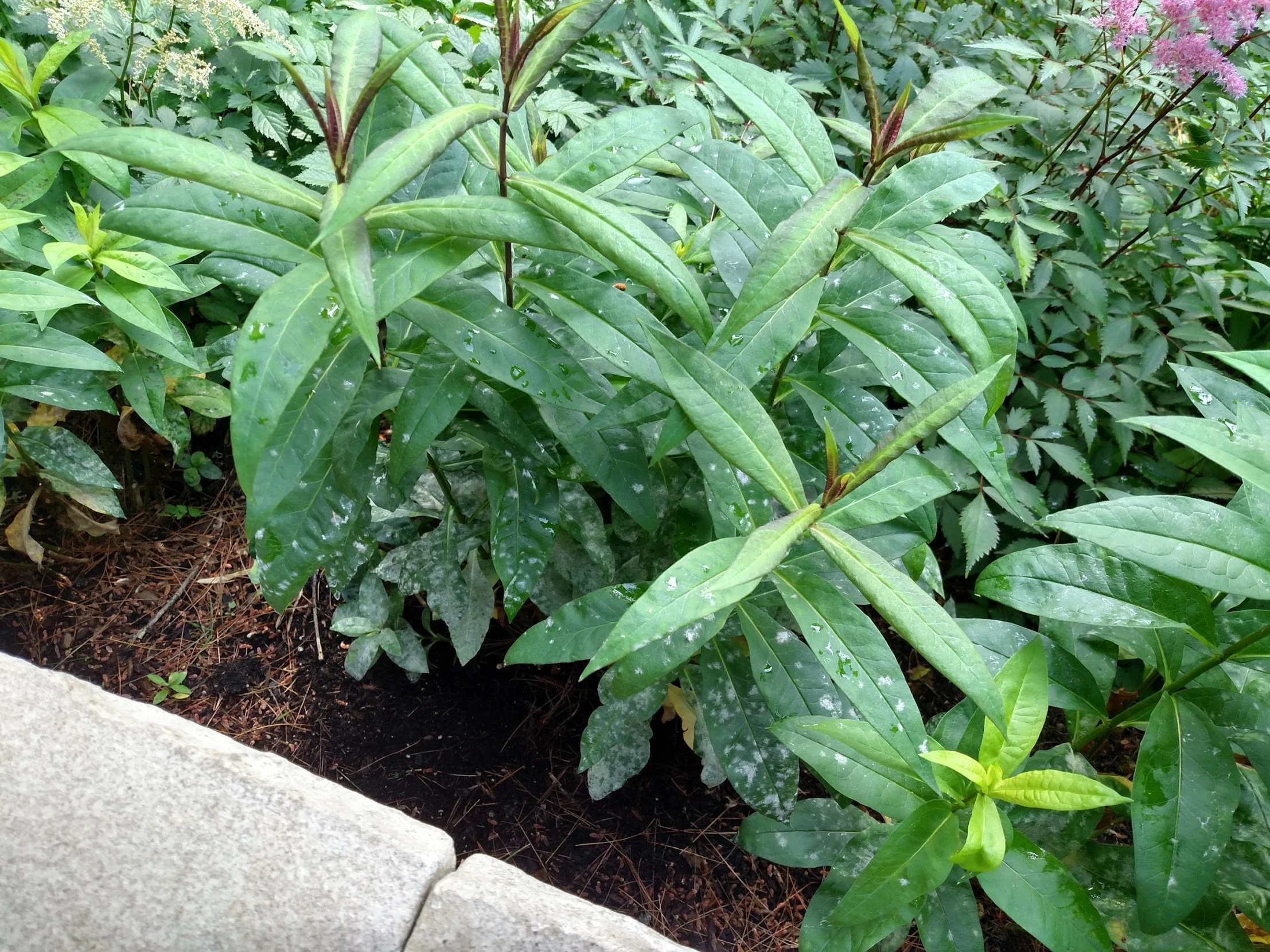
- Powdery mildew: white, talc-like coating (usually on the top of leaves) rather than orange dust or gray fuzz. It often shows up in dry days with humid nights.
- Drought stress or sunscald: crisp, scorched edges or bleached patches, often on the sunniest side of the plant. No spores, no fuzzy growth.
- Nutrient issues: more uniform yellowing, often with a pattern between veins, and fewer distinct spots or pustules.
- Mites and sucking insects: fine stippling, bronzing, or a sandblasted look. Check leaf undersides for webbing or tiny moving dots.
How to slow spread
You do not need a sterile garden. You need a garden that dries out between wet events and does not constantly re-infect itself.
Garden habits that actually work
- Water smarter. Aim for deep watering at the base of plants, early in the day. If you must use a sprinkler, do it in the morning so leaves dry quickly.
- Mulch cleanly. A fresh layer of mulch reduces splash and keeps lower leaves cleaner.
- Give plants room. If you cannot easily slip your hand through the center of a clump, it is probably time to thin or divide.
- Stake and support. Plants flopped onto each other stay wet longer. A simple peony ring or discreet staking can prevent weeks of leaf wetness.
- Sanitize thoughtfully. You do not have to disinfect tools after every snip, but if a plant is clearly diseased, a quick wipe between plants is a good habit.
- Clean up in fall. Remove diseased foliage and spent stems so spring growth starts cleaner.
How much to remove
It is tempting to strip a plant bare. For many perennials, a lighter touch is safer.
- If you can, remove the worst leaves first and reassess in a week.
- As a general guideline, avoid removing more than about one-third of a plant’s foliage at once unless you know that plant rebounds well from a hard cutback.
When to escalate
Most leaf disease flare-ups are annoying, not catastrophic. I think about stepping up control when:
- The plant is a high-value specimen (sentimental, expensive, or a focal point) and the weather is staying wet.
- You see the same issue moving from clump to clump across the bed.
- Stems, buds, crowns, or new growth are being damaged, not just older leaves.
When to remove a plant
I am slow to give up on a perennial, but sometimes it is the kindest option for your bed.
- If a plant is defoliated year after year by the same disease despite better spacing and watering, consider replacing it with a more resistant variety.
- If a plant is chronically crowded in a location you cannot expand, choose something that thrives with less airflow demand.
Safe spraying basics
I am not anti-spray, but I am very pro-targeted spray. Fungicides work best as protectants, and they work worst when we reach for them after the problem has already exploded.
- Read the label end to end. Confirm it lists the plant and the disease. Follow mix rates and reapplication timing exactly. Labels and legal uses vary by region.
- Spray the right surface. Rust often needs coverage on leaf undersides. Leaf spots need thorough coverage of leaf surfaces. Botrytis needs coverage where petals and buds hold moisture.
- Do not spray in high heat. Many products can damage foliage when temperatures are high. The label will tell you the safe range.
- Rotate modes of action. Especially for botrytis, avoid repeating the same active ingredient over and over.
- Protect pollinators. Even though fungicides are generally lower risk than insecticides, avoid spraying when pollinators are active and avoid direct application to open blooms whenever possible. Never spray on windy days.
FAQ
Will these diseases kill my perennial?
Most of the time, rust and leaf spot mainly reduce vigor and bloom quality, especially if defoliation happens early. Botrytis can be more serious on buds and stems. Healthy perennials often recover with better airflow, watering fixes, and cleanup.
Should I cut the whole plant back?
If more than half the foliage is affected and the plant is not in a key bloom moment, a cutback can be a clean reset for some perennials (like coreopsis, hardy geranium, or catmint). For others, heavy cutting can stress them. When in doubt, remove the worst leaves first and see how the plant responds.
Can I compost infected leaves?
Hot composting can reduce many pathogens, but results vary and it is not something I rely on for heavily infected material. Most home piles stay cooler, especially at the edges, so I bag and discard the worst infected leaves to avoid reintroducing problems later.
What if I am not sure which disease it is?
Start with the universal basics: remove badly affected leaves, water at the base of the plant, thin crowded growth, and clean up debris. If the problem persists, take a close-up photo of the leaf (top and underside) and compare texture. Rust has raised pustules, botrytis has gray fuzz, and leaf spot tends to be flatter with defined lesions.
A final neighborly note
Leaf diseases can feel like a personal failure, but they are usually a weather story plus a spacing story. The more seasons I garden, the more I rely on steady, simple habits: watering low, giving plants breathing room, and cleaning up just a bit earlier than I want to.
If you would like, tell me which perennial is struggling and what your weather has been like lately, hot and dry, cool and rainy, or humid nights. Those details often point to the right fix faster than any bottle on the shelf.