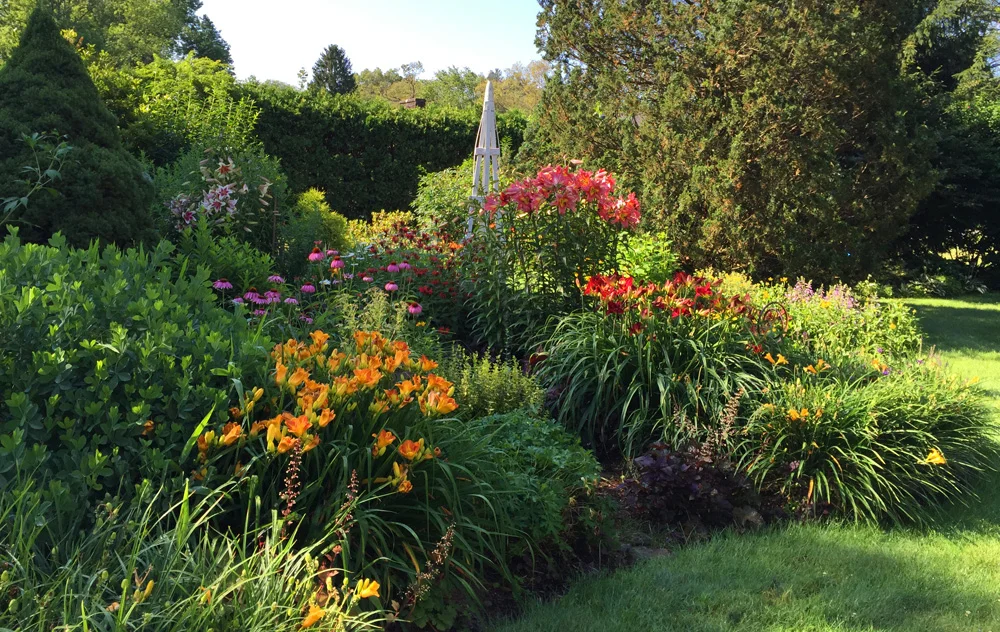

If you have ever stood in front of a gorgeous spring garden and thought, Where did all the color go? once summer hit, you are not alone. I used to do the exact same thing: plant what I loved in May, then wonder why July looked like a green waiting room.
A continuous bloom perennial garden is not about cramming in more plants. It is about timing, repeats, and overlap. Think of it like hosting a long dinner party. You do not bring out every course at once. You plan for one dish to arrive as another is finishing.
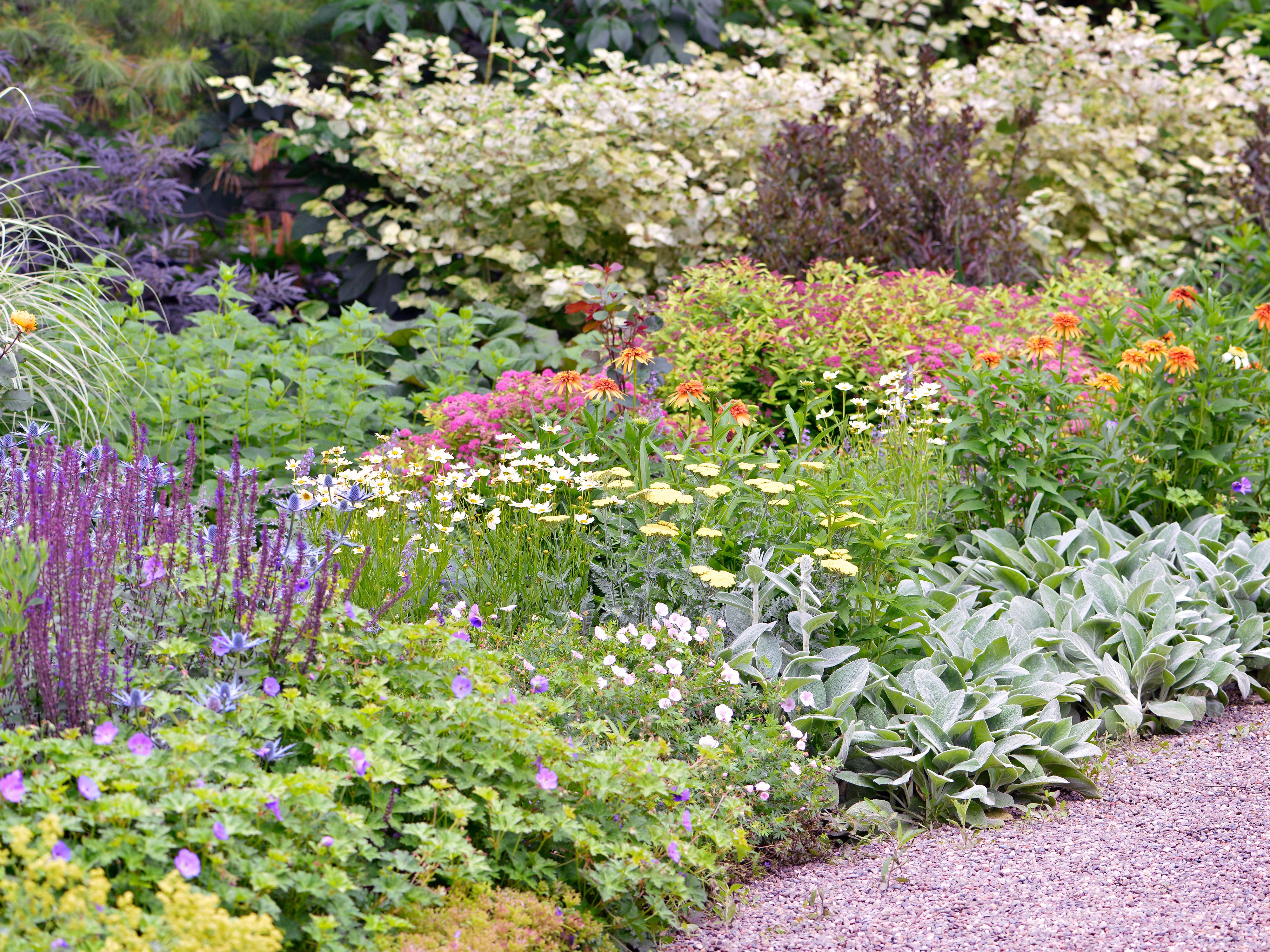
What “continuous bloom” means
Continuous bloom does not mean every plant is flowering every day from April to October. Instead, it means your garden always has something that looks intentional and colorful, because you built in:
- Overlapping bloom times so one wave blends into the next
- Reliable foliage and form so the bed looks full between peak blooms
- Repeat performers like long-blooming perennials and rebloomers
- Succession planting so earlier stars make room for later ones
When this comes together, your garden reads as “always in season,” even if individual plants take turns.
Start with sun, size, and timing
1) Map your sun
Before you pick a single plant, figure out what you are actually working with:
- Full sun: 6+ hours (best for the biggest bloom power)
- Part sun: 3 to 6 hours (still great, just choose accordingly)
- Shade: under 3 hours (often more about foliage, with strategic bloom bursts)
One important note: in hot-summer climates, “full sun” can mean punishing afternoon heat. Many classic sun perennials still bloom beautifully with morning sun and a little afternoon shade, so let your local heat intensity guide you.
If your bed gets morning sun and afternoon shade, lean into plants that appreciate cooler afternoons. If it bakes all day, prioritize drought-tough perennials once established.
2) Pick your viewing angle
Is your bed viewed from one side (against a fence) or all sides (an island bed)? This determines your layering:
- One-sided bed: tallest in back, shortest in front
- Island bed: tallest in the center, stepping down to the edges
3) Think in bloom windows
I plan continuous bloom gardens using three broad seasons. Your exact dates vary by zone, cultivar, and microclimate (wind, reflected heat, shade from buildings), but the rhythm is the same:
- Spring: early to late spring bloomers and emerging foliage
- Summer: long-blooming workhorses and pollinator favorites
- Fall: late-season color plus strong seed heads and grasses
The core strategy
If you remember only two design rules, make them these:
Rule 1: Overlap on purpose
A “gap” happens when you plant a spring bed and a fall bed with nothing bridging them. Instead, aim for each section of the border to include:
- One early bloomer
- One midseason bloomer
- One late bloomer
- One long-blooming filler (or something with standout foliage)
That mix can be repeated in little clusters down the bed, which keeps it looking cohesive.
Rule 2: Repeat anchors
Repetition is what makes a bed feel designed, not accidental. Choose 2 to 4 “anchor” perennials and repeat them every few feet. Anchors should be dependable, with good structure and decent bloom duration.
Examples of classic anchors (choose what suits your conditions):
- Nepeta (catmint): long bloom, soft mounding shape
- Salvia: strong vertical spikes, often reblooms with trimming
- Daylilies: bold form and many reliable cultivars
- Coreopsis: long season, sunny color
- Black-eyed Susan (Rudbeckia): summer into fall presence
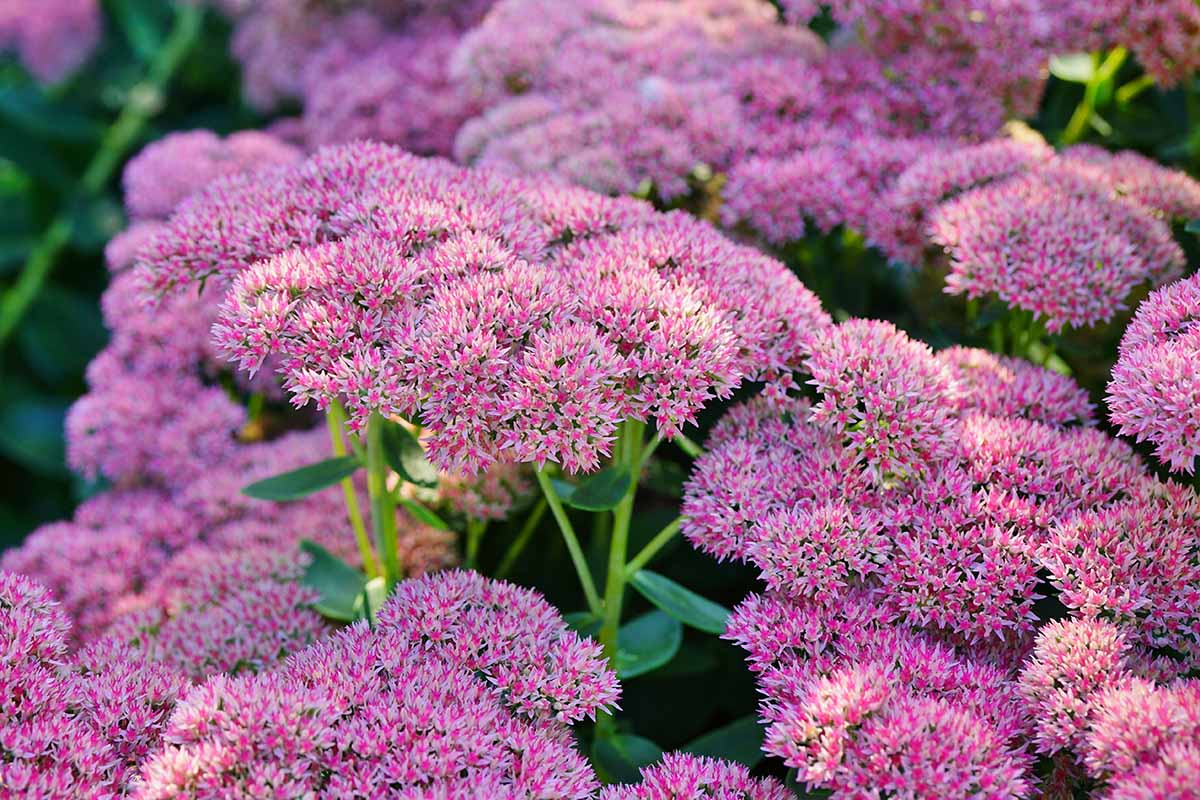
- Sedum/Hylotelephium: late season and winter structure
Soil basics that matter
Continuous bloom is easier when plants grow steadily, and steady growth usually starts with decent soil. You do not need perfection, but you do want two things:
- Drainage: most perennials hate sitting in soggy soil
- Organic matter: a top-dressing of compost improves moisture balance and plant vigor
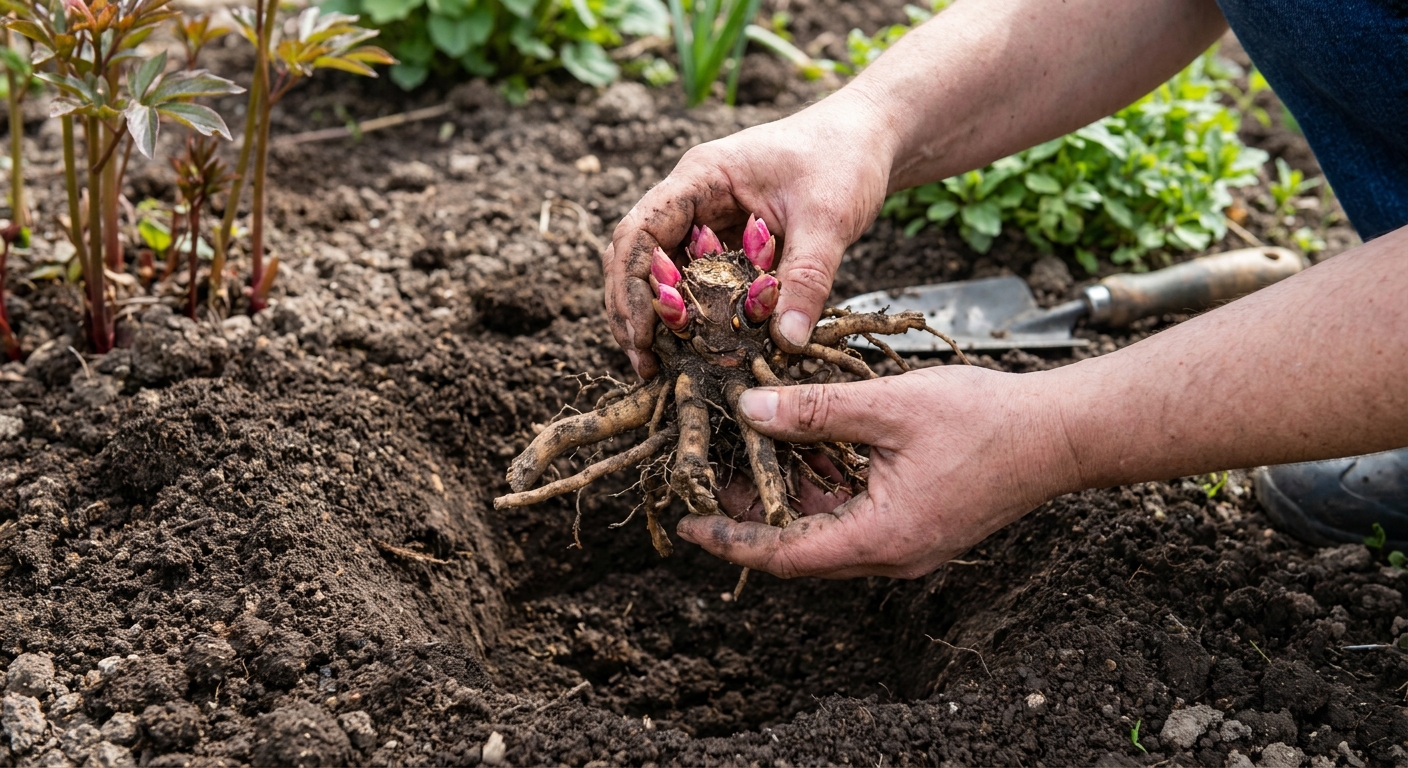
If you are starting from scratch, loosening the soil and mixing in compost before planting will pay you back for years. If you already have a bed, a yearly compost layer is a gentle upgrade that adds up.
Succession in a perennial bed
Succession planting is not only for vegetables. In perennial beds, it means you intentionally combine plants so that:
- Early bloomers get visually “covered” as they fade
- Midseason growers expand into the space
- Late-season plants rise up through earlier foliage
Use “hide and replace” pairings
This is one of my favorite little garden magic moves: pair a spring bloomer that looks rough after flowering with a summer plant that fills in later.
- Example pairings: peonies in front of coneflowers, iris beside catmint, alliums popping up through hardy geranium
The goal is not to remove the spring plant. It is to make sure it has company when it is done being the star.
Also, a quick reality check: peony foliage is usually handsome all season, but in humid summers it can get spotted or mildewed. Good airflow and cleanup help, and even imperfect leaves can still do the job of filling space.
Plan for second acts
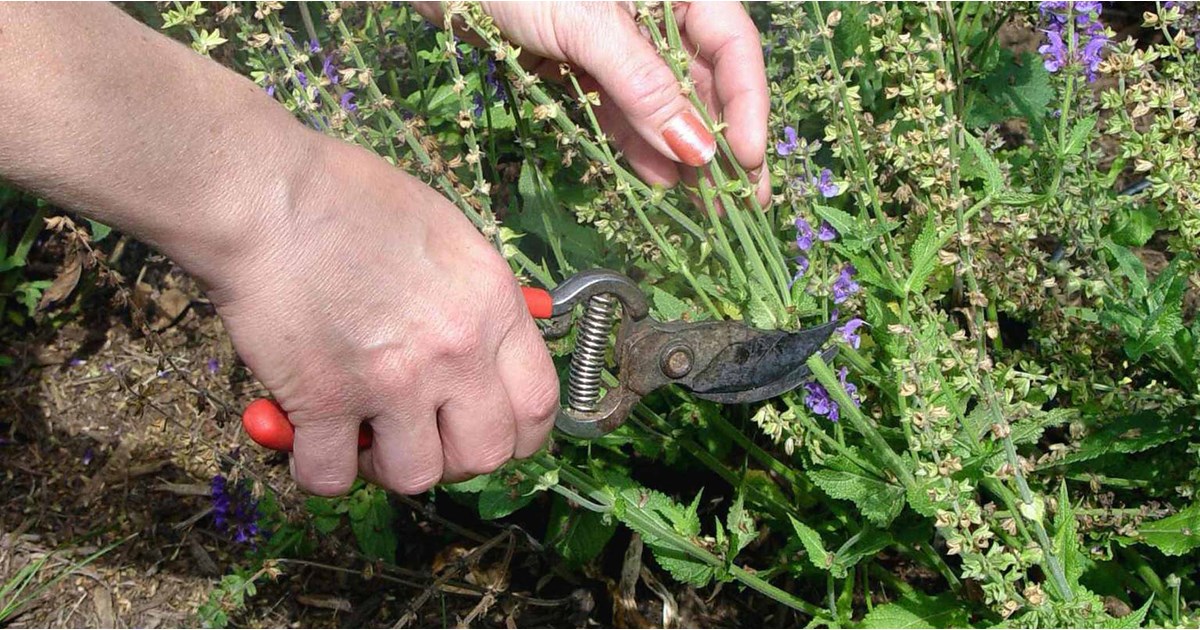
Some perennials give you a second flush if you trim them at the right time.
- Salvia: shear after first big bloom for rebloom
- Nepeta: cut back by about a third after peak for fresh growth
- Coreopsis: deadhead or lightly shear to keep flowers coming
I call this “scheduled tidying.” It is a 10-minute reset that keeps the bed looking lively.
Plant picks by season
Below are dependable categories and favorites. Always double-check that a specific variety suits your zone and sun, because cultivars vary and bloom times shift with microclimate.
Spring backbone
- Hellebores: early flowers and evergreen-ish presence in many climates
- Bleeding heart (Dicentra): spring charm, often goes quiet in heat
- Peonies: short bloom, but unforgettable, with strong structure afterward
- Bearded iris: bold spring color and strong architecture
- Hardy geranium: bridges late spring into summer in many beds
Spring is also where bulbs do a lot of heavy lifting. Even in a “perennial garden,” I tuck in daffodils, tulips, and alliums to kick-start color before the perennials wake up fully.
Summer workhorses
- Catmint (Nepeta): long bloom and soft edging
- Salvia: strong color, pollinator magnet, often reblooms
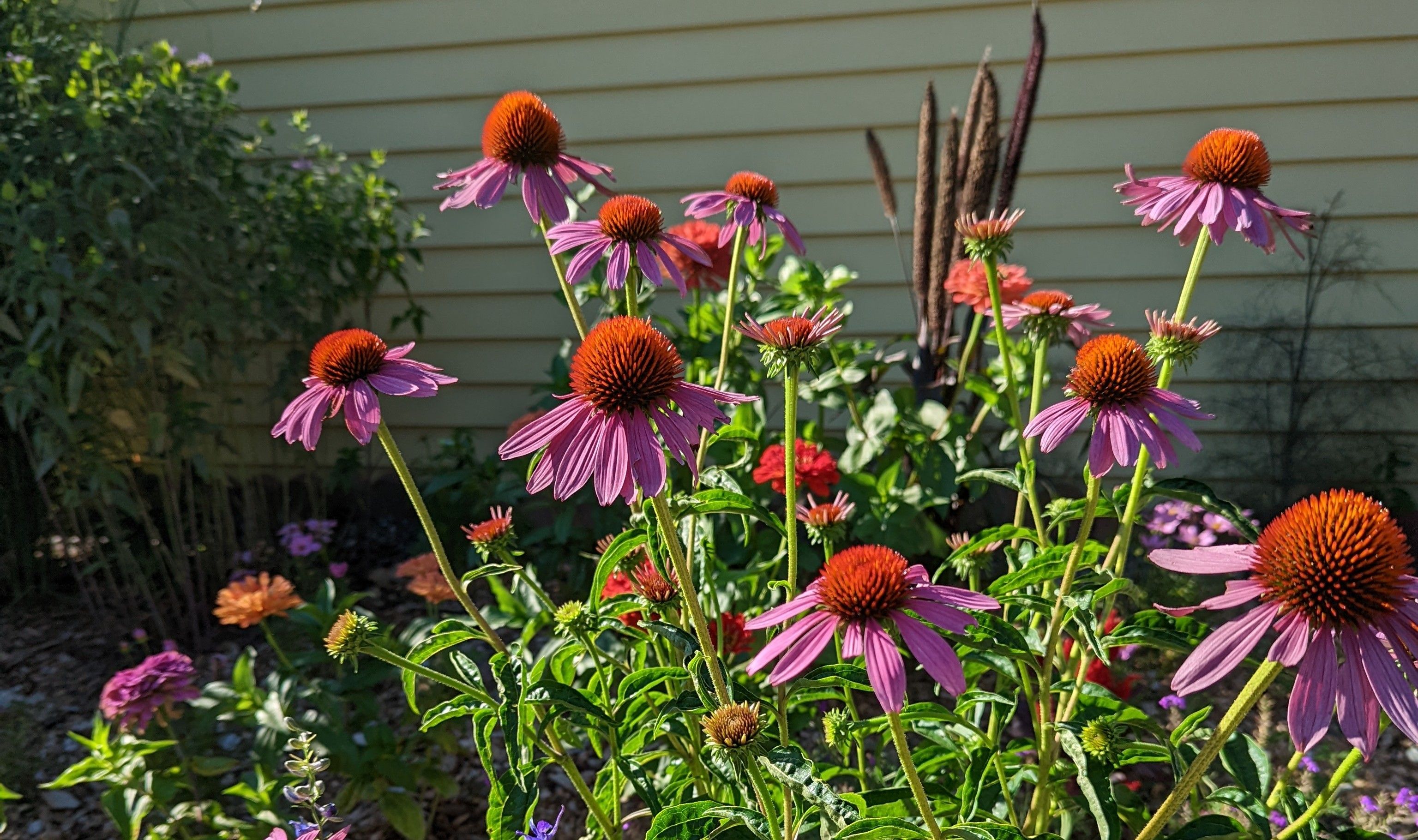
- Coneflower (Echinacea): mid to late summer color with sturdy stems
- Daylilies: dependable bloom, lots of heights and colors
- Yarrow (Achillea): flat blooms, drought tolerant once established
- Bee balm (Monarda): vibrant and lively, give it airflow to reduce mildew
A small caution that saves headaches later: a few favorites can be enthusiastic spreaders or reseeders depending on your region and conditions. Monarda can run, some Rudbeckia reseed, and airy fillers like verbena bonariensis can pop up in unexpected places. None of this is “bad,” but it is worth knowing before you plant them in your tightest spots.
Fall finishers
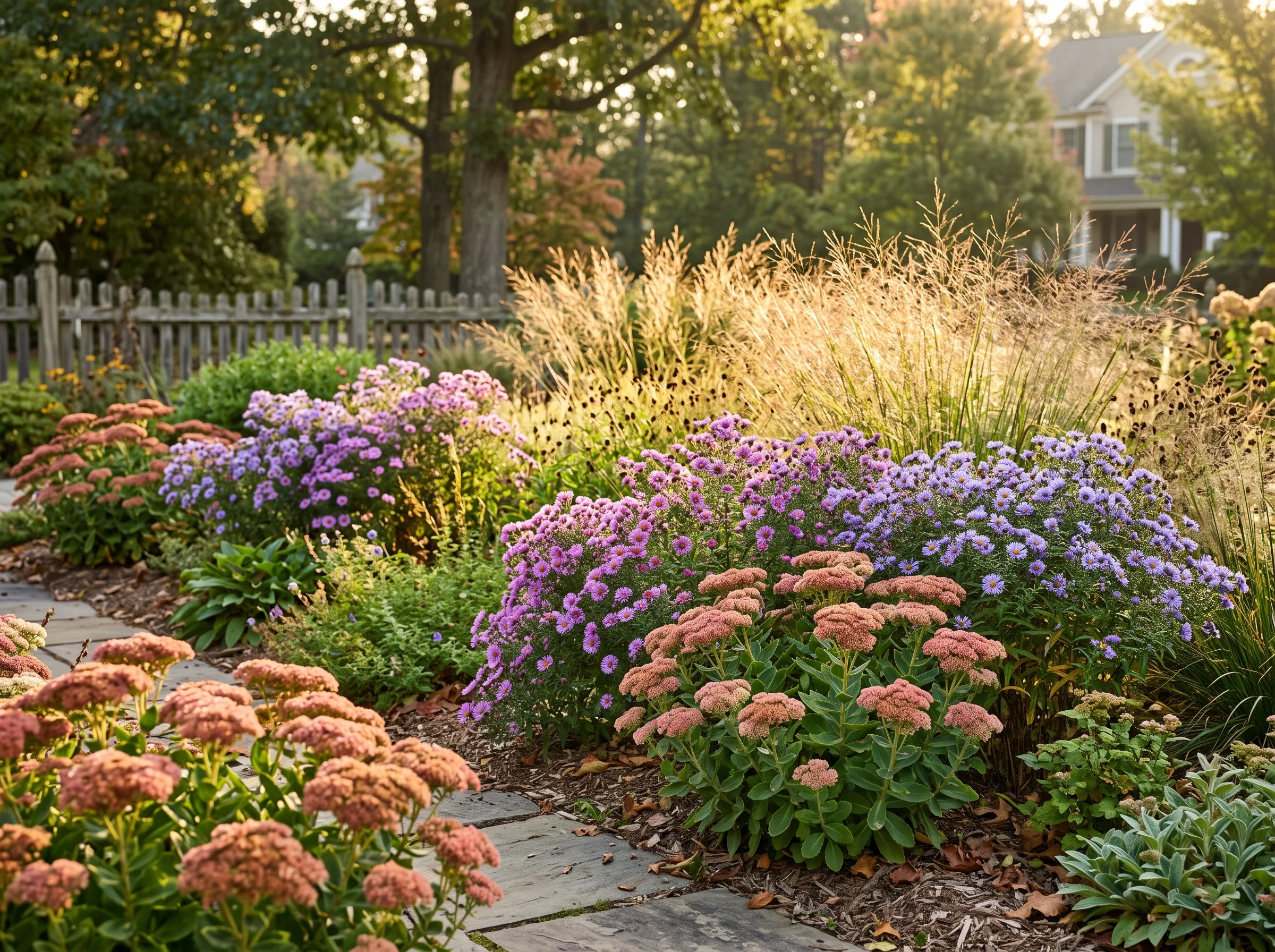
- Asters: that final bright push when you think the garden is winding down (choose varieties carefully, since many want full sun, while some woodland types tolerate more shade)
- Hardy mums: amazing color, and perennial in the right zones, especially when planted early enough to root in well
- Sedum/Hylotelephium: blooms late and looks good even after
- Japanese anemone: airy late flowers in part sun to part shade
- Ornamental grasses: movement, seed heads, and winter beauty
If you garden in part shade
You can absolutely do continuous bloom in part shade. The trick is to think in waves, then use foliage as your glue between blooms.
- Spring: hellebores, bleeding heart, brunnera, epimedium
- Early to mid summer: astilbe, foxglove (often biennial but worth it), hardy geranium, heuchera (more for leaves, but it carries color)
- Late summer to fall: Japanese anemone, toad lily (Tricyrtis), shade-tolerant asters (variety matters)
Layout basics
Layer by height and shape
Height matters, but so does form. A bed feels richer when you mix:
- Spikes: salvia, delphinium, liatris
- Mounds: catmint, coreopsis, hardy geranium
- Daisies: echinacea, rudbeckia, shasta daisy
- Airy fillers: gaura, verbena bonariensis (where hardy), ornamental grasses
Plant in drifts
For most perennials, groups of 3, 5, or 7 look more intentional than one plant here and one plant there. Drifts also read better from a distance, which is how most of us see our front beds day-to-day.
Leave breathing room
This is the part I learned the hard way. If you pack everything tight on planting day, you will be moving plants next year. Give perennials the spacing they want at maturity, and use a tidy mulch layer or a low groundcover to keep things looking finished while they fill in.
A simple planting module
If designing from scratch feels overwhelming, use this as a real-world “starter section” for a sunny bed about 6 to 8 feet long (adjust numbers for your space and cultivar sizes):
- Anchor to repeat: 3 catmint (Nepeta) along the front edge
- Spring feature: 3 alliums tucked among the catmint (plus foliage gets hidden later)
- Summer feature: 3 coneflowers (Echinacea) behind the catmint
- Fall feature: 1 to 2 sedum/Hylotelephium toward the middle or back
- Foliage and texture: 1 small ornamental grass to add movement and hold the bed together when blooms shift
Now repeat the idea down the bed: the same anchor, plus one spring, one summer, and one fall star, with small swaps so it does not feel copy-pasted.
Keep color cohesive
Continuous bloom can look chaotic if every plant is a different shade. One of the easiest ways to make a long-season garden feel calm and cohesive is to choose:
- 2 main colors (for example, purple and white)
- 1 accent color (a pop of yellow or coral)
- Green as the unifier through foliage and repeating shapes
This does not mean you cannot experiment. It just gives your eye a home base from spring to fall.
Maintenance that protects bloom
Deadheading and midseason shearing
Not every plant needs it, but a few strategic trims can extend bloom and keep things tidy:
- Snip spent blooms on repeat bloomers
- Shear mounding plants after a big flush
- Cut back floppy stems early with the “Chelsea chop” approach in late spring, especially in vigorous growers
Water for steady flowering
Many perennials are drought tolerant once established, but even tough plants bloom better with steady moisture during active growth and bud set. Water deeply, less often, and aim for the soil, not the leaves.
Feed lightly
Over-fertilizing can give you lots of leafy growth and fewer flowers. Compost in spring and a gentle, balanced approach is usually enough unless your soil is truly depleted.
Common mistakes
Mistake: too many short-bloom spring stars
Fix: keep the spring favorites, but add summer mounds that expand and hide fading foliage, plus late-season bloomers for the finish.
Mistake: everything peaks at once
Fix: swap a few plants so you have distinct early, mid, and late bloom windows with overlap.
Mistake: ignoring foliage season
Fix: add plants with strong leaves and shape. Think heuchera, ornamental grasses, hardy geranium, and good mounding forms that look fresh even when not flowering.
Mistake: planting singles instead of repeats
Fix: choose an anchor and repeat it. Your garden will instantly look more designed.
FAQ
How many perennials do I need for continuous bloom?
Fewer than you think. In a small-to-medium bed, 10 to 15 well-chosen perennials plus a handful of bulbs can carry the season beautifully, especially if you repeat anchors and rely on long bloomers.
Can I do continuous bloom in part shade?
Yes. The plant list changes, and you may lean more on foliage, but you can still have spring-to-fall color. Late-season options like Japanese anemone and toad lily can be a game changer, and some asters work too if you pick the right type for your light.
What if my bed blooms only in spring?
Do not rip it out. Add in layers: tuck summer bloomers between spring clumps, introduce a couple of late-season perennials, and repeat one anchor plant in two or three spots to tie it together.
Do I need annuals for continuous color?
No, but you can use them like little boosters. A few tucked into gaps during year one and year two can help while perennials fill in.
A gentle nudge
If designing a continuous bloom garden feels like a big puzzle, start small. Pick one bed, choose one anchor to repeat, then add one plant for spring, one for summer, and one for fall. Watch what happens in your yard, in your soil, in your weather. That observation is where great gardens come from.
Perennials are faithful like that. Give them a thoughtful plan, and they will come back each year ready to try again with you.