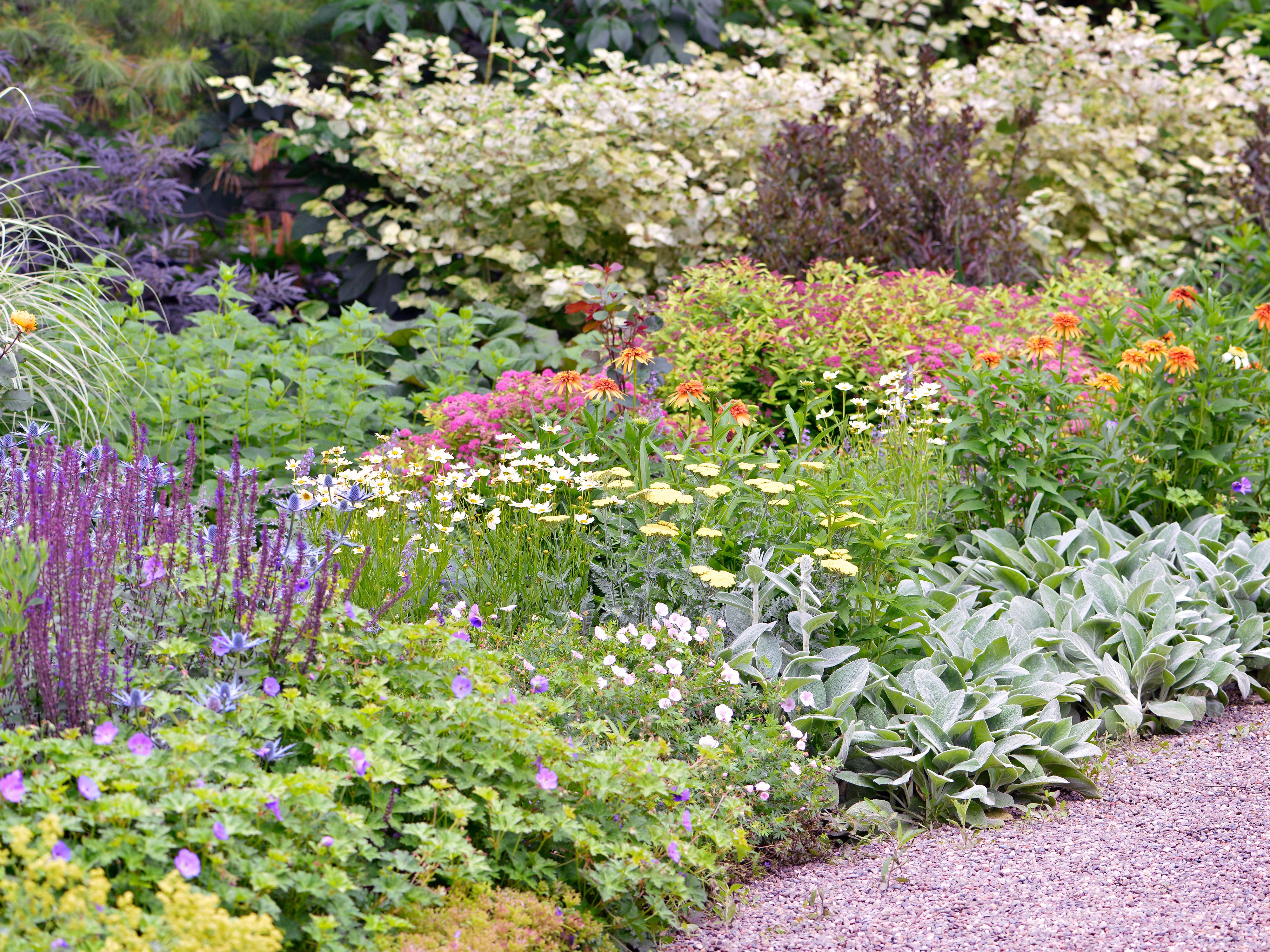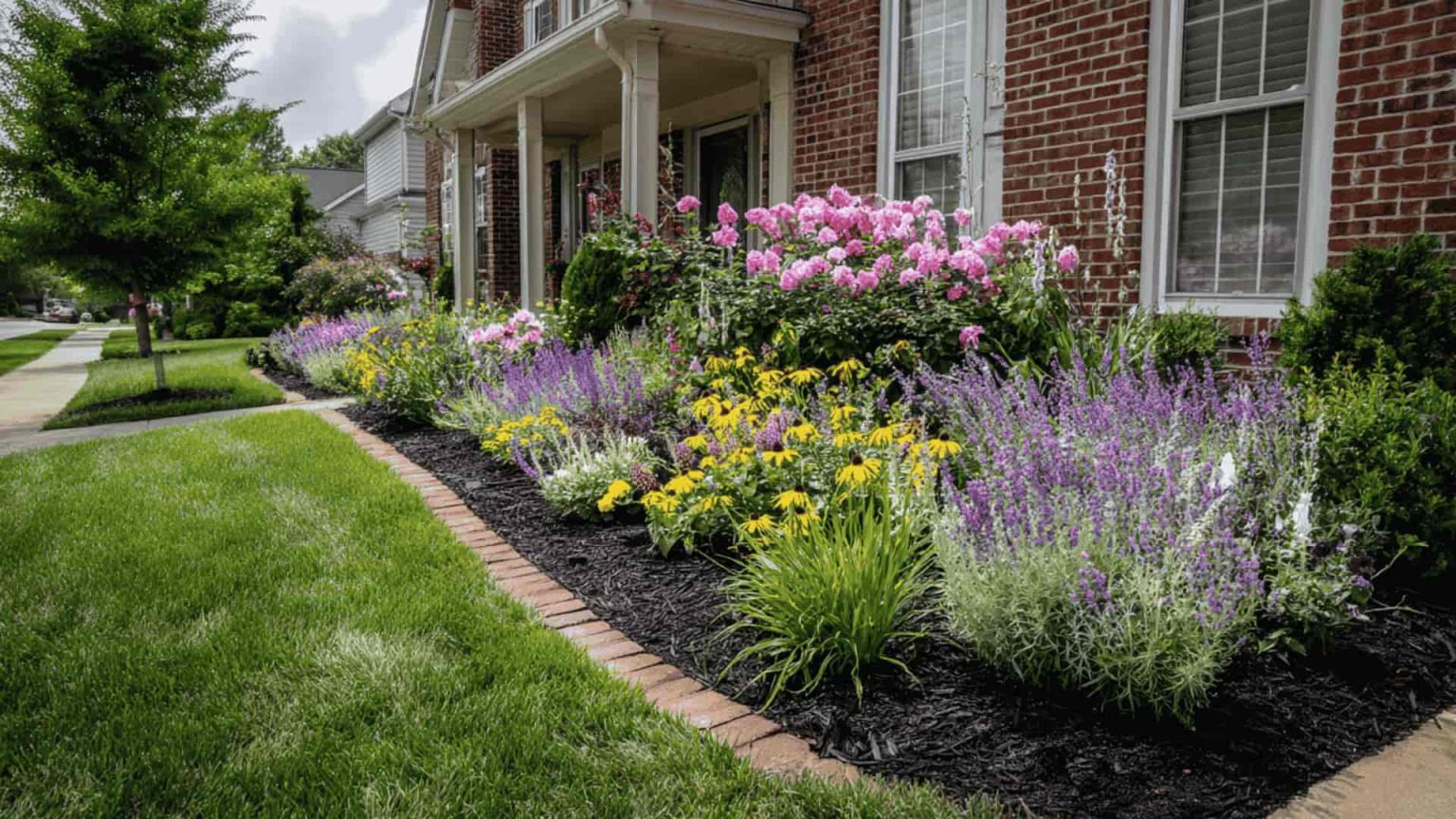

If you are new to perennials, the hardest part is not planting. It is choosing. Too many options can make a simple bed feel like a high-stakes design project.
This five-plant layout is my favorite “training wheels” perennial garden. It uses a small cast of dependable plants, repeated in groups so the bed looks intentional. You get a long bloom season, tidy structure, and a plan that is easy to expand later.

Quick compatibility notes
Light: Best in full sun to part sun, roughly 6+ hours. If you have closer to 4 to 5 hours, it can still work, but expect slightly looser growth and fewer blooms. In hot climates, morning sun with afternoon shade is often perfect.
Zones: These plants work across a wide range of temperate gardens, often USDA Zones 4 to 8 (sometimes 9 depending on cultivar). Plant tags always win, especially for grasses and newer coneflower cultivars.
Soil: Average garden soil with decent drainage is the sweet spot. Sedum and coneflower, in particular, prefer soil that does not stay soggy.
The 5 plants (and why they work)
I chose these because they are forgiving, widely available, and easy to keep looking good with infrequent dividing, staking, or fussing. They also play nicely together in a sunny to part-sunny bed.
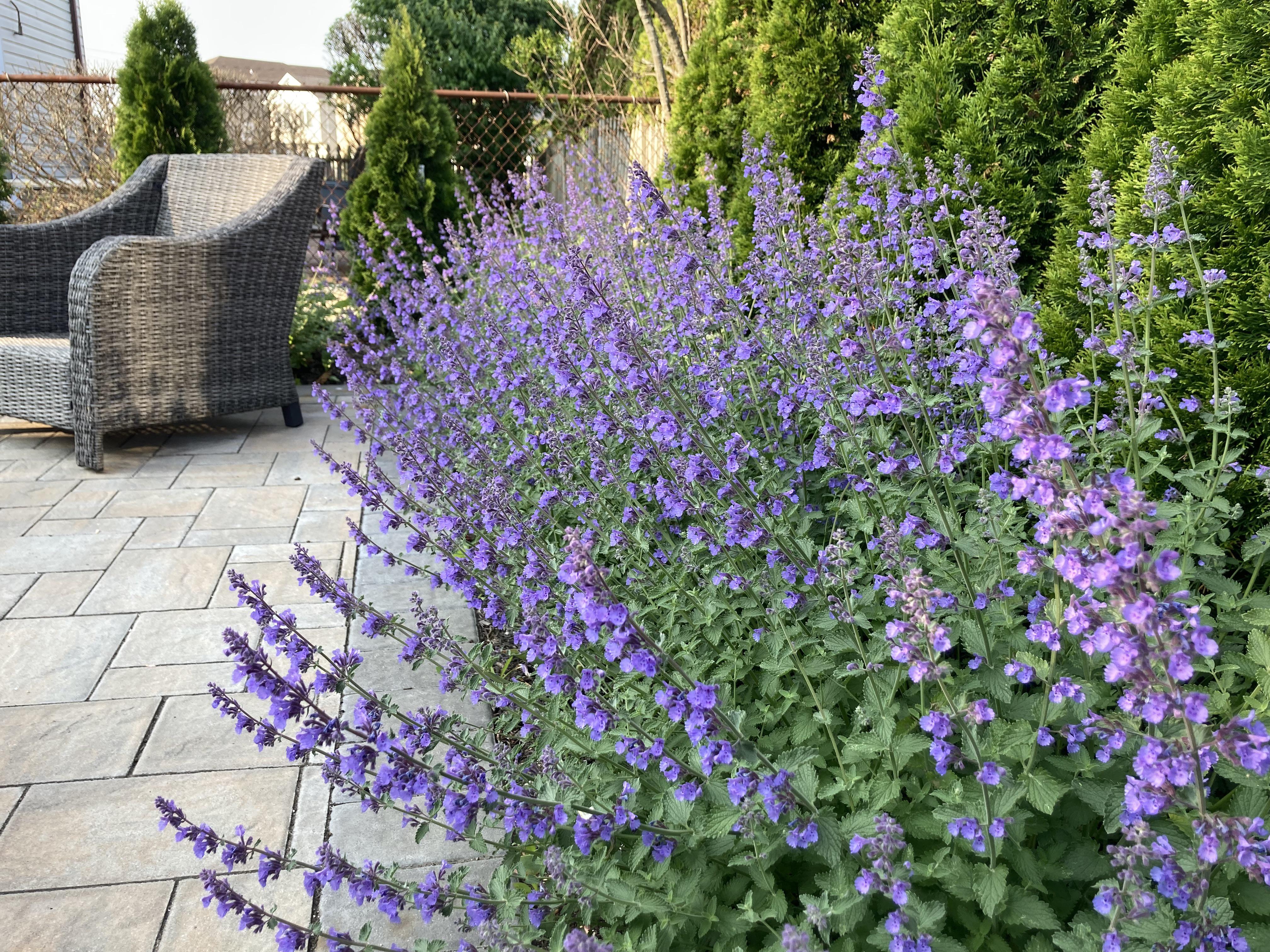
- Catmint (Nepeta) (about 12 to 24 inches tall): long bloom, soft mounding shape, drought tolerant once established, and it hides “bare ankles” at the front of the bed. It may appreciate a haircut after flowering and a refresh division every few years if it thins.
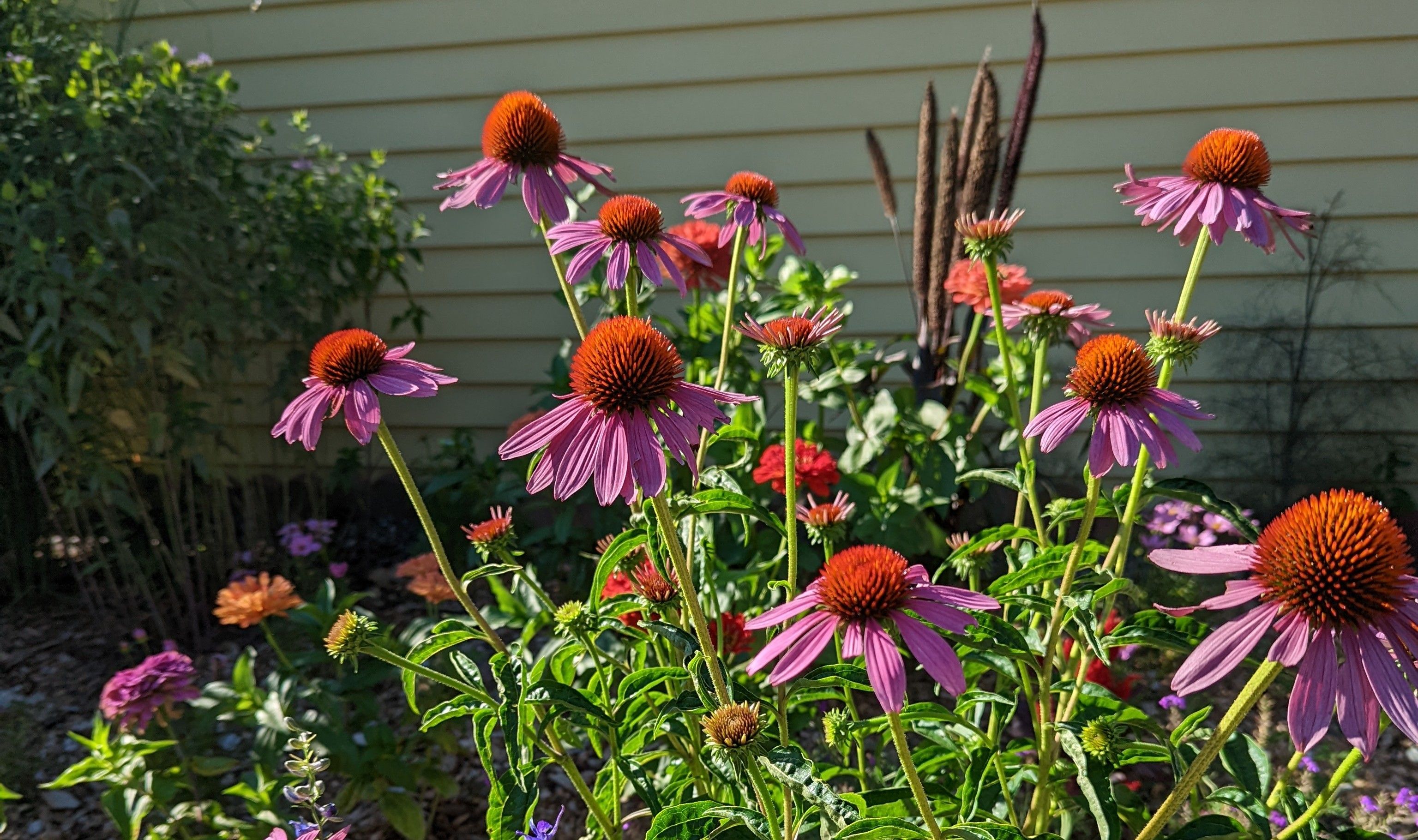
- Coneflower (Echinacea) (about 24 to 40 inches tall): summer color, sturdy stems, and seed heads for birds if you leave them standing. Cultivar choice matters, so buy a sturdy, well-reviewed variety.
- Black-eyed Susan (Rudbeckia) (about 24 to 36 inches tall): bright, happy late-summer color and very beginner-friendly. Some types are short-lived, which is why a clumping standby like ‘Goldsturm’ is a smart pick.
- Sedum (Hylotelephium, upright types) (about 18 to 24 inches tall): clean foliage all season and late blooms when many gardens start to fade. Best drainage is key.
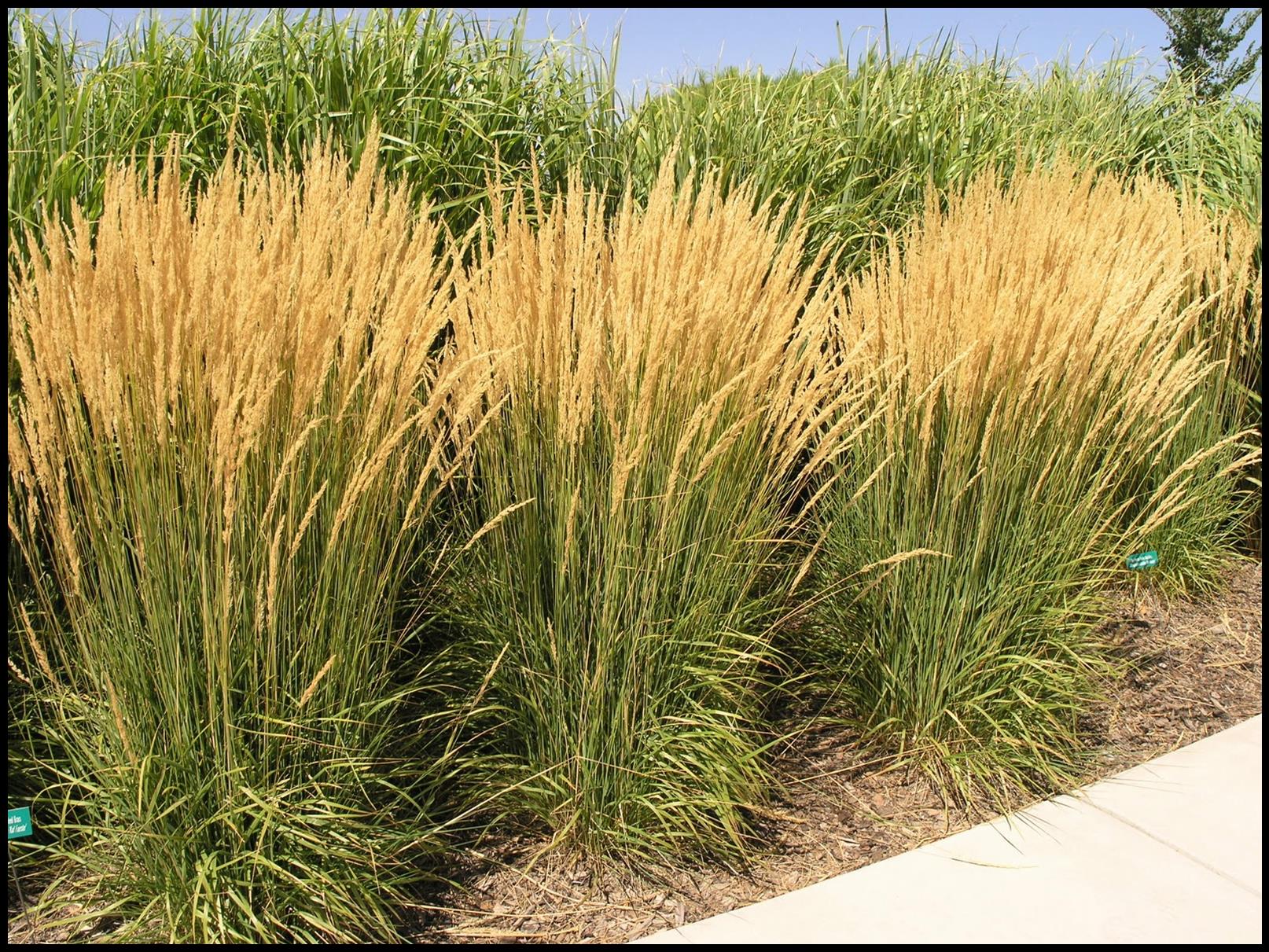
- Feather reed grass (Calamagrostis x acutiflora) (about 4 to 5 feet tall in flower): upright structure and movement, looks good from spring through winter with minimal upkeep once established.
The layout
Think in three layers: tall anchors in back, upright bloomers in the middle, and a soft, flowering edge in front. Repetition is what makes this look designed instead of random.
Best bed size
This layout assumes a bed about 10 feet long by 4 feet deep. That is big enough to look lush, but small enough that weeding and watering stay manageable.
Where each plant goes
- Back row (structure): Feather reed grass goes in the back as vertical punctuation. It is the “spine” of the bed.
- Middle row (main flowers): Coneflower and black-eyed Susan alternate in drifts for a long, bright midsummer show.
- Front row (tidy edge): Catmint runs along the front as a low, flowering ribbon.
- Threaded through the middle (late-season insurance): Sedum sits toward the front of the middle layer so its chunky blooms are easy to see in late summer and fall.
How many plants to buy (10 x 4 bed)
This is the part beginners appreciate most. Here is a shopping list that fills in quickly without overcrowding.
- 2 feather reed grass
- 3 coneflower
- 3 black-eyed Susan
- 3 sedum (upright)
- 5 catmint
Total: 16 plants. If that feels like a lot, remember that perennials are “slow furniture.” It is much easier to start with enough plants to cover soil than to nurse a sparse bed for two years while weeds move in.
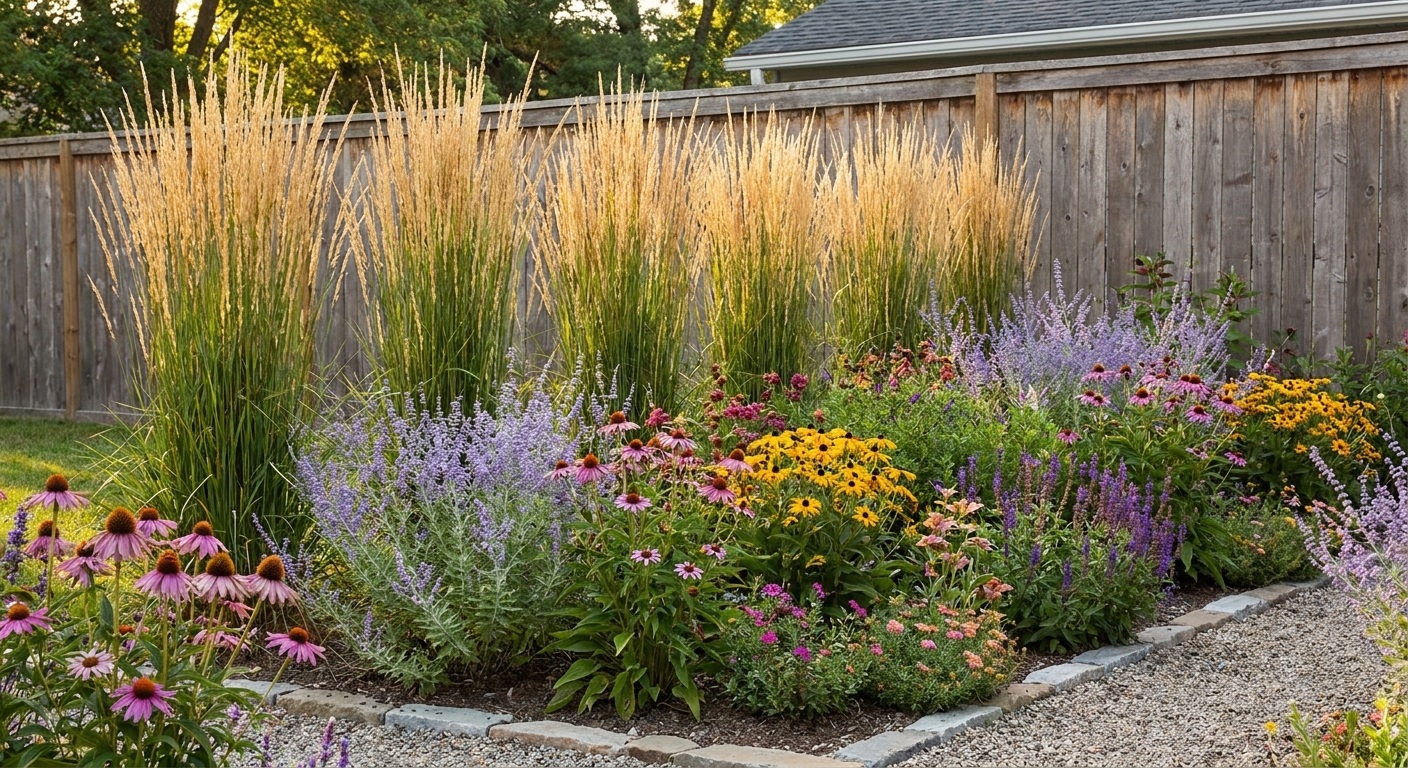
What it looks like at maturity: You will have two tall grass clumps acting like exclamation points in the back, a bright midsummer band of pinks and yellows through the middle, and a soft purple-blue ribbon of catmint tying everything together at the front. Sedum adds that late-season “oh good, it is still going” moment when other beds start to look tired.
Site prep basics
You do not need a perfect soil lab report, but you do need a clean start.
- Remove turf and persistent weeds: Dig, smother, or strip the sod so you are not planting into a future weed problem.
- Loosen and shape the soil: Loosen the top 6 to 10 inches and rake smooth. If your soil is compacted, add compost to improve structure.
- Prioritize drainage: If water sits after rain, fix that first with a slight grade, a raised bed edge, or soil improvement. Sedum and coneflower are much happier with “moist then dry” than “wet all the time.”
Spacing
Overcrowding is one of the fastest ways to turn a low-maintenance bed into a constant trimming job. Under-planting invites weeds. This spacing lands in the sweet spot for most nursery-size plants.
- Feather reed grass: 30 to 36 inches apart
- Coneflower: 18 to 24 inches apart
- Black-eyed Susan: 18 to 24 inches apart
- Sedum: 18 to 24 inches apart
- Catmint: 16 to 20 inches apart
Rule of thumb: If the plant tag lists a “spread,” plant them about two-thirds of that spread apart. This is a guideline, not a law. In rich soil or with irrigation, plants often get bigger, faster.
Planting day
I learned the hard way that the calmest planting days are the ones with a simple order of operations.
- Lay out the bed edge. A smooth curve is prettier and easier to mow around than a wiggly one.
- Set pots on top of the soil first. Place everything before you dig. Stand back. Adjust. This is where “design” happens, and it is much easier with plants still in pots.
- Start with the back row. Plant the feather reed grass first, then work forward.
- Dig wide, not deep. Make the hole wider than the pot. Set the plant so the crown sits at, or slightly above, the surrounding soil grade. Good drainage matters more than extra depth.
- Water in deeply. A slow soak settles air pockets and reduces transplant stress.
- Mulch 2 to 3 inches. Shredded bark or composted mulch works well. Keep mulch pulled back an inch from crowns and do not build mulch volcanoes.
Bloom timeline
This is the quiet magic of using a small, well-chosen plant palette. Something is always happening, even when nothing is “in full bloom.”
- Late spring to early summer: Catmint starts first and keeps going, especially with a midseason shear.
- Midsummer: Coneflower and black-eyed Susan take over with big color.
- Late summer into fall: Sedum blooms, black-eyed Susan keeps going, and grasses look especially good as nights cool.
- Winter: Leave grass plumes and sturdy seed heads standing for texture and birds.
Care routine
I love a garden that does not nag. Here is the simplest routine I have found for keeping this bed looking sharp.
First year
- Water: Deeply 1 to 2 times per week if you are not getting consistent rain. Aim at the soil, not the leaves.
- Weed: Ten minutes here and there is enough if you mulched well.
- Deadheading: Optional. If you snip spent coneflowers and Rudbeckia, you may get more blooms. If you do nothing, the bed still looks good.
Year two and beyond
- Spring cleanup: Cut back the grass and old stems before new growth is tall. I do this on a dry day so everything is less mushy.
- Catmint haircut: Shear it back by about one-third after the first big flush. It rebounds fast and looks neat again.
- Fertilizer: Usually not needed. If your soil is very poor, top-dress with compost in spring.
- Division: Every few years, or when clumps crowd and flowering slows. Some gardens never need it on schedule, others do.
My beginner promise: If you do only three things, do these: water the first year, mulch, and cut everything back in early spring. That alone gets you most of the results.
Swaps for different conditions
Not every yard is the same. If one plant on the list is not a good fit for your conditions, swap just that one and keep the layout.
Heavier, wetter soil
- Swap sedum for switchgrass (a shorter variety if possible) or dwarf Joe Pye weed. Note that even “dwarf” Joe Pye can hit 3 to 4 feet, so place it deeper in the middle layer so it does not hide your front row.
- Choose Rudbeckia fulgida ‘Goldsturm’, which handles average to slightly moist soil well once established.
Deer pressure
- Keep catmint and feather reed grass as-is. They are often left alone, but nothing is truly deer-proof.
- If coneflowers are getting nipped in your area, swap coneflower for Russian sage (Salvia yangii) where it is well-suited.
- If deer pressure is intense, try yarrow (Achillea) in place of Rudbeckia, but watch it the first season. Deer tastes vary by region and by what else is on the menu.
Very hot, dry summers
- Keep catmint, sedum, and coneflower.
- Choose a heat-tough Rudbeckia variety and give everything a thick mulch layer.
- Consider drip irrigation for the first season. It is the most hands-off way to establish perennials.
Varieties I trust
You do not have to use named varieties, but if you like walking into a garden center with a short list, these are reliable choices many gardeners have success with.
- Catmint: ‘Walker’s Low’ or ‘Cat’s Pajamas’
- Coneflower: ‘Magnus’ or ‘PowWow Wild Berry’
- Black-eyed Susan: ‘Goldsturm’
- Sedum (upright): ‘Autumn Joy’ or ‘Autumn Fire’
- Feather reed grass: ‘Karl Foerster’
If you cannot find these exact names, do not stress. Pick the healthiest plants you can find, and stick to the same general types. Healthy roots beat fancy labels every time.
Quick FAQ
Can I do this in a smaller bed?
Yes. For a 6 x 3 foot bed, keep the same layers and simply reduce the counts: 1 grass, 2 coneflower, 2 Rudbeckia, 2 sedum, and 3 catmint.
What if I only want one color scheme?
Easy. Choose one coneflower color and stick with it, then let the yellow Rudbeckia be your “spark.” If you prefer cooler tones, swap Rudbeckia for yarrow in soft yellow or white.
Will this work along a fence or in front of a house?
It works beautifully in both spots. Just make sure the bed is deep enough for the grass to sit in back without crowding everything else. Four feet deep is the comfort zone.
Do I need landscape fabric?
I skip it. A thick mulch layer plus close planting is often more effective long-term, and it is much easier to adjust plants later.
One last tip
If you take nothing else from this, take this: repeat plants in groups. Even three coneflowers together looks calmer and more intentional than one coneflower here, one over there, and one somewhere else.
This five-plant bed is simple on purpose. Once you live with it for a season, you will start to notice what you love most, and that is when it becomes your garden.