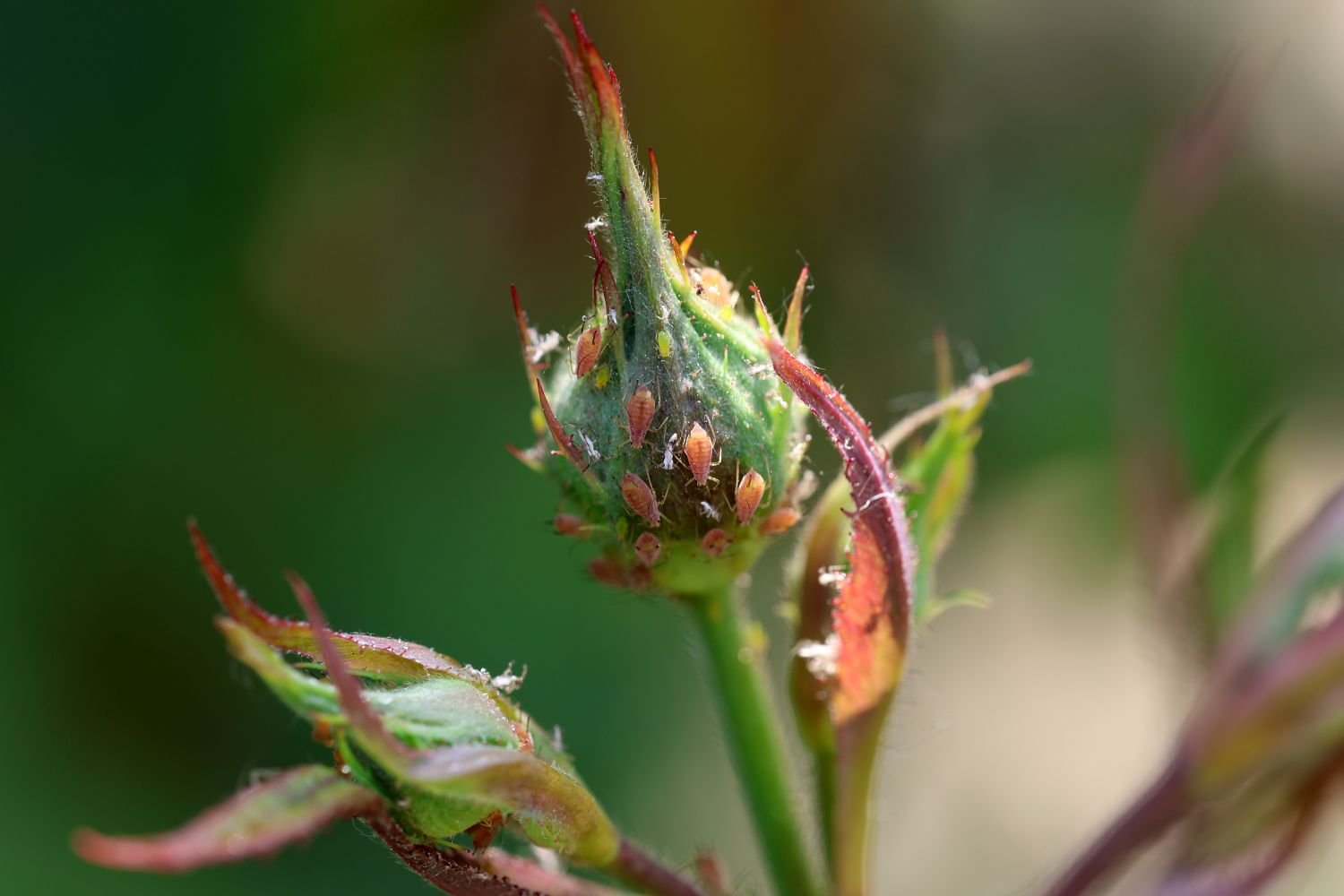

If you have ever stepped outside, spotted aphids clustering on fresh growth, and felt that familiar urge to grab a spray bottle, I get it. I have been there plenty of times. But the most reliable long-term pest control I have found in perennial beds is not a product. It is a community.
Ladybugs, lacewings, hoverflies, and tiny parasitic wasps are already in your area. Your job is to make your garden a place they want to stay, even when pests are not peaking. Do that, and those sudden aphid or thrips flare-ups tend to become smaller, shorter, and a whole lot less stressful.
Meet the good guys (and what they eat)
It helps to know who you are inviting and what they need. Beneficial insects are not one-size-fits-all. Many have a life stage that eats pests and an adult stage that runs on nectar, pollen, or both. Some adults also keep hunting, and a few will do a bit of everything depending on what is available.
Ladybugs (lady beetles)
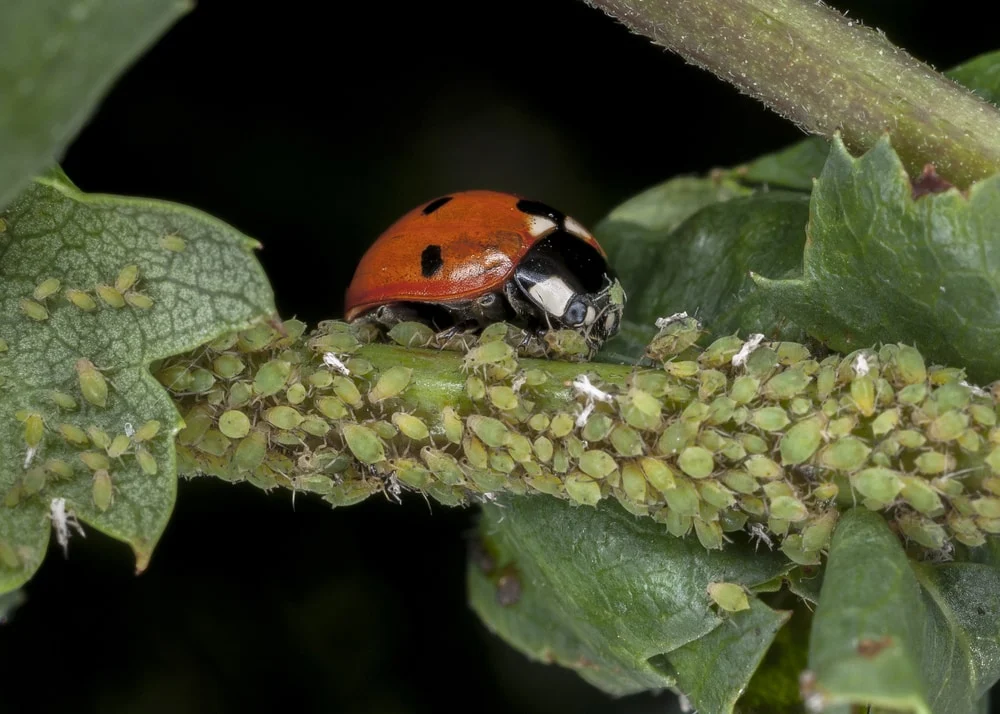
Ladybug adults and larvae both eat soft-bodied pests. The larvae do the heavy lifting. They look like tiny black and orange alligators and can clear aphids surprisingly fast when they settle in.
- Best against: aphids, mealybugs, some scale crawlers (the mobile young stage of scale insects)
- Sometimes against: mites, depending on the lady beetle species
- What keeps them around: small flowers for nectar and pollen, plus at least some prey present
Green lacewings
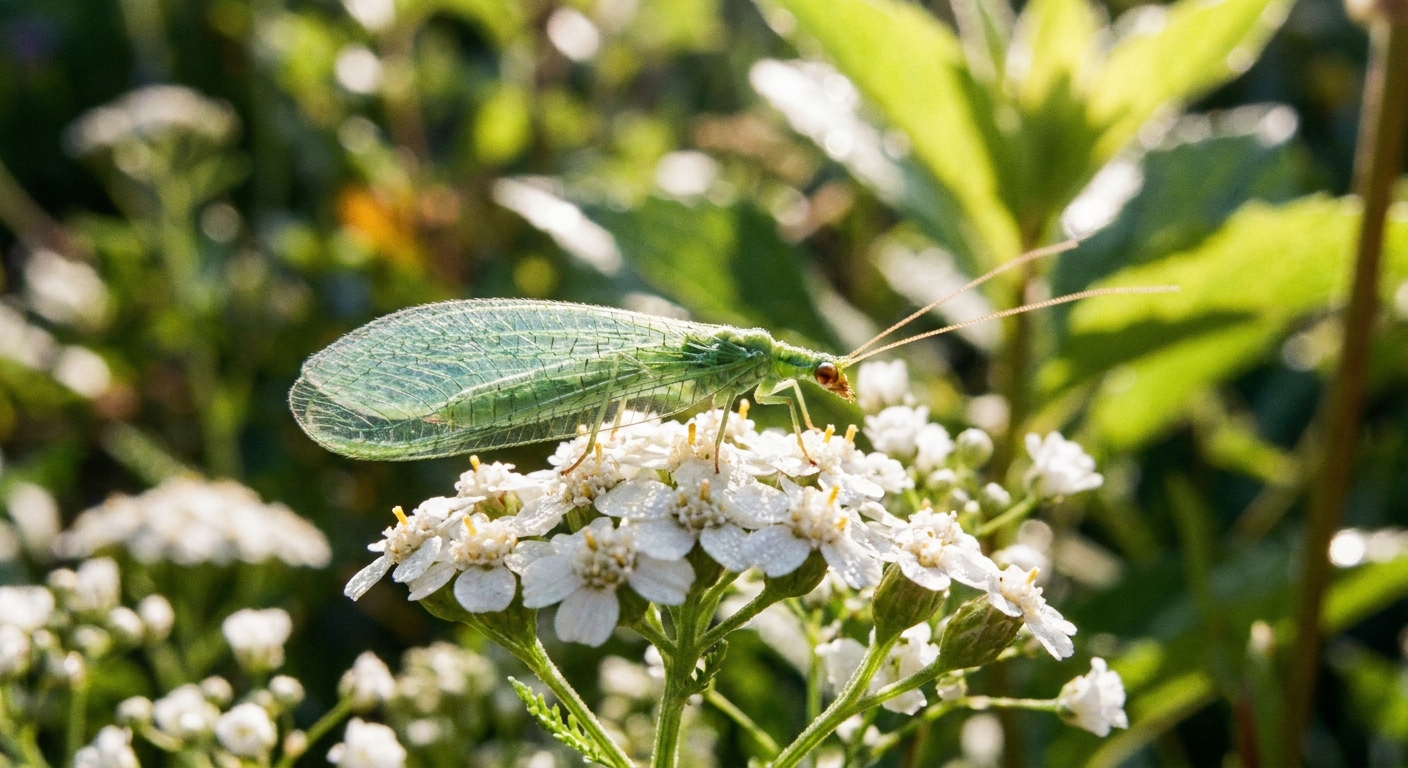
Adult lacewings are delicate, pale green, and often show up at porch lights. Their larvae are sometimes called “aphid lions” for a reason. They are excellent generalist predators, especially on tender pests and eggs.
- Best against: aphids, thrips, whiteflies, insect eggs, and very small larvae
- What keeps them around: nectar and pollen for adults, sheltered spots to lay eggs
Hoverflies (syrphid flies)
Hoverflies look a bit like small bees or wasps, but they are harmless flies. Adults visit flowers for nectar and pollen. The real magic happens with the larvae, which are stealthy aphid predators that work leaves and stems like a slow vacuum.
- Best against: aphids, and sometimes other soft-bodied pests
- What keeps them around: lots of small, open flowers and a steady bloom window
Parasitic wasps (tiny, non-stinging helpers)
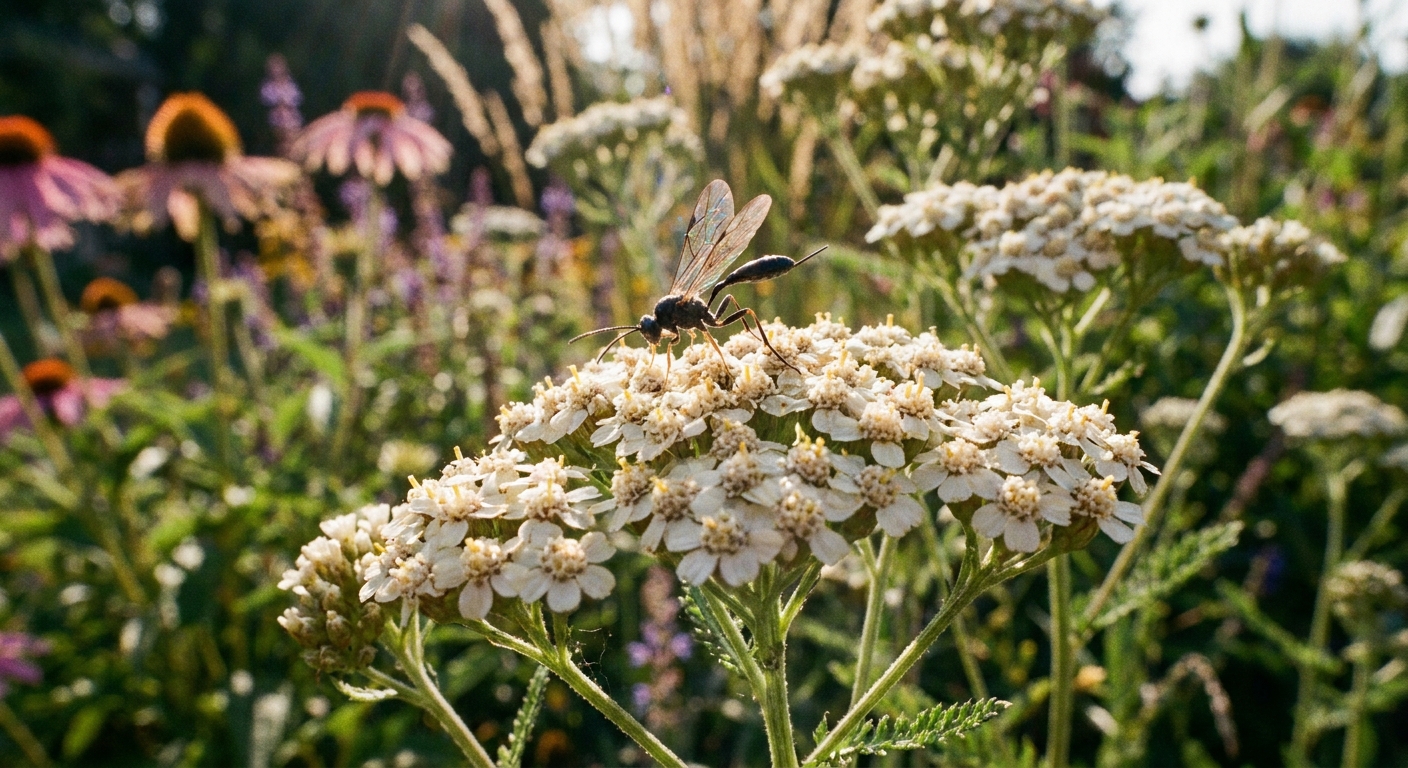
These are not the picnic wasps you worry about. Most parasitic wasps in gardens are tiny and rarely noticed. They lay eggs in or on pests. Their young develop inside the host, which stops the pest from reproducing and ends the problem from the inside out.
- Often help with: aphids (look for “mummies”), leaf miners, cabbage worms, and many caterpillar or beetle pests, depending on the wasp species
- Also possible: thrips or hornworms in some situations, but it is very species- and crop-dependent
- What keeps them around: easy-access nectar from small, open blooms
A quick reassurance: A garden with more beneficial insects usually feels calmer, not more “buggy.” You will notice fewer outbreaks, fewer sticky leaves, and less distorted new growth over time.
What to plant
In my experience, the biggest mistake is planting only big, showy flowers and expecting that to feed tiny beneficial insects. Ladybugs, lacewings, hoverflies, and parasitic wasps tend to prefer small, shallow blooms or clustered flowers where they can land and sip easily.
Think of your planting plan as a three-layer buffet: spring, summer, and fall flowers, plus a little “mess” for shelter. As a quick mental picture, you might do catmint in spring, yarrow in summer, and asters in fall, then repeat that pattern across the bed.
Perennials that support beneficial insects
- Yarrow (Achillea): flat flower clusters act like little landing pads for tiny wasps and hoverflies
- Mountain mint (Pycnanthemum): one of the best beneficial-insect magnets I have grown, and it blooms for ages (choose a species suited to your space, some can spread)
- Asters (Symphyotrichum): late-season fuel when pest pressure can spike again
- Goldenrod (Solidago): often blamed for fall allergies, though ragweed is usually responsible, and goldenrod is a powerhouse for beneficials in fall (some spread vigorously)
- Coreopsis: long bloom season and a steady supply of pollen
- Catmint (Nepeta): reliable bloom and a great bridge plant between early and late flowers
- Penstemon: supports a wide range of insects and extends bloom in many climates
- Native coneflowers and daisies: excellent general support, especially when planted in drifts
Tip: Where possible, choose native species and locally adapted cultivars. Beneficial insects can use many non-natives, but natives often feed more of the local food web with less fuss.
Herbs that behave well in perennial beds
You do not need a dedicated herb garden to use herbs as beneficial insect lures. Tuck these into sunny edges.
- Dill and fennel: umbels attract parasitic wasps and hoverflies (let a plant or two flower)
- Parsley: also blooms into umbels if allowed, and beneficials love it
- Thyme and oregano: small flowers that bring in tiny predators
- Chives: early blooms, plus they are tidy and perennial in many regions
Design that helps them stay
Plant choice matters, but layout matters too. Predatory insects do best when they can find food and shelter without crossing a desert of bare mulch.
Plant in clusters
A single yarrow plant is easy to miss. A drift of three to seven plants is a billboard. Clusters help beneficials forage efficiently, and they help you, too, because you can see where insect activity is happening.
Keep blooms going
Beneficial insects need sugar and pollen all season, not just in June. Aim for at least one early bloomer, two summer anchors, and two fall bloomers.
- Early: creeping phlox, perennial candytuft, early alliums, catmint
- Mid: yarrow, coreopsis, coneflower, salvias
- Late: asters, goldenrod, sedum (Hylotelephium), Joe Pye weed
Leave some soft shelter
Not messy, just lived-in. A little leaf litter under shrubs, a small patch of ornamental grass, or hollow perennial stems left through winter gives beneficials places to overwinter and hide from birds and wind.
If you prefer a very tidy look, compromise by leaving stems standing until spring cleanup. Just skip anything that is clearly diseased or riddled with a known problem, and remove that material instead of letting it overwinter.
Add safe water
Shallow water helps insects too. A simple saucer with pebbles filled to just below the pebble tops gives them a safe place to drink. Keep it fresh, especially in hot spells.
What to avoid
This is the part that can feel frustrating at first. You can plant all the right flowers, but a few common habits accidentally push beneficial insects away.
Broad sprays (even organic ones)
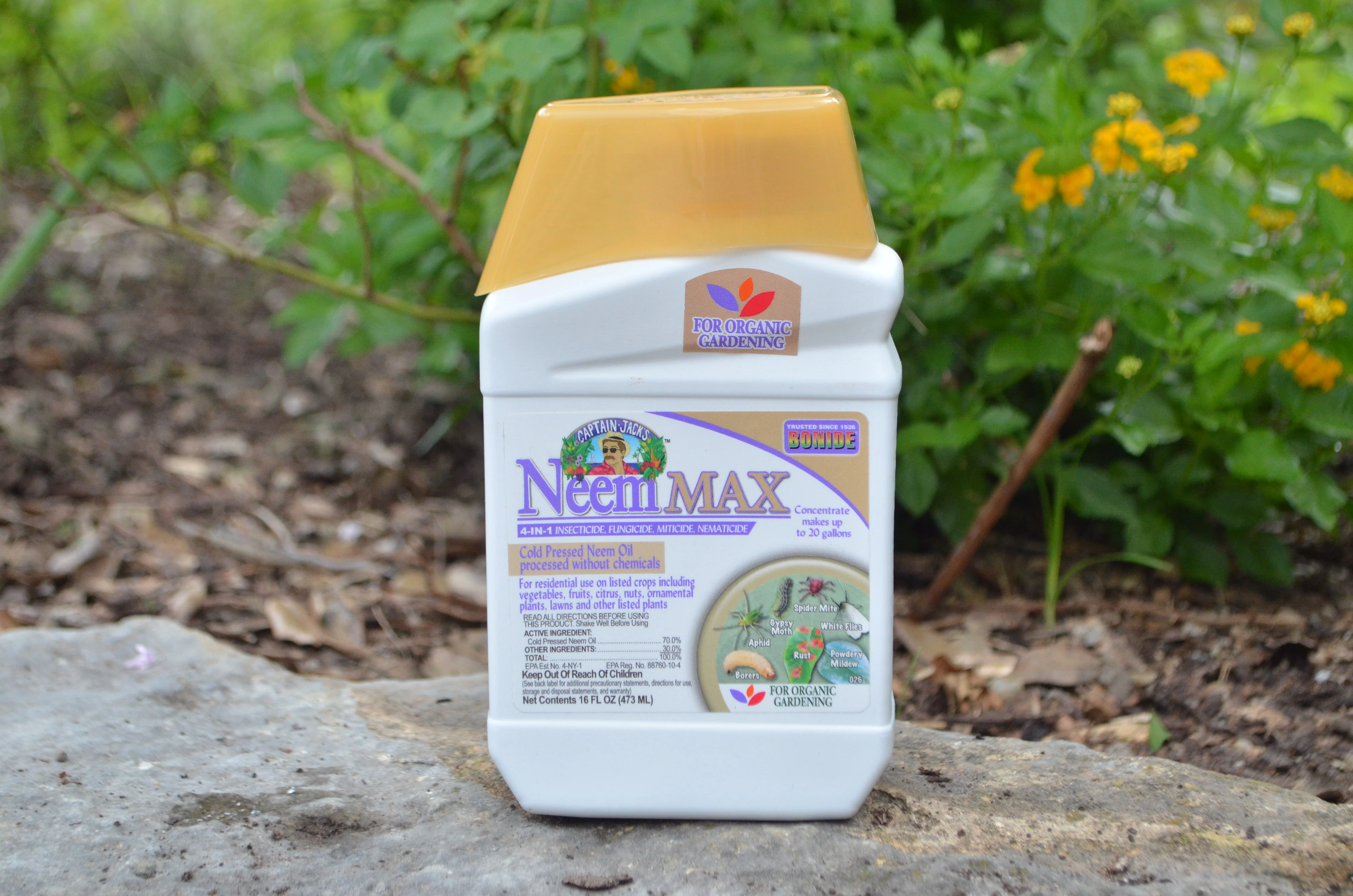
Many sprays labeled “natural” are still non-selective. They can harm ladybugs, lacewings, hoverflies, and parasitic wasps along with the pests. Common culprits include pyrethrins and neem when used broadly or frequently. Spinosad can be useful, but it is still harmful to many beneficial insects, especially bees and other flower visitors when sprayed on blooms or while residues are fresh.
If you need to intervene, spot-treat the exact plant and avoid spraying open flowers. Beneficials feed on pollen and nectar, and that is often where residues linger.
Too much fast nitrogen
Soft, nitrogen-pushed growth is aphid candy. In perennial beds, slow and steady is your friend. Compost, leaf mold, and gentle slow-release options keep plants resilient without creating a pest buffet.
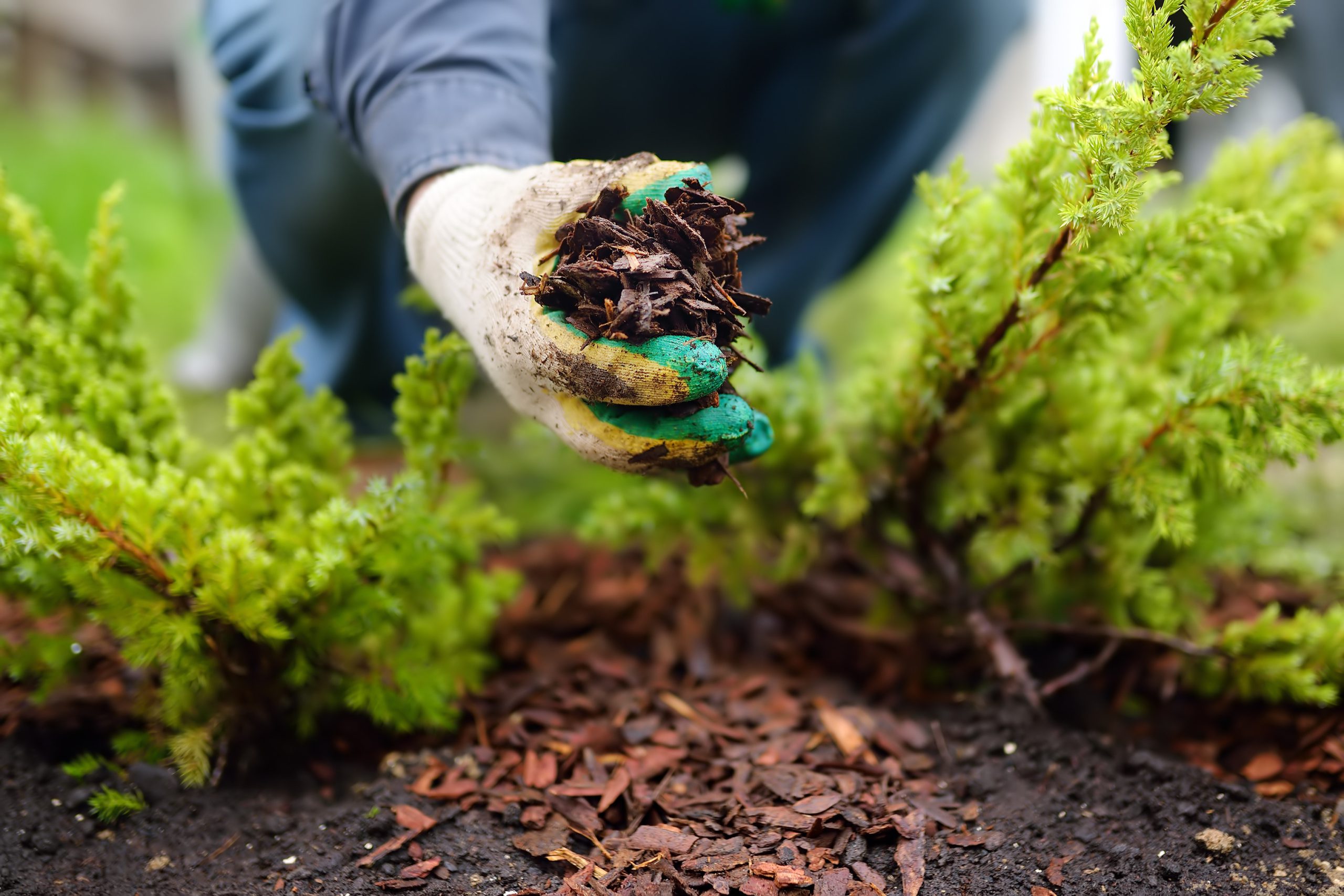
Mulch piled to the crown
Mulch is helpful, but thick mulch smothering every inch reduces habitat diversity and can encourage crown issues. Leave a small breathing space around perennial crowns and consider mixing mulch styles, like composted leaf mulch in one area and fine bark in another.
Outbreaks without wrecking the balance
Even the healthiest perennial bed will have pest moments. The goal is not perfection. The goal is balance.
Step 1: Confirm the pest
A few aphids on a milkweed stem is not an emergency. Twisted new growth across several plants is worth action.
For thrips, look for silvery scarring on petals and leaves, distorted buds, and tiny black specks (frass). Thrips damage is easy to confuse with heat stress or wind burn, so check closely before you treat.
Step 2: Look for signs of help
Before you do anything, scan for the predators you are trying to build up.
- Lacewing eggs: tiny white ovals perched on hair-thin stalks, usually on leaf undersides
- Aphid mummies: swollen, papery tan or brown aphids that look stuck to the leaf, a sign parasitic wasps are already working
- Ladybug larvae: spiky little black-and-orange “alligators” patrolling stems
Step 3: Use water first
A strong spray of water knocks aphids off and often reduces the problem dramatically without touching beneficial insects. Repeat every couple of days for a week if needed.
Step 4: Prune hotspots
If one stem is covered, snip it, bag it, and toss it. This removes thousands of pests instantly and keeps predators from having to chase an overwhelming population.
Step 5: Go targeted if you must
- Insecticidal soap: effective on aphids and some soft-bodied pests when sprayed directly, and less persistent in the environment
- Horticultural oil: can smother pests, but avoid high heat and avoid spraying open blooms
Always spray in the evening when beneficials are less active, and only treat the affected plant, not the whole bed.
My personal rule: if I can see ladybug larvae or lacewing eggs nearby, I give them a couple of days before I do anything beyond water and pruning. They usually show up right after the buffet opens.
Bonus fix: deal with ants
If ants are marching up your plants, they may be “farming” aphids for honeydew and chasing predators away. Reducing ant traffic can make natural control click into place.
- Trim back stems that touch fences, walls, or other plants that act like bridges.
- Use sticky barriers on stakes or supports (not directly on tender plant stems).
- If a nearby nest is the source, address it away from the bed so you are not spraying the plants you are trying to protect.
Buying ladybugs or lacewings?
I get asked this a lot, and I have tried it myself. The results are mixed.
Ladybugs: usually not worth it
Store-bought ladybugs are often collected while overwintering, and they naturally want to fly away. You may release hundreds and watch them disappear by morning. If you do try it, release at dusk, lightly mist plants, and release into dense plantings with active aphid populations. Even then, consider it a short-term experiment, not a fix.
Lacewing eggs or larvae: sometimes helpful
Lacewings purchased as eggs can work better because they hatch where you place them. They still need appropriate conditions and prey. I see them as a boost during a real outbreak, not a substitute for habitat.
The long game: planting for beneficial insects brings more consistent results than buying bugs, because it builds a system that renews itself every season.
A simple starter plan
If you want a straightforward place to begin, here is a small, sunny-bed recipe that supports predators from spring through fall and still looks like a flower garden, not a science project.
For a 6 by 10 foot bed
- 3 yarrow
- 3 catmint
- 3 coreopsis
- 3 coneflower
- 2 mountain mint (give it room, and choose a well-behaved species for your site)
- 3 asters (tuck toward the back)
- Optional edge tuck-ins: chives, thyme, dill (let one flower)
Plant in repeating groups, not one of everything. Repetition is what makes it both pretty and functional.

FAQ
How long does it take to see results?
Often you will notice more beneficial activity within the first season, especially if you add long-blooming nectar plants. The bigger shift, fewer major outbreaks, usually shows up by year two as the bed fills in and overwintering habitat improves.
Will parasitic wasps sting my kids or pets?
The tiny parasitic wasps used in biological control are not the nest-defending stinging types most people worry about. Stings are very unlikely in normal garden conditions.
What is the biggest beginner mistake?
Spraying too soon. A few pests are often the signal flare that brings predators in. If you wipe the pests out immediately with a broad spray, the predators never settle in, and the cycle repeats.
Can I do this in part shade?
Yes. You may have fewer heat-loving predators than in full sun, but you can still support them with shade-tolerant bloomers (like asters suited to your light, some salvias depending on variety, and native woodland edge plants) and by avoiding broad-spectrum sprays.
The shift that changes everything
Once you start gardening with beneficial insects in mind, you stop asking, “How do I get rid of every bug?” and start asking, “Who do I want living here?” That one mental shift makes perennial gardening feel steadier and more forgiving.
Add a few small-flowered nectar plants, let your bed have a little seasonal texture, and reach for water and pruning before you reach for sprays. Most seasons, your ladybugs, lacewings, hoverflies, and parasitic wasps will do the bulk of the work, quietly, faithfully, and year after year.