
There is a very particular heartbreak to walking out after a summer thunderstorm and finding your proudest blooms folded in half. Tall perennials want to do the right thing, but heavy flower heads, lush foliage, and a single gust of wind can turn a tidy border into a tangle.
The good news is that staking does not have to look like a construction site. If you support plants early and match the method to the plant’s growth habit, the stakes all but vanish. What you see is the flower show, not the hardware.
Why tall perennials flop
Flopping is usually a mix of physics and timing. Here are the most common culprits I see (including in my own beds when I get overconfident).
- Top-heavy blooms like peonies, dahlias, and many daisies that carry weight at the ends of stems.
- Fast, lush growth from rich soil or high nitrogen fertilizer that stretches stems.
- Shade stretch when a sun-lover leans toward the light.
- Inconsistent watering that can encourage shallow rooting in some soils and conditions.
- Soil issues like compaction or poor drainage that limit strong root growth.
- Wind and heavy rain that hit like a one-two punch.
Staking does not “fix” weak stems, but it prevents breakage, keeps blooms clean, and maintains airflow that helps reduce mildew and rot.
The golden rule: stake early
If you take only one tip from this guide, let it be this: install support when the plant is still small. Once stems are tall, threading them into a grid or tying them neatly becomes frustrating, and you are more likely to snap something.
A simple timing cue that works in most climates: when the plant is 6 to 12 inches tall, it is time to act. For very tall plants (4 to 6 feet), I start even earlier, right as shoots are sturdy enough to see clearly.
A quick seasonal rhythm
- Early spring: Set grow-through grids and ring supports over clumps as they emerge.
- Late spring: Add bamboo canes for delphiniums, hollyhocks, lilies, and anything that will need vertical help.
- Early summer: Install linking stakes to corral wide, billowy growers before they sprawl into paths.
- Mid to late summer: Do small adjustments and gentle re-ties after storms, especially for repeat bloomers.
Support system #1: Grow-through grids
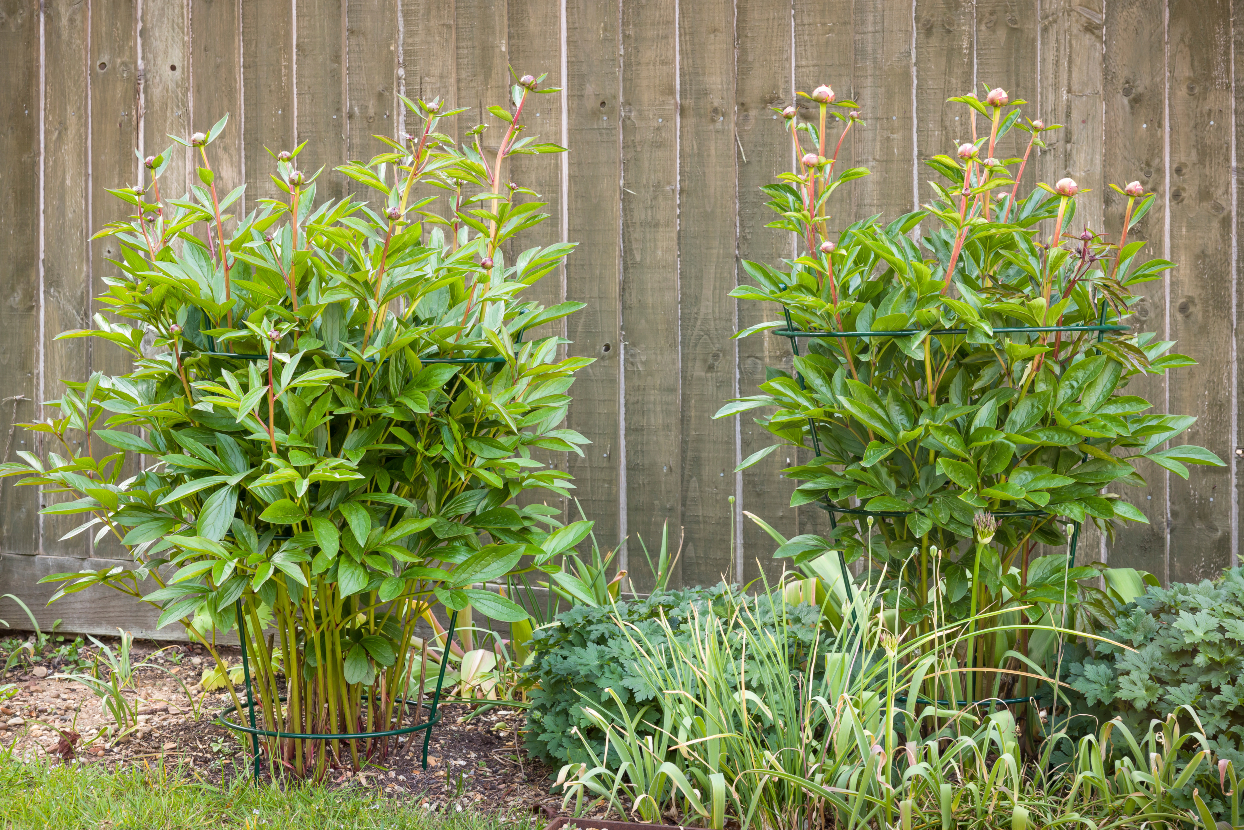
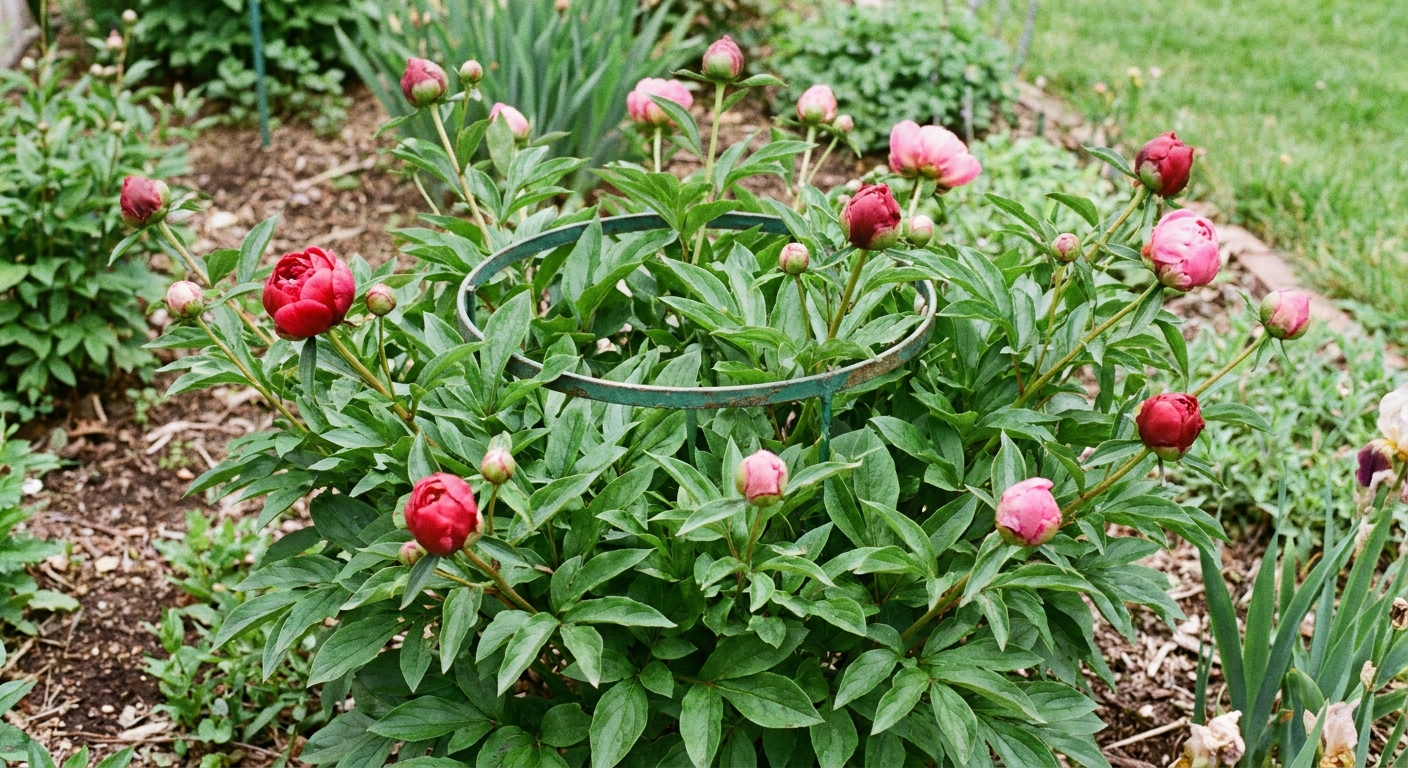
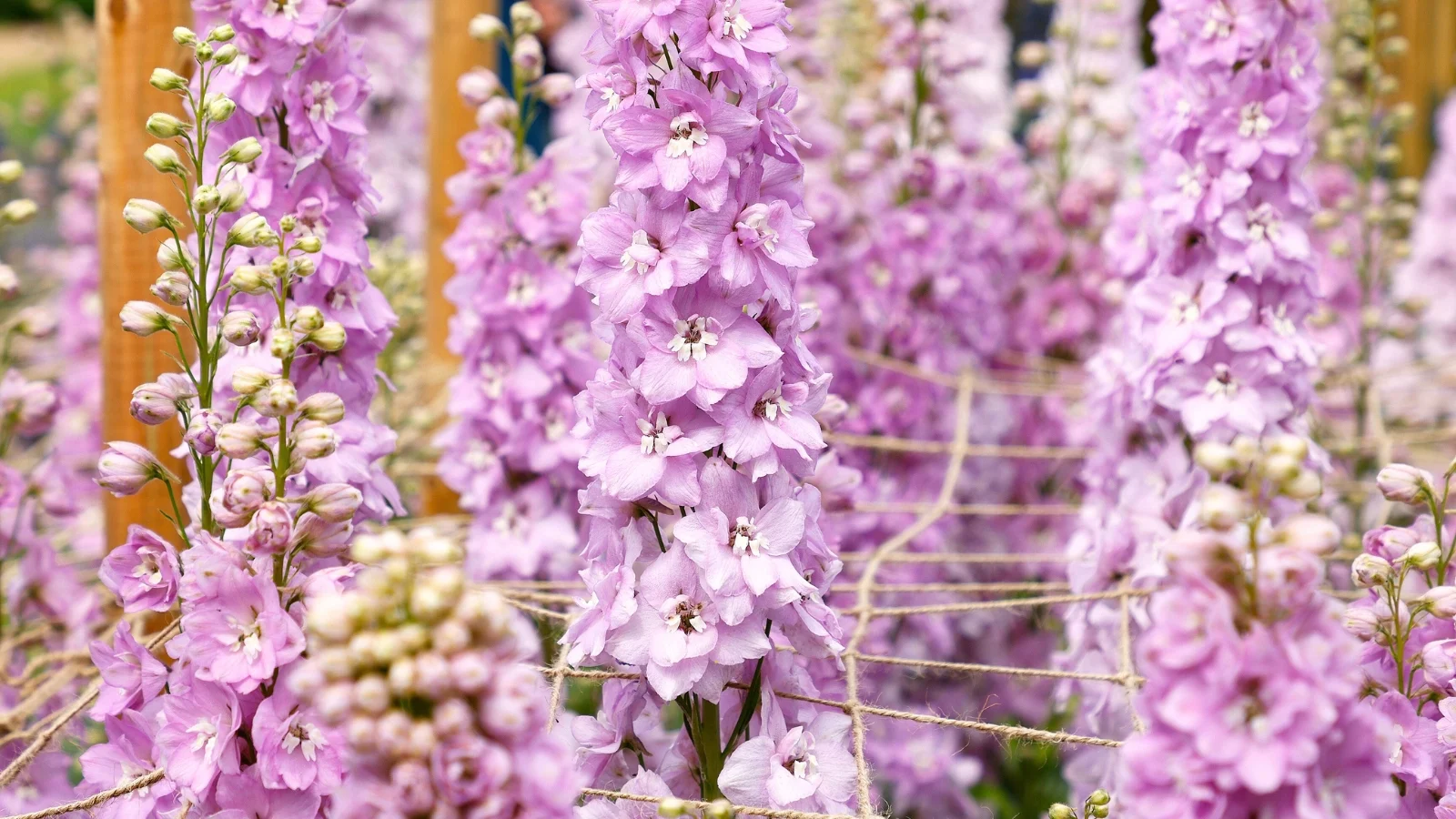
Grow-through grids are my favorite for clump-forming perennials because they are the most invisible option. You set the grid over the plant early, and the stems grow up through the openings. By flowering time, you usually cannot see the support at all.
Works well for
- Peonies
- Garden phlox
- Sedum (especially taller types)
- Asters
- Shasta daisies
- Some catmint and salvias, especially sturdier, more upright types (for the floppier, twiggy ones, a hoop or a haircut often looks better)
When to install
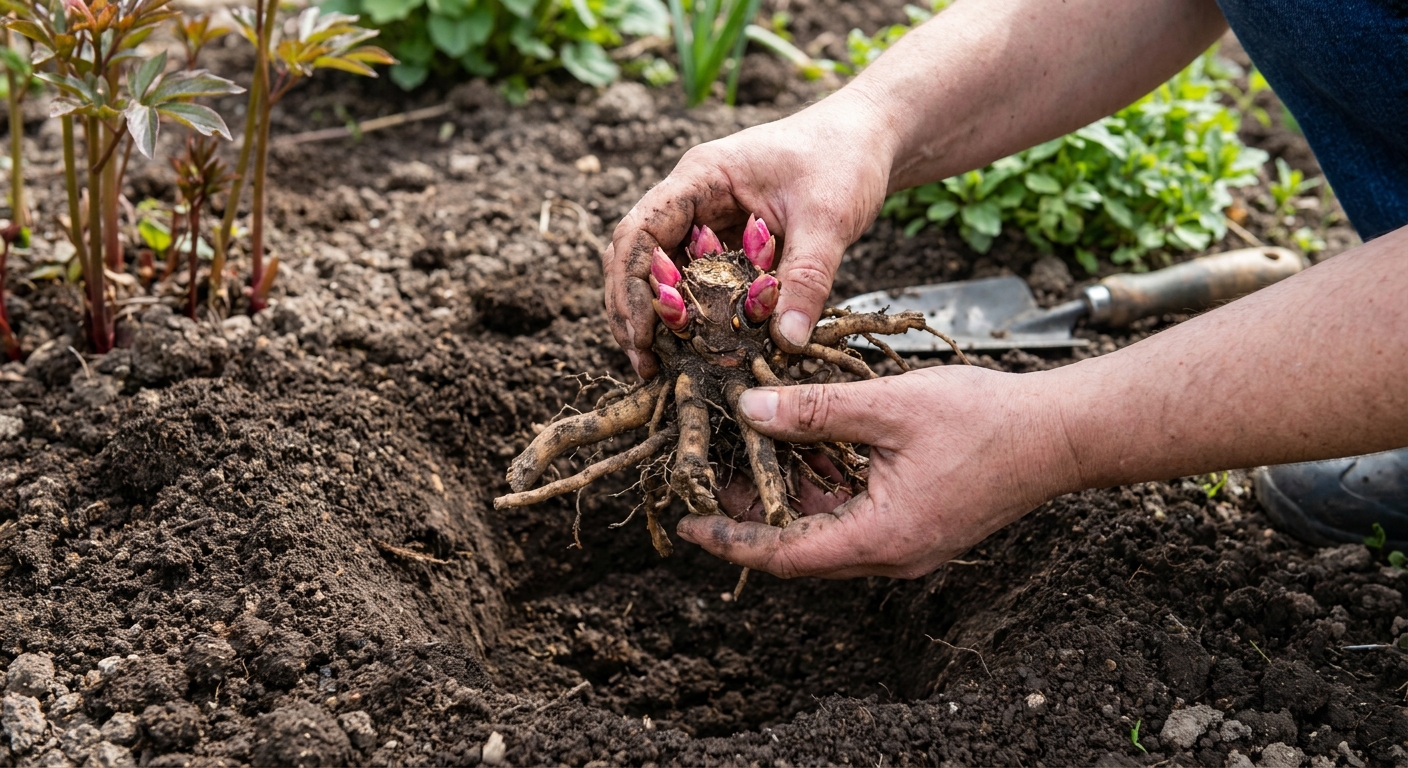
When shoots are 3 to 8 inches tall. For peonies, I put rings on when the red shoots are just a few inches up, long before buds form.
How to install so it disappears
- Choose the right diameter. Pick a grid that is slightly wider than the plant’s spring clump. If you cram it, stems will bunch and bend.
- Center it over the crown. You want the plant rising evenly through the openings, not pushing to one side.
- Push the legs in deeply. Aim for several inches into firm soil. If your soil is loose from spring prep, tamp around the legs with your hand.
- Gently guide stems. As growth takes off, nudge stems into open squares every few days for a week or two. This is the secret to a natural shape.
- Mulch after the support is placed. Mulching first can make legs wobble.
Tip from my own beds: If a plant grows faster than expected and starts leaning above the grid, you can add a second, slightly higher grid later, but it is much easier to get it right early.
Support system #2: Bamboo canes (with soft ties)
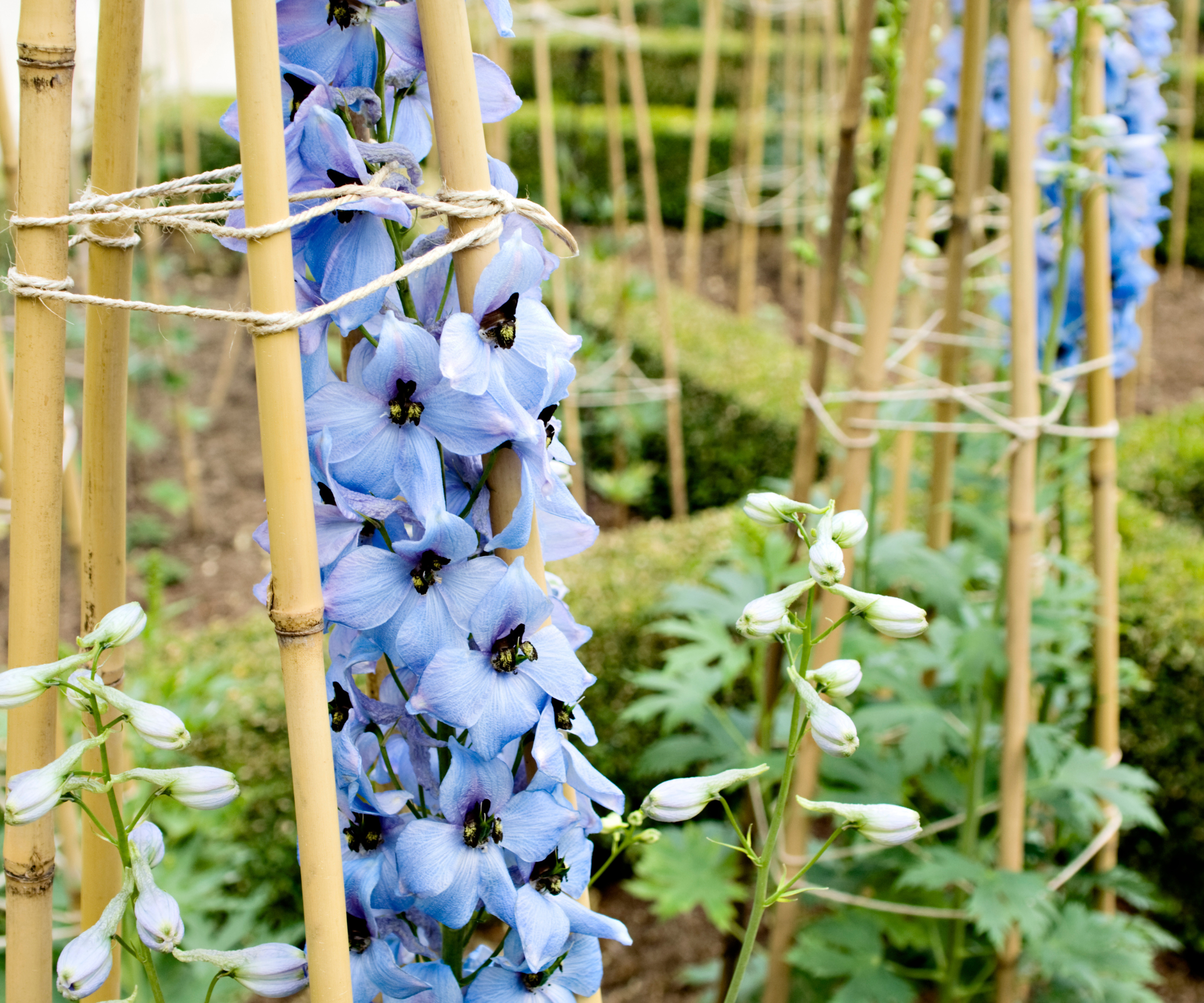
Bamboo is the classic, inexpensive, flexible solution. The trick is to think like a plant, not like a fence builder. That means you are aiming for light support at several points, not one tight tie that forces everything upright.
Instead of one stake with one tie, tall perennials usually do better with two to five canes placed around the plant and tied in a few spots to create a gentle framework.
Best for
- Delphiniums
- Hollyhocks
- Dahlias (grown as tender perennials, and often treated like annuals in cold climates)
- Gladiolus
- Top-heavy lilies
- Taller hardy geraniums and sneezeweed that need gentle guidance
When to install
As soon as you can predict height, usually when stems are 8 to 18 inches tall. For dahlias, I stake at planting time or right after sprouting because they grow quickly and snap easily.
How to stake neatly
- Choose canes tall enough. Your cane should reach at least two-thirds of the mature height. For a 5-foot delphinium, a 4-foot cane is more useful than you think because the top growth is lighter.
- Insert canes before the plant gets crowded. Push them in a few inches away from the crown so you do not spear the root mass.
- Angle each cane slightly inward for stability. A tiny lean toward the center resists outward flopping.
- Tie with soft material. Use soft garden twine, stretchy plant tie tape, or strips of old T-shirts. Avoid thin wire that cuts stems.
- Use a figure-eight tie. Loop once around the cane and once around the stem with a little space between. This prevents rubbing damage.
- Add ties as the plant grows. Place ties every 10 to 14 inches on tall spikes. Keep them snug but not tight.
Make bamboo less obvious
- Use green-stained bamboo or paint the upper portion with a matte green outdoor paint.
- Place stakes on the back side of the plant relative to common viewing angles.
- Stake in groups. Several thin canes look lighter than one thick post.
Support system #3: Linking stakes
Linking stakes are those clever supports that snap, hook, or slide together so you can build a low fence around plants. I reach for them when a plant is not so much falling over as it is spilling outward into paths or neighboring perennials.
Best for
- Peonies that splay wide
- Coreopsis and rudbeckia that get floppy in rain
- Large clumps of coneflowers
- Older perennial mums
- Any mixed border where you need quick, adjustable corralling
When to install
When the plant is 10 to 16 inches tall and starting to widen. If you wait until it is leaning, you often end up bruising stems and blooms while trying to coax everything upright, and the finished look can feel a bit forced.
How to install for a natural shape
- Place stakes in a loose ring. Give the plant breathing room. A little movement is healthy.
- Link at a low height first. Start around 8 to 12 inches high, then add a second tier later if needed.
- Follow the plant’s silhouette. Do not force a perfect circle if the clump is naturally oval.
- Hide connections with foliage. Tuck connectors behind outer leaves as the plant fills in.
My favorite use: Linking stakes are wonderful in mixed beds where you have a few known floppers and want one continuous, low, tidy support line that disappears once everything leafs out.
Support system #4: Hoops and pea sticks
Two old-school supports deserve a place at the table because they solve common problems without looking fussy.
Hoops and ring supports
Hoops (including classic peony hoops) are essentially a simple, discreet fence for a single plant. They are great when a grid feels too rigid, but you still want a clean outline.
- Best for: peonies, floppy salvias, catmint, daisies, and anything that wants to arch outward.
- Timing: early, when growth is still low enough to grow up and over the ring naturally.
Pea sticks and twiggy brushwood
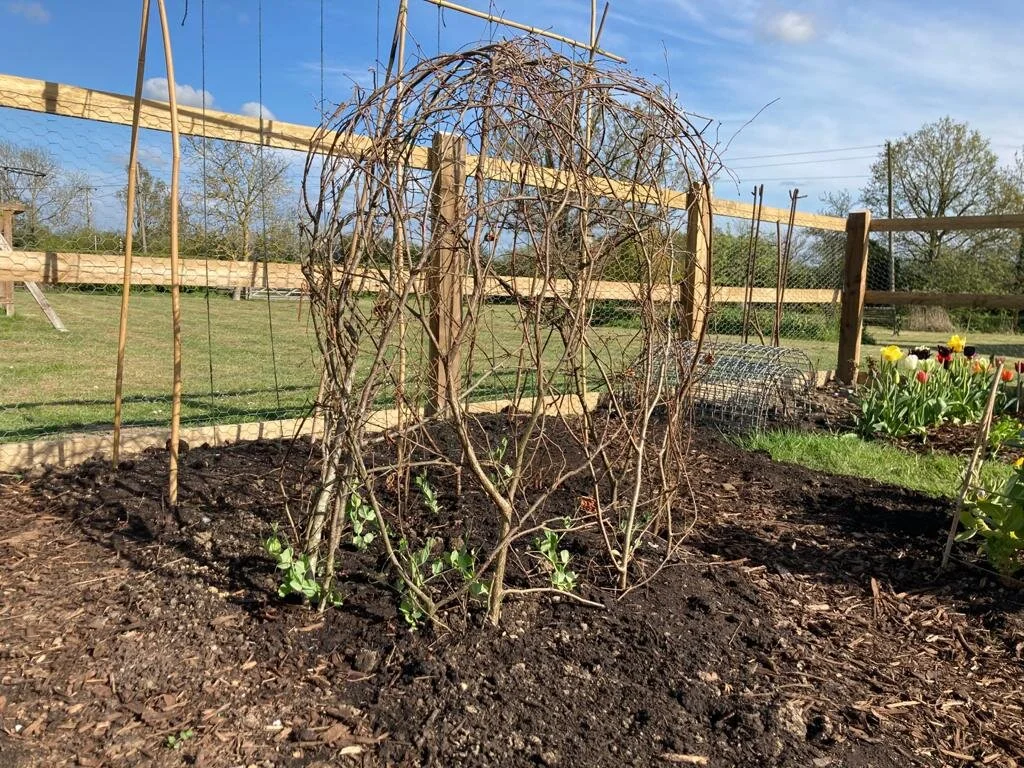
If you garden in a cottage style, pea sticks are a small miracle. You push twiggy branches into the ground around a clump in early spring, and the plant knits itself through the twigs. It looks natural because it is natural.
- Best for: floppy, many-stemmed perennials that look odd tied to canes, plus self-seeding favorites.
- Timing: very early, before stems get tall enough to tangle.
Pick the right method fast
| If your plant tends to... | Use this support | Why it works |
|---|---|---|
| Form a dense clump and then flop after rain | Grow-through grid | Supports many stems at once and stays hidden |
| Grow tall, single or few upright stems | Bamboo canes | Gives vertical strength and adjustable tie points |
| Sprawl outward into paths or other plants | Linking stakes or hoops | Creates a gentle perimeter that guides growth inward |
| Arch outward with twiggy growth | Hoops or pea sticks | Supports without forcing stems into a rigid grid |
| Get tall and wide with heavy blooms | Grid plus a few canes | Grid supports the base, canes steady taller stems |
How to keep staking tidy
Match support color to foliage
Green supports fade into the background quickly. If you only have bright bamboo, place it where it will be hidden by later growth, or stain it with a garden-safe wood stain before the season begins.
Stake from inside the bed
If your border is viewed from one main direction, place canes slightly toward the back of the plant. The stems still get support, but your eye catches flowers first.
Think loose and layered
Ties that are too tight look obvious and can damage stems. A little sway is normal. Aim for a plant that stands up to weather, not a plant that cannot move at all.
Use companion plants as camouflage
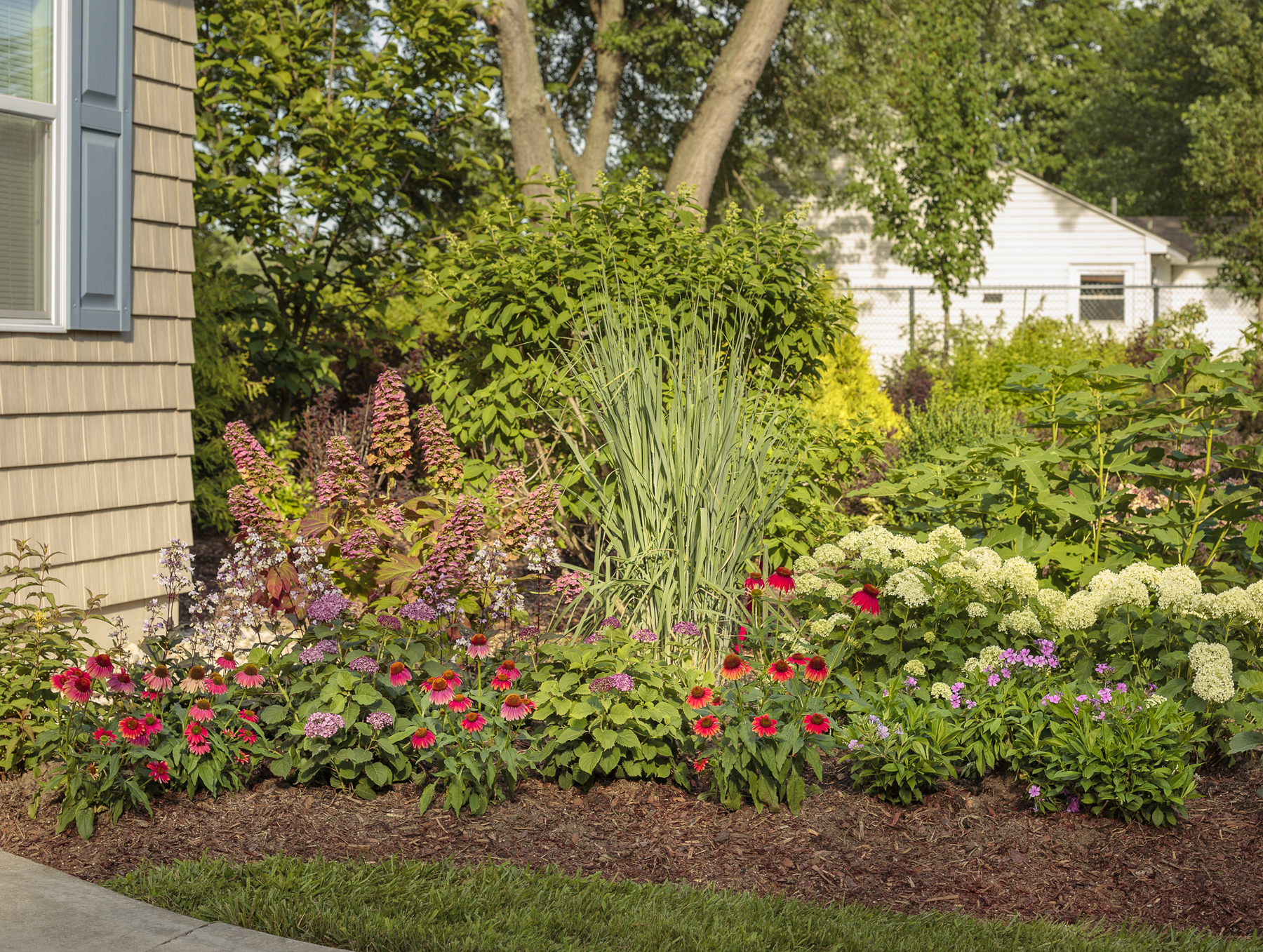
Low mounding perennials like hardy geranium, catmint, heuchera, and creeping thyme can hide the legs of grid supports. In my beds, this is often what makes staking feel truly seamless.
Stake depth and root safety
For most tall perennials, you want stakes set deep enough that they do not wobble, but not so close to the crown that you skewer the root system.
- Distance from crown: Start 3 to 6 inches out from the base for clump-formers. For single-stem plants like dahlias, stake 2 to 4 inches away.
- Depth: In average garden soil, push in at least 6 to 10 inches. For tall or top-heavy plants and windy sites, a good rule of thumb is to set the stake about one-quarter to one-third of its length into the ground. In sandy soil, go deeper. In heavy clay, you may need to pre-make a pilot hole with a metal rod.
- After pushing in: Firm soil around the stake with your hands or foot pressure so it seats well.
If you hit something solid, stop and reposition rather than forcing it. Most perennials recover from a little root disturbance, but a snapped crown can set a plant back for the whole season.
Common staking mistakes
- Mistake: Waiting until buds are open and the plant is already leaning. Do instead: Install supports early and guide growth up through them.
- Mistake: One tight tie at the top. Do instead: Add several loose ties lower down to support the whole stem.
- Mistake: Using thin wire or twist ties directly on stems. Do instead: Use soft ties and a figure-eight loop.
- Mistake: Staking in freshly fluffed soil that never gets tamped. Do instead: Firm the soil around each leg or cane after installing.
- Mistake: Forcing a plant into a rigid shape. Do instead: Support the natural silhouette and give it room to breathe.
Quick plant-by-plant tips
Peonies
Best: Grow-through ring, grid, or a sturdy hoop. Timing: When shoots are 2 to 6 inches. Extra tip: If you grow double-flowered types, choose a sturdier ring and do not undersize it.
Delphiniums
Best: Bamboo canes, 3 to 5 around the clump. Timing: At 8 to 12 inches. Extra tip: Tie low first, then again as flower spikes lengthen.
Garden phlox
Best: Grow-through grid. Timing: At 6 to 10 inches. Extra tip: Pinching stems in late spring plus a grid gives a fuller, sturdier plant.
Coneflowers and black-eyed Susans
Best: Linking stakes for wide clumps; grid for tighter clumps; hoops for plants that arch. Timing: Before they widen, around 10 to 16 inches.
Dahlias
Best: Bamboo or a sturdy stake at planting time. Timing: Immediately. Extra tip: Add ties as you go and do not wait for the first big bloom. (In cold winters, many gardeners lift and store tubers, then replant in spring.)
After wind or heavy rain
Even well-supported plants can get tossed around. When the weather clears, I do a gentle walk-through:
- Check ties: Loosen any that are cutting in, especially on fast-growing stems. During peak growth, a quick weekly check keeps ties from quietly girdling stems.
- Lift and reset: If a plant is leaning, lift stems back into the support rather than yanking them upright.
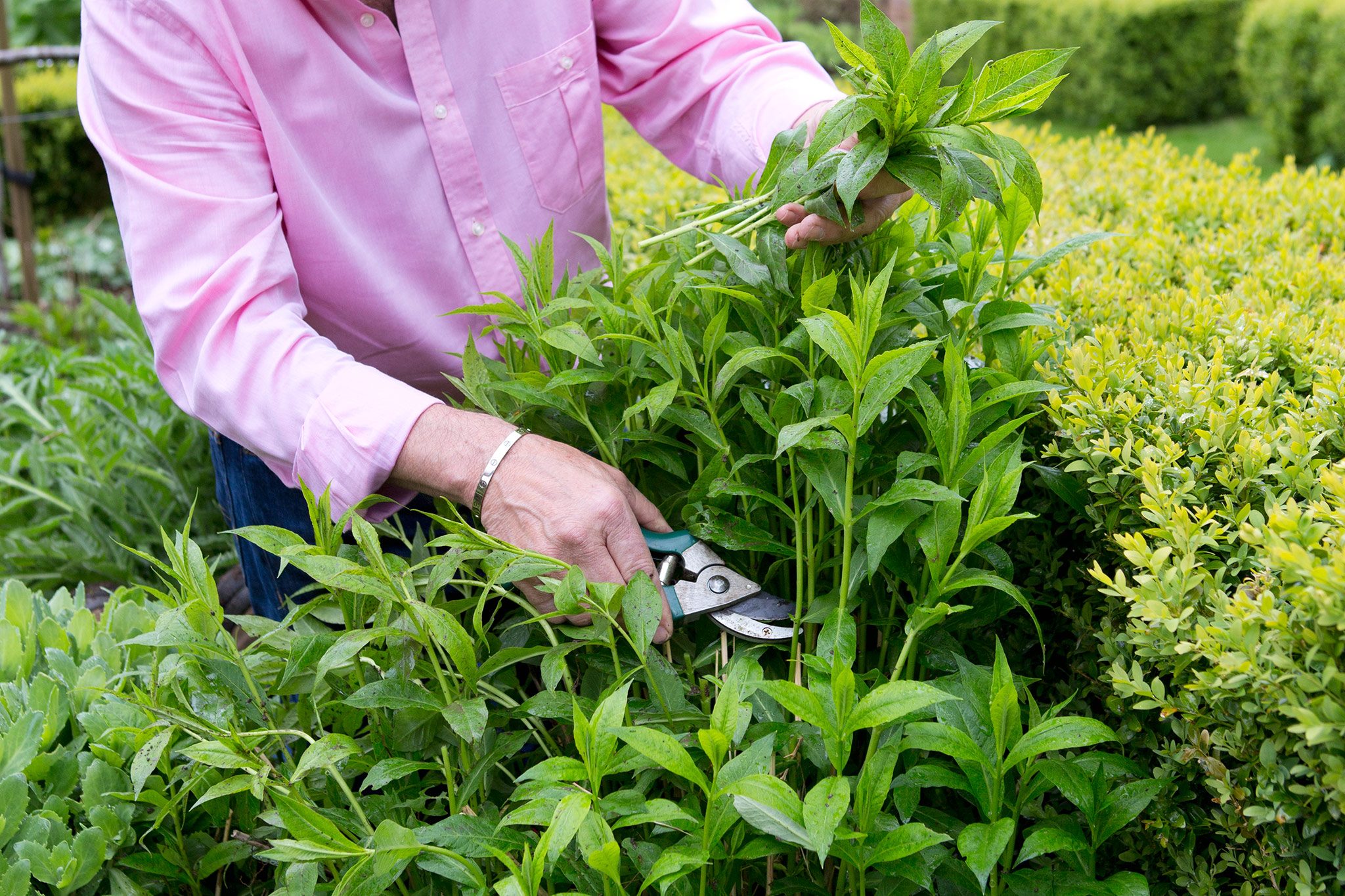
- Remove broken stems cleanly: Use sharp pruners and cut back to a healthy node. If you are moving from plant to plant and disease is a concern, a quick disinfect between cuts is a smart habit.
- Decide if you need a second tier: Linking stakes and cane frameworks can be built upward as the season progresses.
If a plant flops repeatedly even with support, that is a clue to look at light and nutrition. Too much shade or too much nitrogen can make staking feel like a never-ending job.
FAQ
Should I stake before or after mulching?
Before, whenever you can. It is easier to push legs into firm soil, and you can hide the base of supports with mulch afterward for a cleaner look.
How do I support plants without visible stakes?
Use grow-through grids early, pick green supports, and let companion plants hide the legs. The “invisible” look mostly comes from timing, not fancy gear.
Can I use tomato cages for perennials?
You can, especially for sturdy plants like tall sedum or bushy asters. If your cage tapers, try flipping it upside down so the widest ring is at the top, then stake the cage itself so it does not wobble.
What is the best tie material?
Soft, wide ties are safest: stretchy plant tape, soft twine, or fabric strips. Avoid anything that cuts in as stems swell.
A final pep talk
Staking feels fussy the first year you do it, and then it becomes one of those quiet spring rituals that pays you back all summer. The goal is not perfection. The goal is stepping outside after a storm and still seeing your flowers standing there, doing what perennials do best: coming back, blooming hard, and making your garden feel faithful.