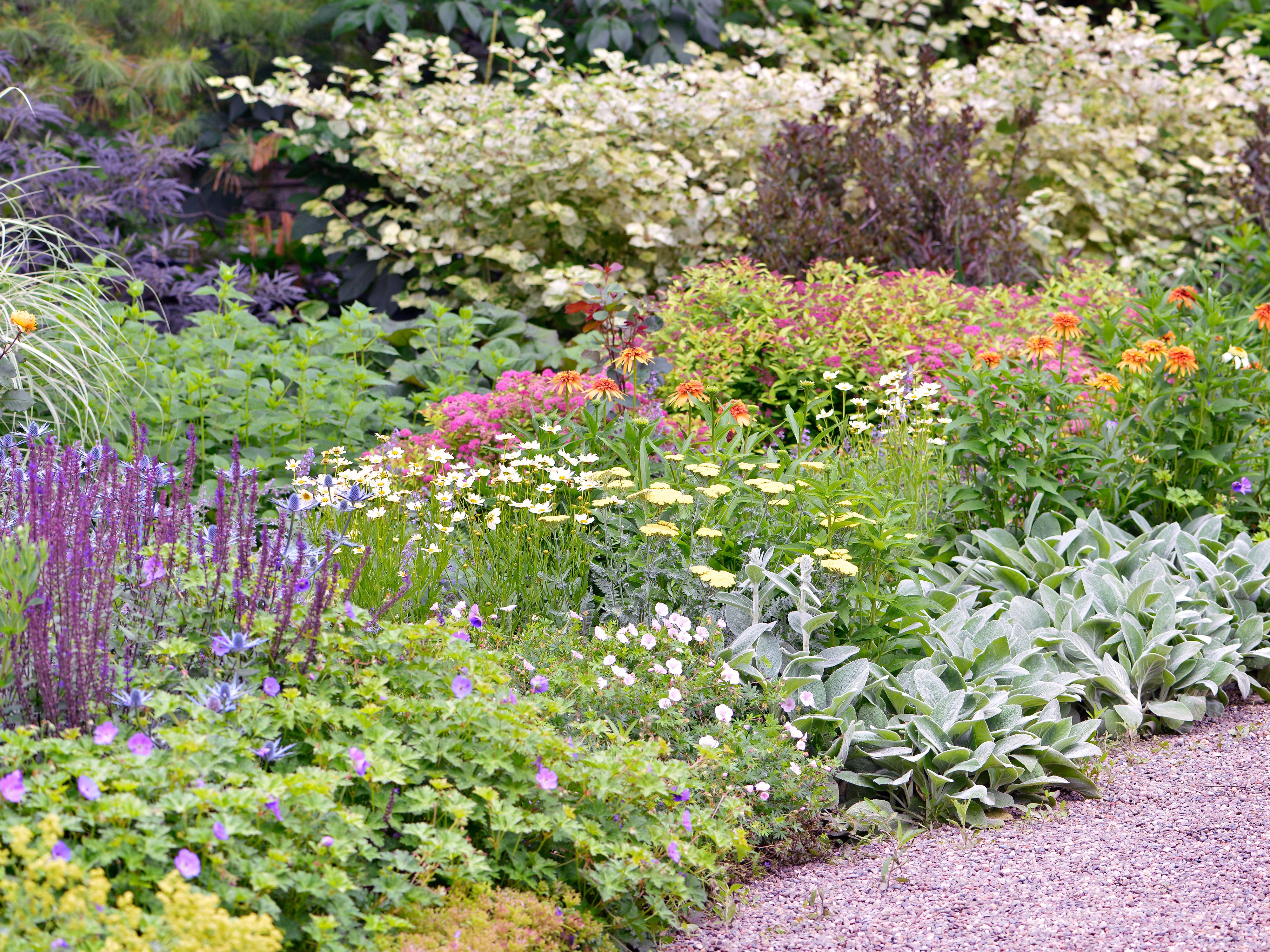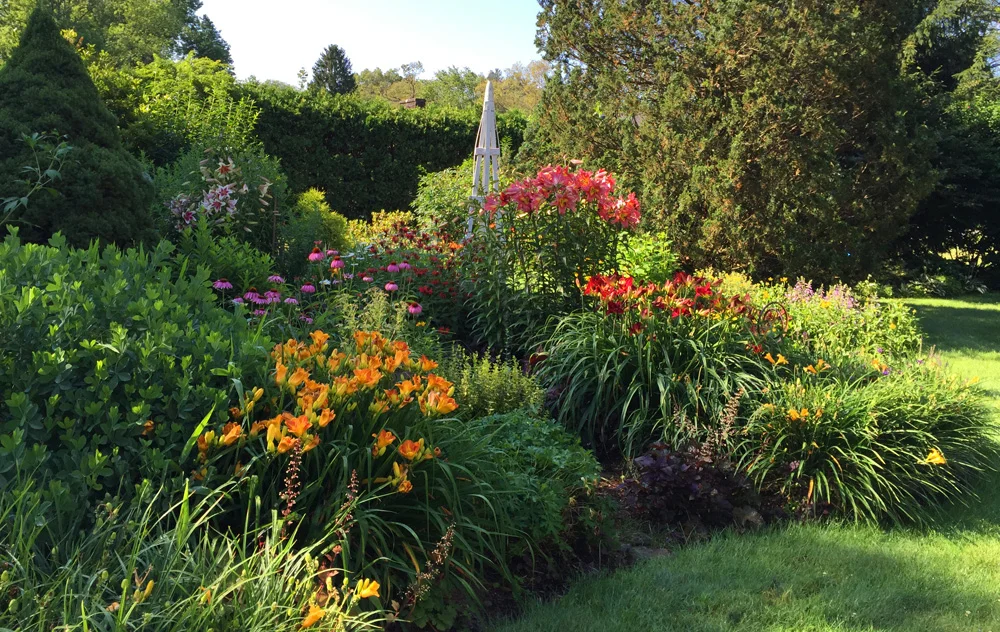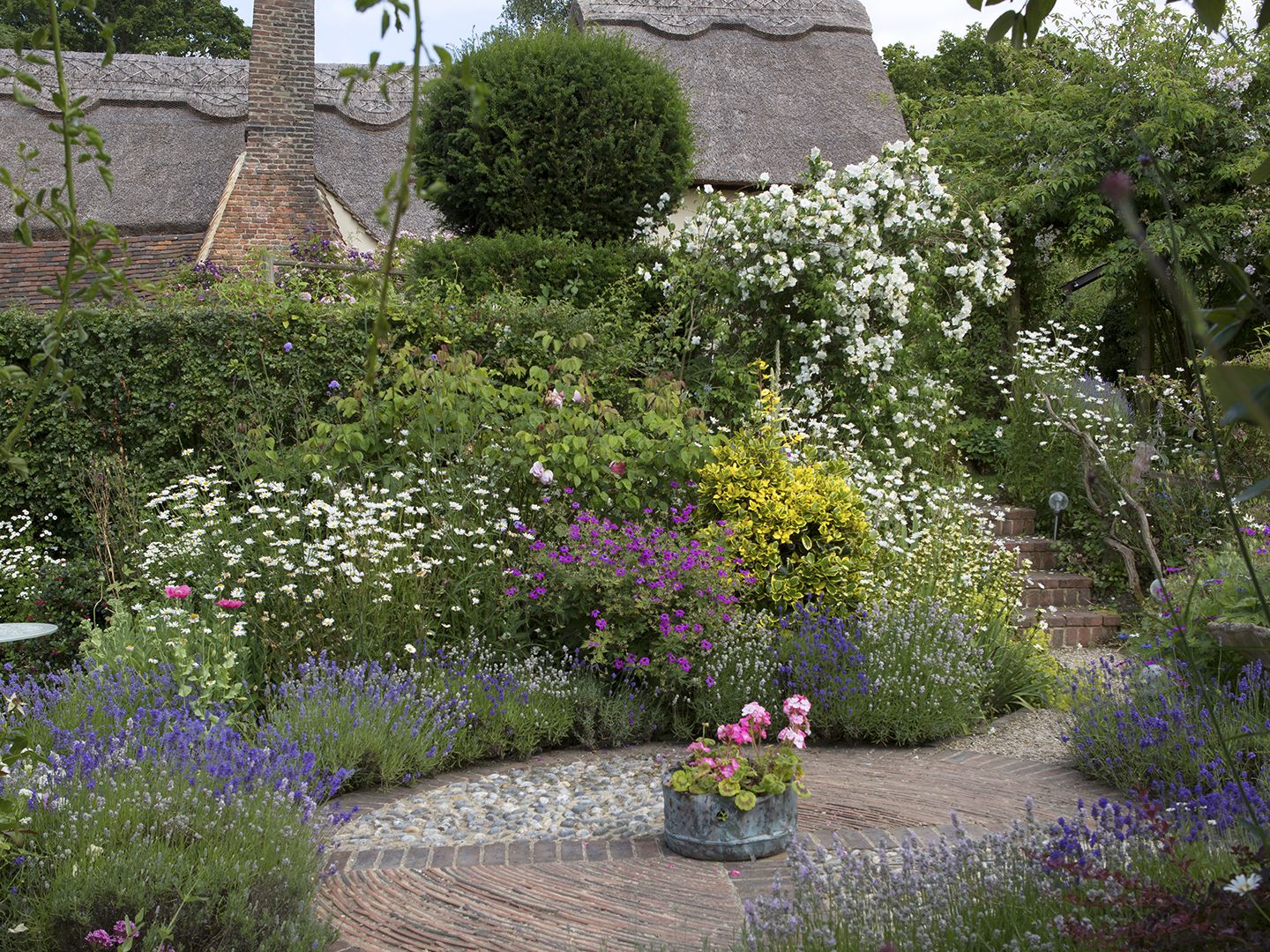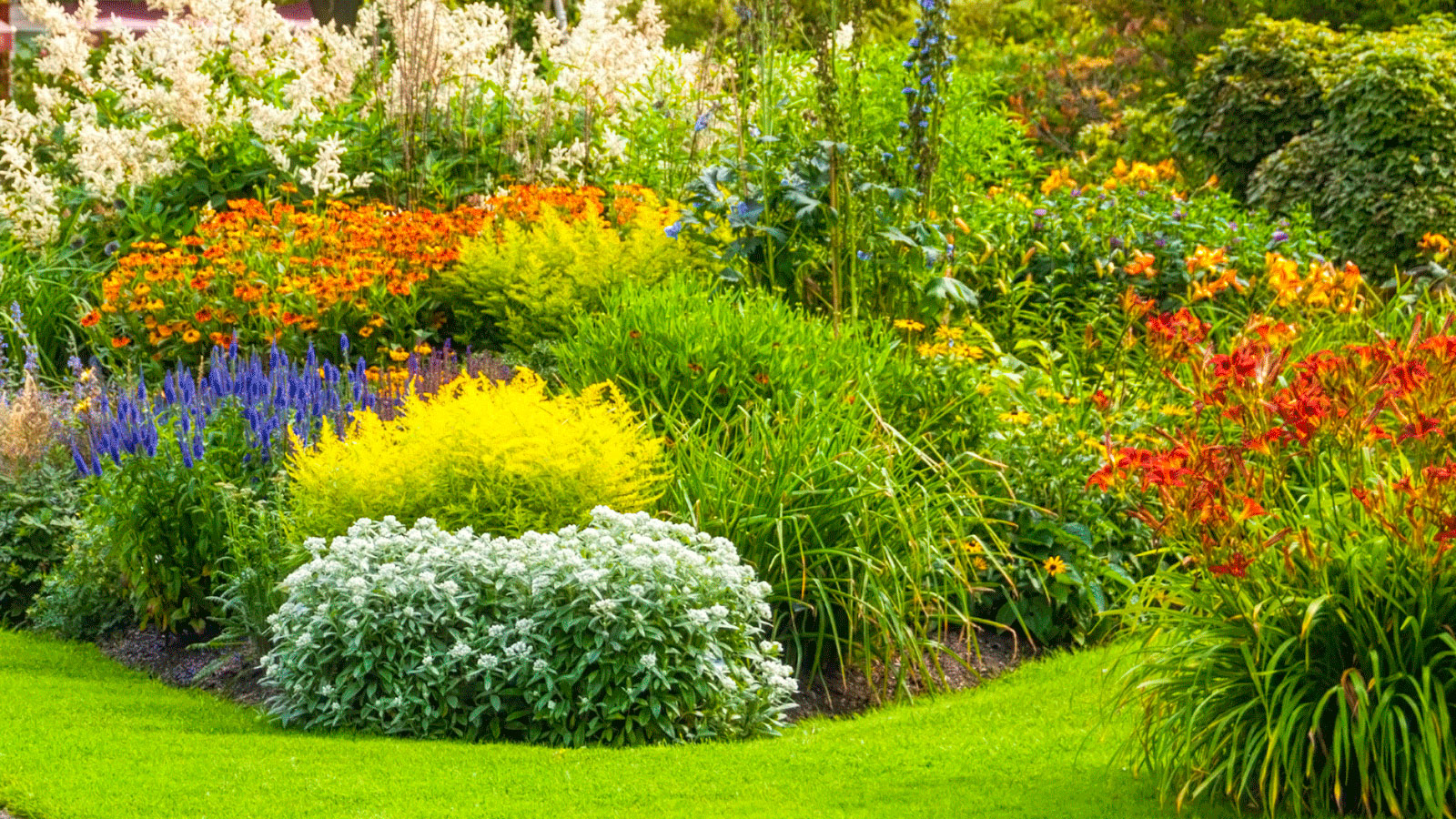

The first pollinator garden I ever planted “on purpose” looked lovely for about two weeks. Then the blooms marched off in different directions, the tall stuff flopped, and the bees seemed to prefer my neighbor’s clover. That little failure taught me something I still lean on today: pollinators do not need perfection, but they do respond to clear signals. Big patches of nectar, consistent bloom, sunny landing zones, and a layout that makes it easy for them to forage.
This is my go-to blueprint for designing a perennial pollinator garden using native and well-behaved hybrid perennials in generous drifts. You will end up with a bed that has real garden structure for you, and a steady buffet for bees, butterflies, and hummingbirds.
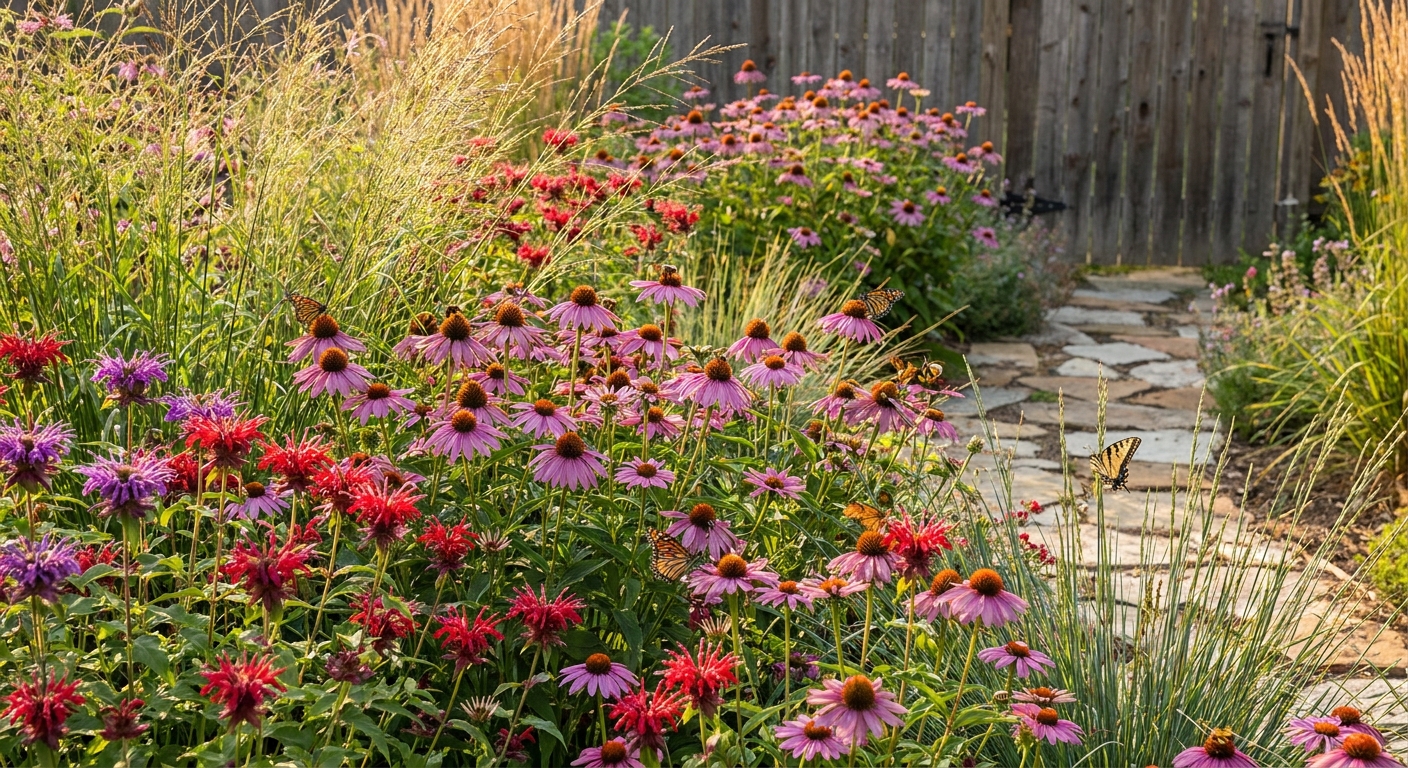
What pollinators notice
Before we get into layouts, it helps to think like a pollinator for a moment. In my experience, these are the big “yes” signals:
- Sun and warmth: Many nectar-rich perennials bloom best in full sun, and you will often see more activity there. That said, part shade can be valuable in hot climates and for woodland natives.
- Big, repeatable patches: A single plant is easy to miss. A drift reads like a billboard.
- Continuous bloom: A garden that offers something from spring through fall keeps visitors returning.
- Easy access: Open flowers for short-tongued bees, tubular flowers for hummingbirds, and flat landing pads for butterflies.
- Low pesticide exposure: Skip insecticides. Even “targeted” products can disrupt beneficial insects. Also avoid systemic products (including neonicotinoids) on nursery plants, and ask growers how plants were treated.
Your layout is what ties all of those together. A good plan makes it easier to plant in volume, stagger bloom, and keep the bed attractive even when certain plants take a break.
The drift method
A drift is simply a group of the same plant repeated in a patch large enough to be seen and used. Instead of sprinkling one of everything, you repeat a handful of strong performers.
Drift sizes
- Small beds (under 100 sq ft): drifts of 3 to 5 plants
- Medium beds (100 to 250 sq ft): drifts of 5 to 9 plants
- Large beds (250+ sq ft): drifts of 7 to 15 plants, repeated in multiple places
One note from years of trial and error: I get the best results when I repeat the same plant in more than one spot. It gives pollinators multiple foraging “stops,” and it makes the design feel intentional from every angle.
Build a simple structure
Even the most wildlife-friendly bed can look messy if it does not have a backbone. I like to build structure first, then layer in the pollinator stars.
Layer 1: Anchors
These give your garden shape, hold up visually from a distance, and provide perches and shelter.
- Switchgrass (Panicum virgatum): upright, tough, great winter interest
- Little bluestem (Schizachyrium scoparium): airy texture, copper fall color
- Joe Pye weed (Eutrochium spp.): late summer magnet for butterflies (give it room)
- Culver’s root (Veronicastrum virginicum): tall spires, surprisingly elegant and not floppy in sun
Layer 2: Mass bloomers
These are your main drifts, repeated through the bed.
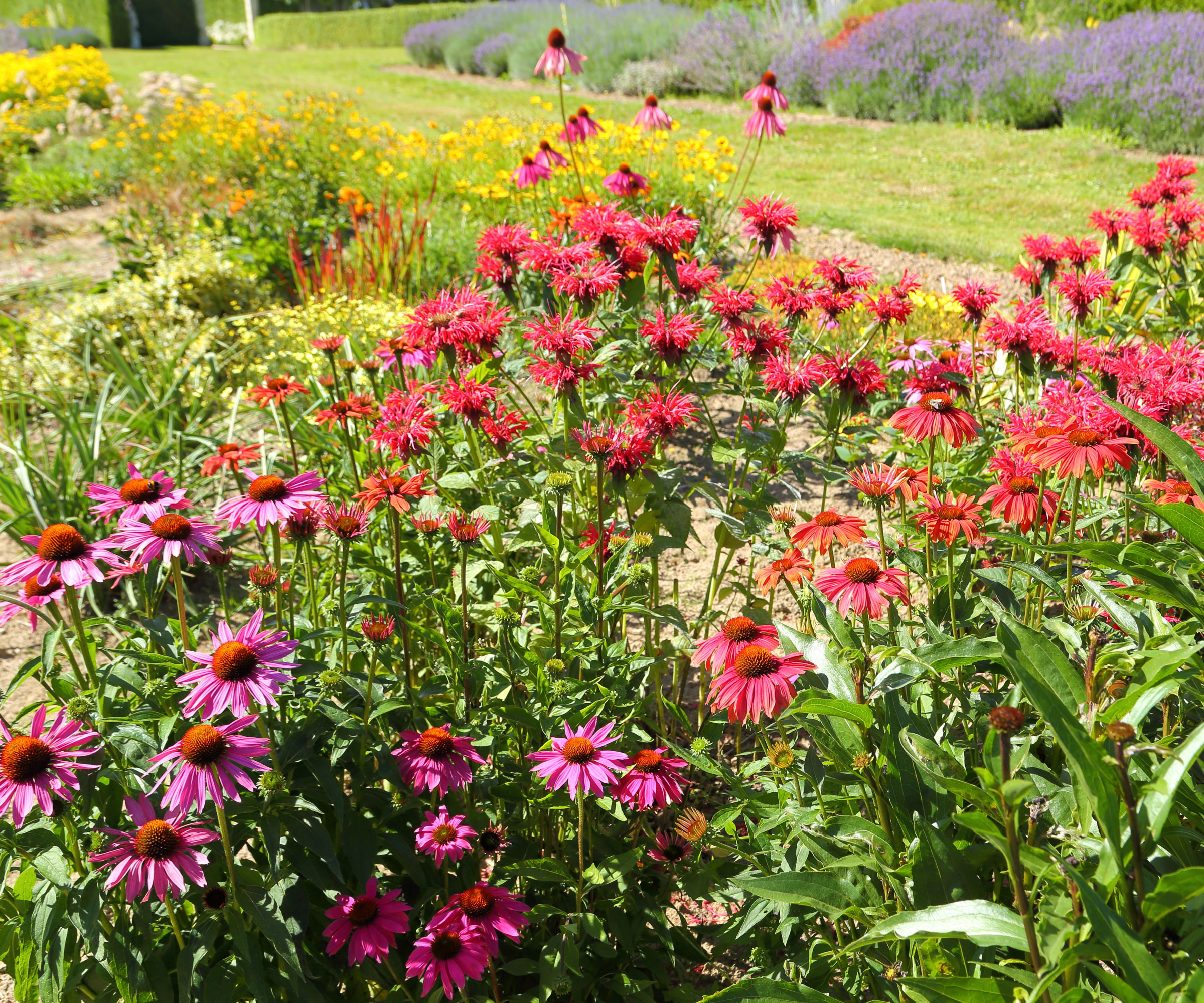
- Purple coneflower (Echinacea): bees all day, seedheads for birds
- Bee balm (Monarda): hummingbirds love it, choose mildew-resistant varieties if humidity is high (many types spread, so plan for a drift that can wander a little)
- Blazing star (Liatris spicata): vertical purple wands, butterflies line up for it
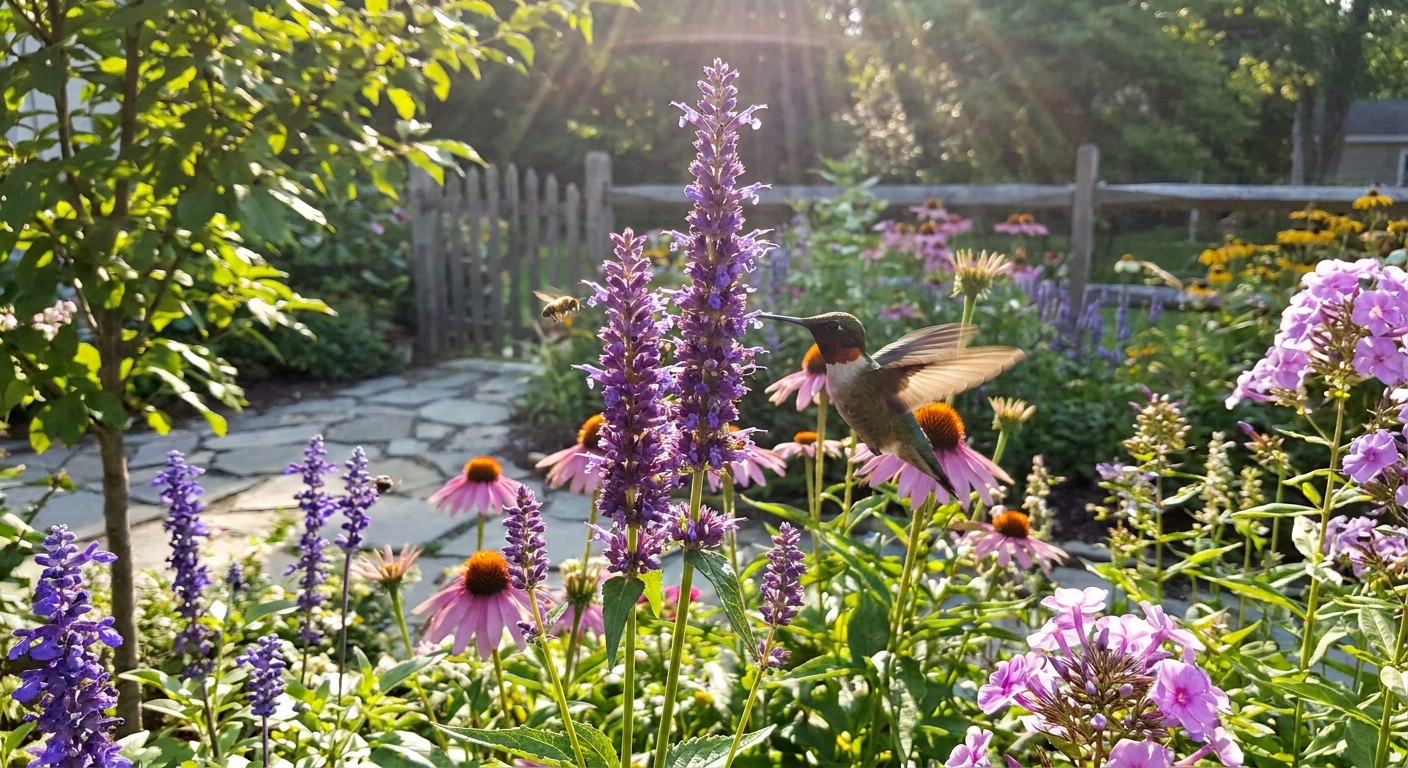
- Agastache (hyssop): long bloom, hummingbird favorite, fragrant foliage
- Black-eyed Susan (Rudbeckia): summer stamina, excellent for newer gardeners
Layer 3: Edgers and fillers
These soften the front edge, cover bare soil, and give early or late interest.
- Wild geranium (Geranium maculatum): spring bloom, good in part shade
- Coreopsis: sunny cheer and long bloom
- Heuchera (coral bells): foliage color in part shade, small flowers for tiny pollinators
- Mountain mint (Pycnanthemum): a bee party (it can spread enthusiastically, so give it a defined edge or a contained spot)
Three layouts to copy
These layouts work because they are repetition-based. You can swap plants based on your region and sun exposure, but keep the pattern.
Layout 1: Three bands
This is my favorite for a long bed along a fence or walkway. You create three meandering bands that weave through the space.
- Back band: tall anchors (grasses, Joe Pye weed, Culver’s root)
- Middle band: big bloomers (coneflower, monarda, liatris, rudbeckia)
- Front band: tidy edge plants (coreopsis, geranium, heuchera, low asters)
Planting tip: Repeat each “band plant” at least 3 times along the bed so the design looks intentional and pollinators can forage in clusters.
Layout 2: Island stations
If you are starting from scratch in the middle of a yard, make one larger island bed or a few smaller islands within sight of each other.
- Center: 1 to 3 anchor clumps (tall grass or a tall perennial)
- Ring 1: 2 to 4 big drifts of main bloomers
- Ring 2: low edge plants that keep the outline crisp
Why it works: Pollinators can work the island in a loop. You can also walk all the way around and enjoy it from every angle.
Layout 3: Burst and rest
This layout is for gardeners who want that always-something-happening feeling.
- Burst groups: plants that bloom strongly for a few weeks (iris, peonies, liatris, certain salvias)
- Rest groups: plants with long bloom windows (agastache, echinacea, coreopsis, nepeta, asters)
- Structure: grasses and sturdy foliage plants to keep the bed looking good between bursts
Design trick: Place a “rest” drift next to every “burst” drift so when one pauses, the neighboring patch carries the scene.
Bloom timing
I like to sketch my bed with three bloom waves: spring, summer, and late season. If you hit those three, you will feed pollinators through the whole active period in most climates.
Spring
- Columbine (Aquilegia): early hummingbird interest in many areas
- Penstemon: excellent for early bees and hummingbirds
- Wild geranium: dependable spring nectar
- Catmint (Nepeta): starts early and keeps going with trimming
Summer
- Bee balm (Monarda)
- Agastache (hyssop)
- Coneflower (Echinacea)
- Black-eyed Susan (Rudbeckia)
Late season
Late blooms support migration, overwintering prep, and the last big nectar push.
- Asters (Symphyotrichum): an absolute fall essential
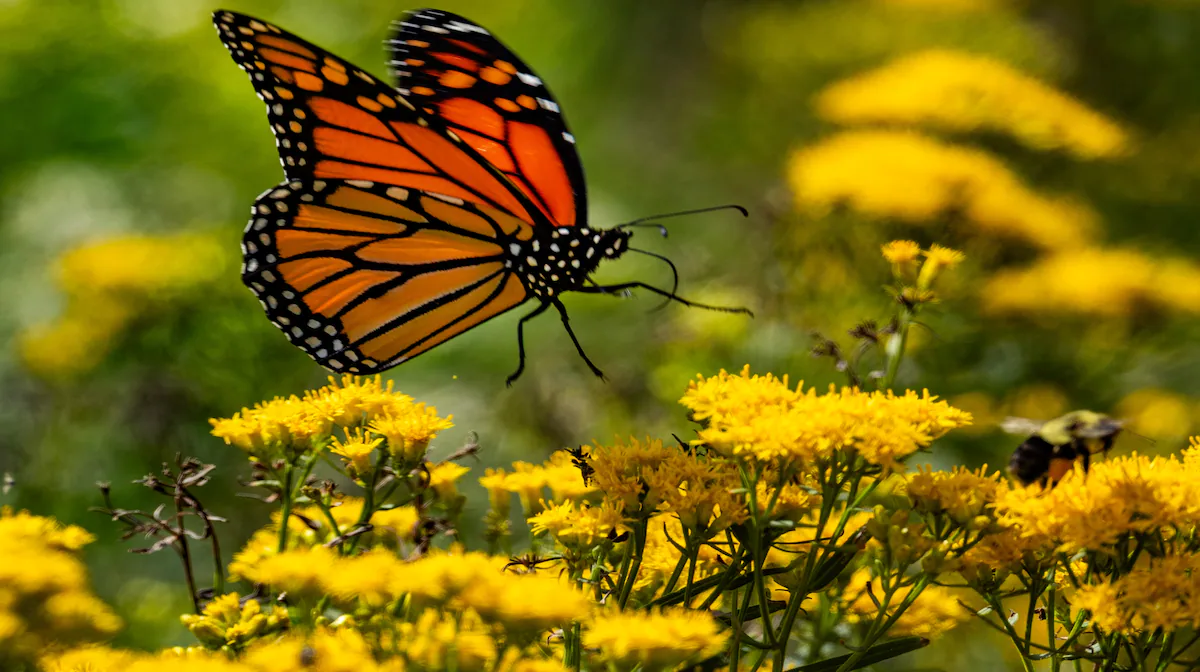
- Goldenrod (Solidago): loaded with pollinators (some spread by rhizomes, so choose compact, garden-friendly types if you prefer tidy)
- Sedum/stonecrop (Hylotelephium): late nectar and strong structure
- Joe Pye weed: often peaks late summer into early fall
Natives and hybrids
I love native plants. I also love certain hybrids that behave politely, bloom longer, and help a bed look cared for. You can use both, thoughtfully.
- Use natives as your core drifts: They are often reliable nectar sources and, in many regions, they tend to support a wider range of native insects.
- Use hybrids for long color and habit: Especially where you need a clean edge or a longer bloom window.
- Avoid heavily doubled flowers: Many “puffy” doubles are harder for insects to access.
- Prioritize open forms and (when it applies) fragrance: Many bees and butterflies cue in on scent, but hummingbirds mostly follow color and flower shape.
If you are unsure, plant one drift and watch it for a season. Your garden will tell you what is truly useful.
Microhabitats
Pollinator gardening is not only about flowers. A few small habitat choices can dramatically increase activity.
Leave some bare soil
Many native bees nest in the ground. A sunny, well-drained patch of bare soil about 1 to 2 square feet can be a gift.
Add shallow water
A simple dish with stones for landing, refreshed often, can help during hot spells.
Include host plants
Butterfly gardens are built on leaves, not just nectar. If you have room, include at least one host plant drift suited to your region. Milkweed is the famous one, but there are many others depending on which butterflies you want to support.
Keep winter structure
I leave seedheads and hollow stems standing until spring is truly underway. Birds eat seeds, and many beneficial insects overwinter in that “messy” material. If you prefer a tidier look, you can still compromise by cutting back in stages rather than clearing everything at once.
Spacing and repetition
When a pollinator bed disappoints, it is often because plants were spaced too far apart or too many varieties were used in ones and twos.
- Plant closer than you think (within reason): Follow tag spacing, but aim for faster canopy closure to shade out weeds and create fuller drifts.
- Repeat your top performers: Choose 6 to 10 main perennials for a typical bed and repeat them.
- Edge matters: A clean edge or a defined path makes a lively pollinator bed look intentional, not wild.
Plant picks by pollinator
For bees
- Echinacea (coneflower)
- Pycnanthemum (mountain mint)
- Nepeta (catmint)
- Salvia (perennial sages)
- Solidago (goldenrod)
For butterflies
- Liatris (blazing star)
- Asclepias (milkweed)
- Verbena bonariensis (tall verbena) where it is not invasive
- Symphyotrichum (asters)
- Eutrochium (Joe Pye weed)
For hummingbirds
- Monarda (bee balm)
- Agastache (hyssop)
- Penstemon
- Salvia (especially red and coral tones)
- Columbine (Aquilegia) in spring
A 15-minute sketch plan
If you want a fast start, do this on paper first:
- Draw your bed shape and mark the sunniest side.
- Place 3 to 5 anchor clumps (grasses or tall perennials) toward the back or center, depending on viewing angle.
- Choose 6 to 10 main perennials total for the whole bed.
- Assign each main perennial a drift count (example: 3 drifts of coneflower, 2 drifts of monarda, 2 drifts of liatris).
- Thread in an edge plant along the front to keep it crisp.
- Check bloom waves: at least 2 spring choices, 3 summer choices, 2 late-season choices.
Then plant in drifts, mulch lightly with about 2 inches of shredded bark or leaf mulch (keep it pulled back from crowns), water the first season, and watch. Your second season is when you refine. That is not a flaw. That is gardening.
Regional fit
One quick reality check before you buy a cart full of plants: match the plan to your place. Check your hardiness zone, summer heat, soil moisture, and what is native (or at least well-adapted and non-invasive) in your region. Bloom times also shift by climate, so your “late season” in one area might start in August, while in another it might not kick in until October.
If you can, shop local. Native plant nurseries and reputable growers in your region are far more likely to carry the ecotypes and tough, garden-worthy cultivars that actually thrive where you live.
Care and maintenance
Year 1
Expect weeding, watering, and some awkward stages. Water deeply 1 to 2 times a week during dry spells (more for sandy soils, less for heavy soils), and keep mulch in place to reduce weed pressure. Let plants focus on roots.
After it fills in
Once the bed is established, you can usually water less often, and maintenance becomes more about editing. Thin or divide overly enthusiastic spreaders, refresh the edge, and cut back in spring after you see steady warm weather and early insect activity.
Troubleshooting
“My bed looks busy and chaotic.”
Reduce variety and increase repetition. Pick your favorite 6 to 8 performers and expand those drifts.
“The back flops onto the front.”
Move tall plants farther back, add sturdy grasses as supports, and avoid over-fertilizing. Many pollinator perennials flop in rich soil.
“I have flowers, but not many pollinators.”
Check sun hours (aim for 6+ where possible), increase drift size, and make sure you have late-season bloomers like asters and goldenrod. Also consider whether nearby pesticide use might be reducing activity.
“Everything blooms at once, then nothing.”
Add two or three long-blooming “rest” plants (catmint, coreopsis, agastache) and at least two true late-season drifts (asters, goldenrod, sedum). If your spring is thin, tuck in early bloomers like penstemon, columbine, or wild geranium.
“Something always seems to be eaten.”
Some leaf loss is part of hosting wildlife. If damage is severe, focus on plant diversity and avoid making one plant the only option. A more varied bed spreads pressure out.
FAQ
How big should a pollinator drift be?
As a rule of thumb, plant at least 3 of the same perennial together in small beds, and 5 to 9 together in medium beds. In larger beds, 7 to 15 in a patch really starts to sing.
Do I have to use only native plants?
No. Natives are an excellent foundation, but you can mix in well-chosen hybrids for longer bloom, tidy habit, and reliable structure. Prioritize accessible flower shapes and avoid heavily doubled blooms.
What is the easiest perennial pollinator garden combo?
If you have full sun, try drifts of coneflower, rudbeckia, catmint, and a fall aster, with one or two clumps of an upright native grass for structure. It is simple, tough, and very active with bees.
Should I deadhead for pollinators?
I deadhead selectively. I will trim plants like catmint or coreopsis to encourage rebloom, but I often leave coneflower and rudbeckia seedheads later in the season for birds and winter interest.