
Sloped yards have a reputation for being “problem areas,” but I have come to see them as blank canvases with built-in drama. A hillside naturally creates layers, views, and microclimates. The challenge is simple: water wants to run downhill, and soil will happily follow.
The good news is that you do not need a full retaining-wall renovation to make a slope beautiful and stable. With a little planning, you can slow water down, give roots something to grip, and plant perennials that knit the whole hillside together like living fabric.
Start with a quick slope check
Before you buy plants or haul in mulch, take ten minutes to understand what your slope is doing. This saves so much frustration later.
1) How steep is it?
As a rough guide:
- Gentle slope: easy to plant and maintain with groundcovers, mulch, and smart watering.
- Moderate slope: benefits from planting pockets, small terraces, or step-like contours.
- Steep slope: needs some form of structure, even if it is simple logs, stones, or a few short retaining sections.
If you want a quick, concrete check, grab a 4-foot level and a tape measure. Hold the level out from the slope so it is truly level, then measure the vertical drop from the downhill end of the level to the ground. Divide that drop by 48 inches to get a percent grade. The exact number is less important than noticing whether your hill is a gentle tilt or something that actively pulls soil downhill.
2) Where does water move?
Watch during a heavy rain or sprinkler cycle. Look for:
- Channels where water cuts little ruts
- Spots where soil collects at the bottom
- Areas that stay dry because water sheds too quickly
Also check for concentrated flow, like downspouts, sump discharge, or a neighbor’s runoff dumping onto your slope. One hose-like stream of water will undo the best planting plan. If you can redirect that water into a drain, a rain garden, or a flatter area before it hits the hill, do it.
3) What is the soil like?
Clay slopes tend to shed water and slump when saturated. Sandy slopes drain fast and can dry out shockingly quickly. Either way, roots and organic matter are your best allies.
The big idea: slow, spread, and sink
Erosion control sounds technical, but it boils down to three gardening moves:
- Slow water with terraces, contour edging, or dense plant cover.
- Spread water so it soaks in across the slope instead of racing down one path.
- Sink water into the soil using organic matter, deep roots, and pockets that catch runoff.
Every strategy in this article supports one or more of those goals.
When to call a pro
I love a DIY garden project, but there are a few slope situations where it is smarter to bring in a landscape contractor, engineer, or local extension advice before you dig:
- Active slumping or sliding, especially after storms
- Soil movement near a foundation, driveway, or retaining wall
- Very steep banks where a fall is a real risk
- Drainage coming from outside your property that you cannot control
- Anything requiring a tall retaining wall, which may need permits and proper engineering
Small logs and stones can help on many home slopes, but they are not a substitute for engineered support where failure could damage property or hurt someone.
Terracing options
Terracing is just creating level or near-level areas that interrupt the slope. Even a few subtle “steps” can dramatically reduce runoff.
Mini-terraces with stone, brick, or landscape blocks
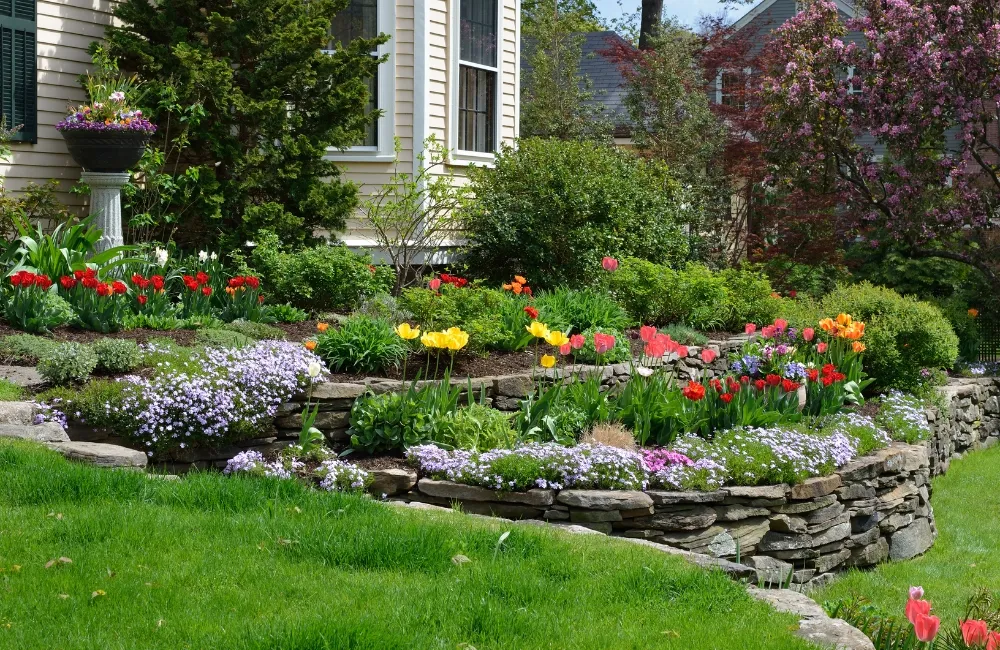
If you like a tidy look, low walls are a sturdy solution. You do not need tall retaining walls to get results. A series of short walls, each holding back a small rise, is often easier to build and looks softer once plants spill over the edges.
- Keep each terrace wide enough to plant and to stand on for weeding.
- Backfill with a soil mix that drains well but holds moisture (compost plus your native soil is a great start).
- Leave planting gaps between stones where small creepers can root.
Natural terraces with logs or boulders
For cottage-garden charm, use what looks like it belongs outdoors already. Rot-resistant logs, chunky stones, or boulders can create informal ledges that catch soil and leaf litter over time.
- Stake logs securely so they do not shift.
- Angle boulders slightly back into the slope for stability.
- Plant trailing perennials at the edges to soften hard lines.
Contour berms
If you are not ready for “terraces,” try contour berms. These are low mounds built across the slope along the contour line, not up and down the hill. They act like speed bumps for water.
- Build berms with soil and compost, then top with mulch.
- Plant them densely with creeping perennials and clump-formers.
- Repeat every several feet on moderate slopes for a staircase effect.
Planting pockets: my favorite slope trick
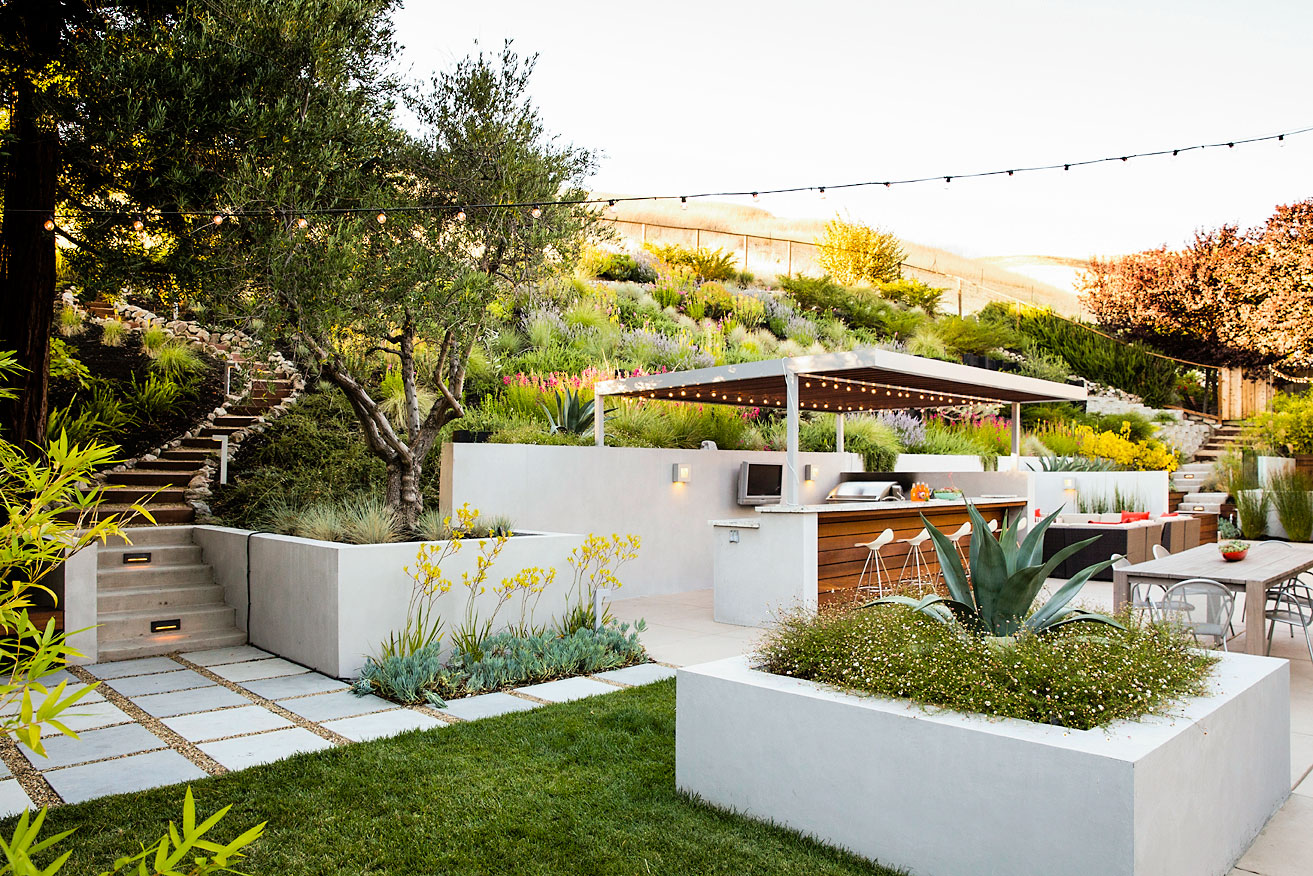
When I moved to a house with a stubborn hillside, “pocket planting” was what finally made the space feel manageable. Instead of trying to improve the entire slope at once, you create stable, amended pockets where plants can get established, then let them expand.
How to build a planting pocket
- Cut a small shelf into the slope so the planting area is close to level. This is key. A tilted planting hole sheds water.
- Rough up the surrounding soil so roots can travel outward.
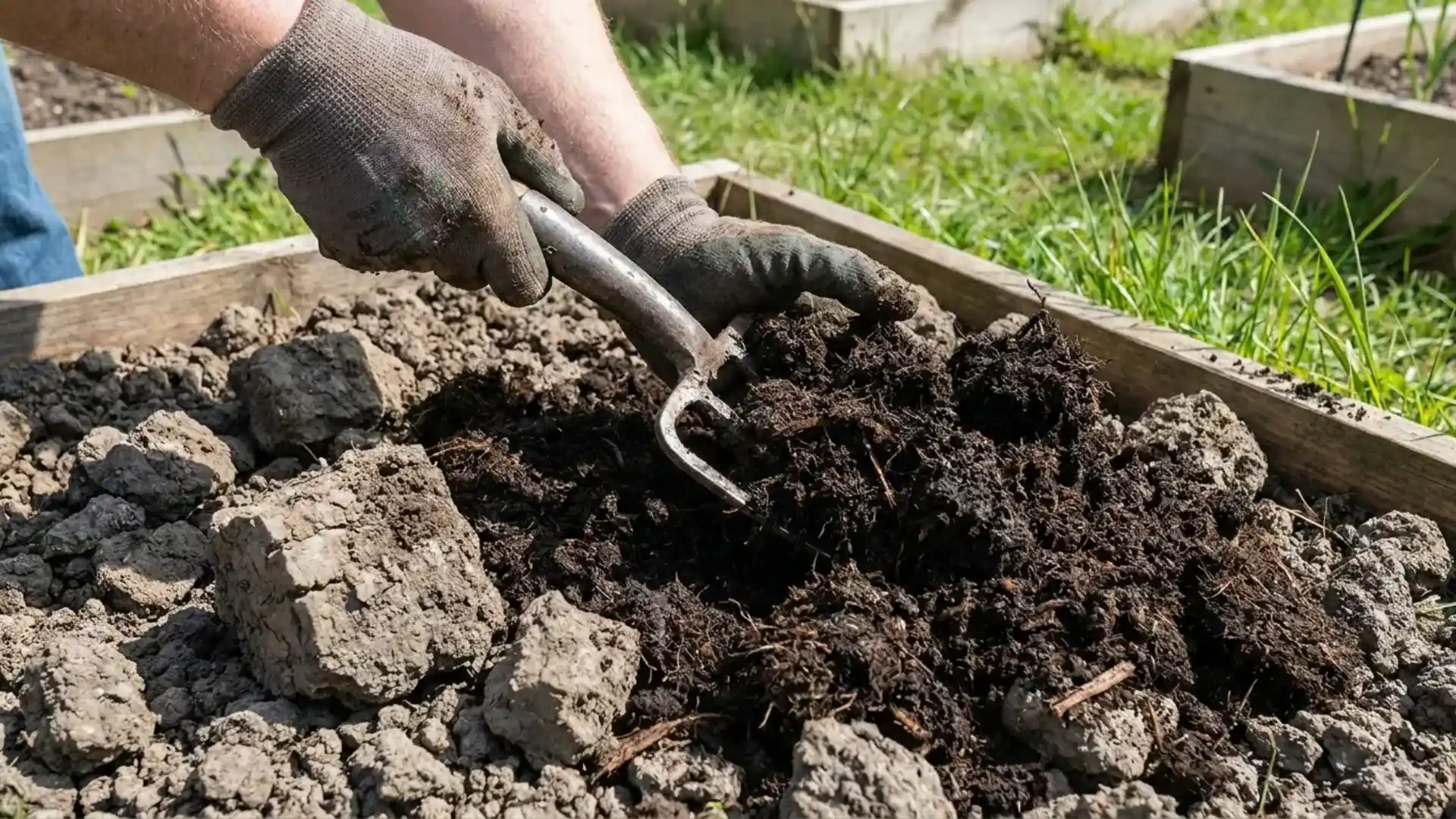
- Mix in compost and a little aged bark or leaf mold to improve both drainage and moisture-holding.
- Create a small lip on the downhill side of the pocket, like a shallow crescent, to catch runoff.
- Mulch well and water deeply to settle the soil.
Pockets are also a wonderful way to “dot” a hillside with repeating plants, which reads as intentional design rather than a patchwork of random survivors.
Quick stabilization after digging
Any time you cut shelves, build berms, or disturb soil on a slope, think like a rainstorm. Your goal is to cover and hold things in place until roots take over.
- Do not leave bare soil overnight if a storm is coming. Even a light mulch or a thin layer of straw can prevent a messy slide.
- Use biodegradable hold-downs on larger disturbed areas: jute netting or coir blankets pinned snug to the soil work well and can be planted through.
- Break up flow with small stone “speed bumps” or short wattles set across the slope, especially where you see rills forming.
Soil-holding perennials for slopes
For erosion control, you are looking for perennials that do at least one of these things well:
- Spread to cover bare soil
- Root along stems to “pin” soil in place
- Form dense crowns that break rainfall impact
- Send down strong root systems that hold on through storms
Below are reliable slope performers. Always double-check suitability for your growing zone and sun exposure. And because several popular groundcovers are considered invasive or regulated in some regions, it is worth a quick check of your local invasive plant list before you commit.
Sunny slopes (6+ hours)
- Creeping thyme (Thymus serpyllum): Low, fragrant, drought-tough once established. Great for edges and between stones.
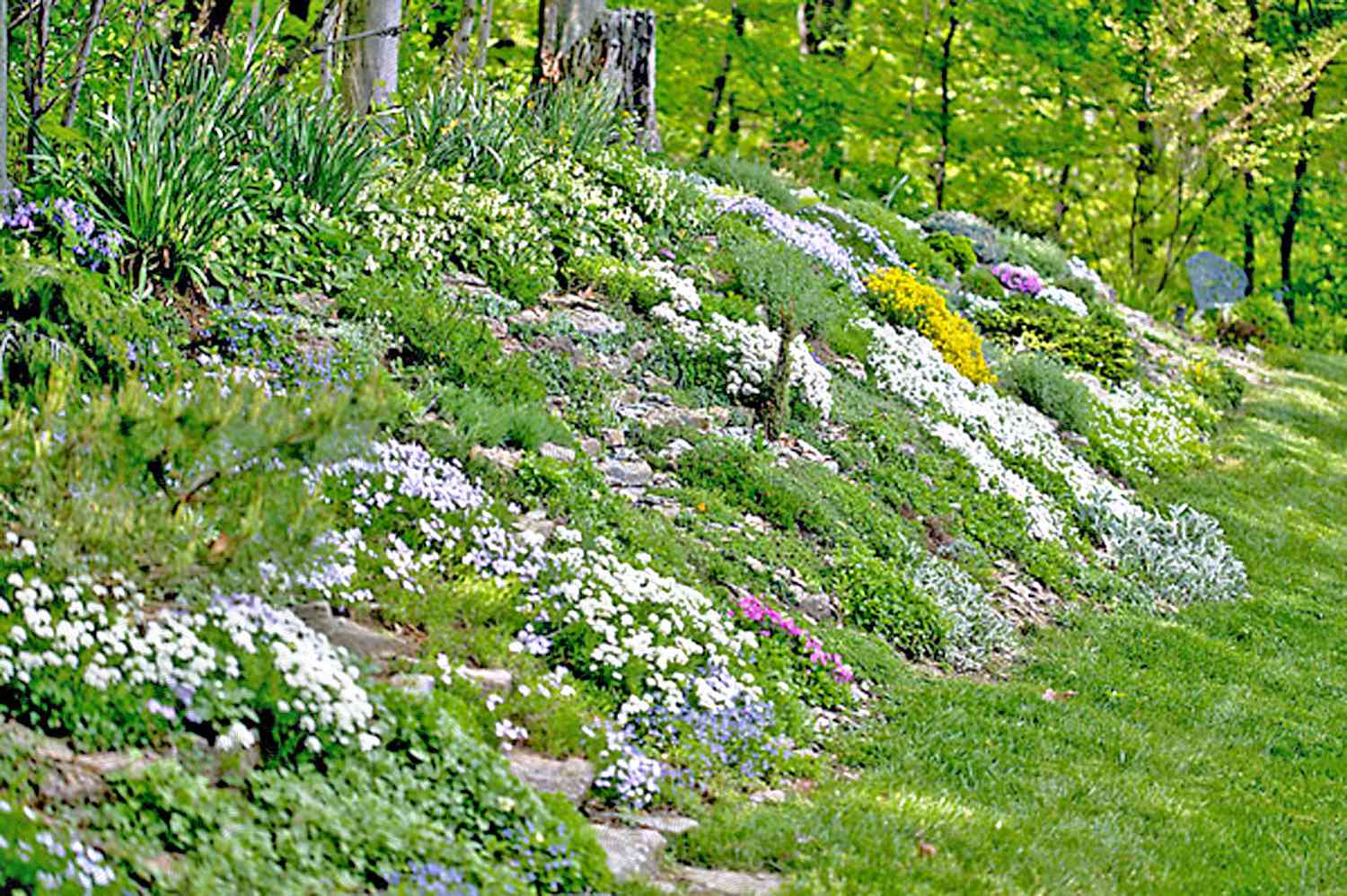
- Creeping phlox (Phlox subulata): Spring color that cascades beautifully. Excellent for terrace edges.
- Stonecrop sedum (Sedum spurium and other creeping sedums): Succulent foliage, shallow but gripping roots, handles heat and thin soils.
- Ice plant (Delosperma): Bright summer flowers and water-wise growth for hot, well-drained slopes.
- Catmint (Nepeta): Not a creeper, but a hardworking mound that covers ground quickly and supports pollinators.
Part sun slopes (3 to 6 hours)
- Hardy geranium (Geranium macrorrhizum): One of my go-to “knitters.” Aromatic foliage, tough roots, and it fills in beautifully.
- Bugleweed (Ajuga reptans): Spreads fast and roots as it goes. Use thoughtfully, and check local invasive guidance before planting near natural areas.
- Epimedium (barrenwort): A patient spreader with wiry roots, lovely spring flowers, and excellent drought tolerance once settled.
- Heuchera (coral bells): Great for pockets and terrace faces where you want year-round foliage color. Pair with a spreading groundcover to reduce bare soil around crowns, and avoid heavy, wet spots where crowns can struggle.
Shade slopes (less than 3 hours)
- Creeping Jenny (Lysimachia nummularia): Bright chartreuse in shade and moist soil. It can run, so it is best where you can contain it and where it is not listed as invasive.
- Sweet woodruff (Galium odoratum): A gentle spreader with spring blooms, wonderful under shrubs and trees.
- Pachysandra (Pachysandra terminalis): Classic evergreen coverage for shade, especially where you need a dense mat. In some regions it can spread beyond beds, so check local guidance.
- Vinca minor (periwinkle): Tough evergreen coverage with spring flowers. In many areas it is considered invasive, so use only where it is allowed and fully contained, or choose a better-behaved alternative.
- Ferns (many types): Not creeping, but their fibrous root masses can stabilize shade slopes when planted in groups.
If your shade slope is dry because of tree roots, prioritize plants known for dry shade tolerance (epimedium, some geraniums, and many ferns once established). When in doubt, this is also where locally native woodland plants can really shine.
Design it so it looks intentional
Stability is the foundation, but style is what makes you love looking at it from the window. Here are the layout moves that make a sloped perennial garden feel finished.
Work in horizontal bands
Planting across the slope, not up and down, naturally echoes the way terraces and contour berms function. Use repeating ribbons of one groundcover with drifts of taller perennials behind it.
Repeat a few anchor plants
Pick two or three workhorse perennials and repeat them every few feet. On slopes, repetition reads as calm and cohesive, especially from a distance.
- One spreading groundcover (your erosion-control base)
- One medium clumper (season-long structure)
- One taller accent (vertical punctuation)
Let plants spill over edges
Edges are where a hillside garden becomes charming. Use cascading plants at the lip of terraces or pocket lips:
- Creeping phlox
- Thyme
- Creeping sedum
- Safer spillers to consider: candytuft (Iberis sempervirens) or creeping speedwell (Veronica, where well-behaved locally)
Plan for access
The fastest way to abandon a slope is making it hard to reach. Include at least one of these:
- Stepping stones set into the slope for stable footing
- Simple steps (stone, timber, or gravel) that zigzag up
- A narrow mulched path that cuts across the hill
If you can reach it comfortably, you will weed it, water it, and enjoy it. That is the whole game.
Planting and establishment
A hillside garden is won or lost in the first season, when roots are still getting their grip.
Plant at the right time
Early fall is my favorite for many perennials because the soil is still warm, rain often increases, and plants can root without battling summer heat. Spring is also great, especially if you can water consistently.
Watering on a slope
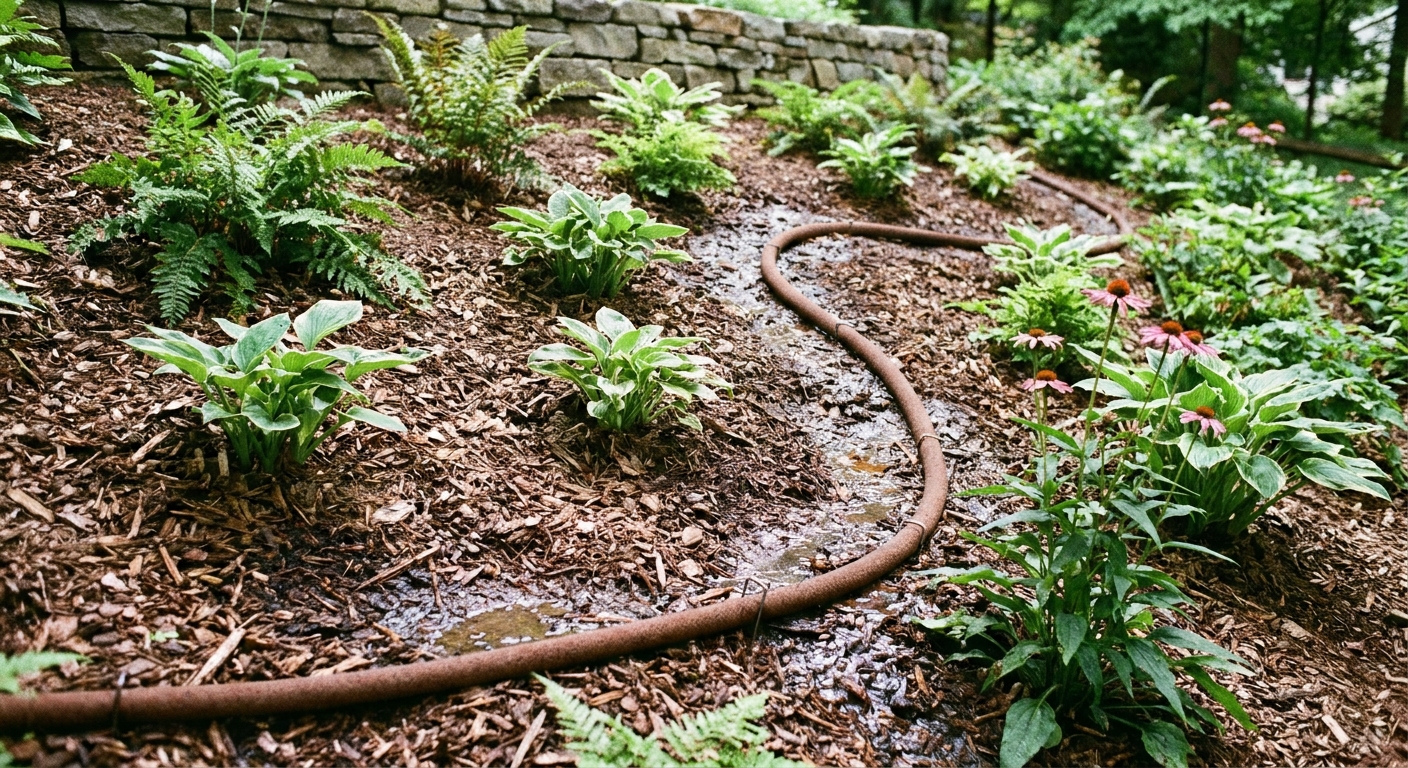
- Water slowly so it soaks in. A soaker hose pinned along contour lines is ideal.
- Water deeply, less often to encourage roots to grow down, not stay near the surface.
- Check pockets after watering. If water is running around them instead of into them, build up the small downhill lip.
Mulch, but do it like you mean it
Mulch on a hillside can slide if it is applied too thickly or during heavy rain. Aim for about 2 to 3 inches in most beds, and go a little thinner on steeper spots. Choose mulch that interlocks a bit (shredded bark often stays put better than big chunky nuggets).
- Apply mulch after planting and watering.
- Keep mulch slightly back from crowns to prevent rot.
- Top up as plants fill in, not all at once.
Erosion-control fabric
I am cautious with landscape fabric on slopes. It can be useful temporarily while plants establish, but it also makes future planting and soil improvement harder.
- Better temporary option: biodegradable jute netting or coir blankets pinned down, then planted through.
- If you use fabric: choose a permeable product, pin it well, and plan for how you will expand plantings later.
Smart plant pairings
These combinations balance soil-holding groundcovers with perennials that give height and seasonal color.
Sunny slope pairing
- Base: creeping thyme or creeping sedum
- Mid-layer: catmint, yarrow (Achillea), coreopsis
- Accents: salvia, echinacea, ornamental grasses (clumping types)
Part sun pairing
- Base: hardy geranium
- Mid-layer: heuchera, nepeta, penstemon (where suited)
- Accents: daylilies, baptisia (for deeper roots), tall sedges
Shade pairing
- Base: sweet woodruff or pachysandra (where non-invasive locally)
- Mid-layer: epimedium, heuchera, brunnera
- Accents: ferns, astilbe (if moisture is reliable), hosta (if slugs and deer are not a constant battle)
Common hillside mistakes
Bare soil between plants
Fix: Plant closer than you would on flat ground, and use a spreading groundcover as the default filler. On slopes, bare soil is an open invitation to erosion.
Planting straight up and down the hill
Fix: Reorient beds so the main lines run across the slope. Even a slight curve across the hill interrupts water flow.
Relying on mulch alone
Fix: Mulch is helpful, but roots are what truly stabilize soil. Think of mulch as a temporary blanket until plants knit together.
Choosing fast spreaders without a plan
Fix: Some groundcovers can be overly enthusiastic, or considered invasive in certain regions. Use vigorous spreaders where you can contain them, and check local invasive plant lists before planting near natural areas.
Maintenance that stays manageable
A slope can be easier than a flat bed once it fills in, but the first couple of seasons matter.
- Weed little and often: pulling tiny weeds is safer and faster than wrestling mature ones on a hill.
- Edge-check after storms: if mulch or soil is slipping, rebuild small catch-lips around pockets and add a few stones as anchors.
- Shear or trim groundcovers after flowering when appropriate (creeping phlox and thyme appreciate a tidy-up).
- Fill gaps each spring or fall: a few plug plants placed strategically will prevent a bare patch from turning into a runoff channel.
FAQ
What is the best perennial groundcover for erosion control?
The “best” depends on sun and soil, but my most reliable slope knitters are hardy geranium for part sun, creeping thyme or creeping sedum for sun, and sweet woodruff for shade. If you are considering pachysandra, vinca, or creeping Jenny, check local invasive guidance first and choose contained spots.
Can I stabilize a slope without a retaining wall?
Often, yes. Many slopes do beautifully with contour planting, pockets, dense groundcovers, and a few strategic mini-terraces or logs. If the slope is steep enough that soil slumps or slides in sheets, or if it is close to a foundation or wall, you may need professional support in at least the worst sections.
How do I keep mulch from washing downhill?
Use shredded bark, apply a moderate layer (often 2 to 3 inches), and build small catch-lips across the slope to stop it from migrating. Plant more densely, too. As plants fill in, mulch becomes far less critical and far less mobile.
When should I plant on a hillside?
Early fall is ideal in many climates because roots establish while temperatures cool and rainfall often increases. Spring is also excellent if you can water consistently through the first hot spell.
A hillside can be your best border
I know slopes can feel intimidating, especially if you have watched soil and mulch slide after every hard rain. But once you start thinking in pockets, bands, and plant “carpets,” everything gets easier. Start small, stabilize one section well, and let the plants do what perennials do best: return, spread, and improve the garden year after year.