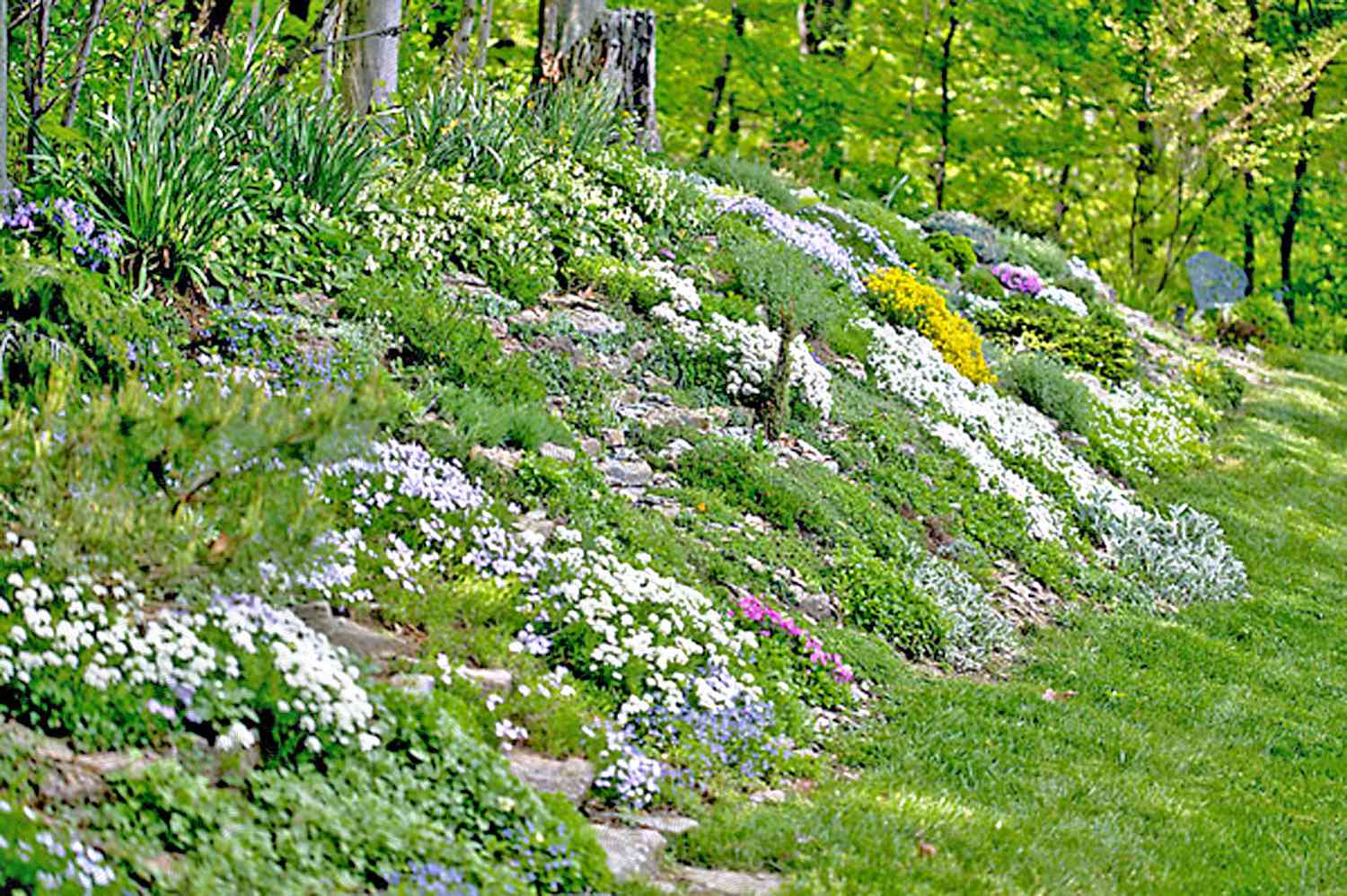

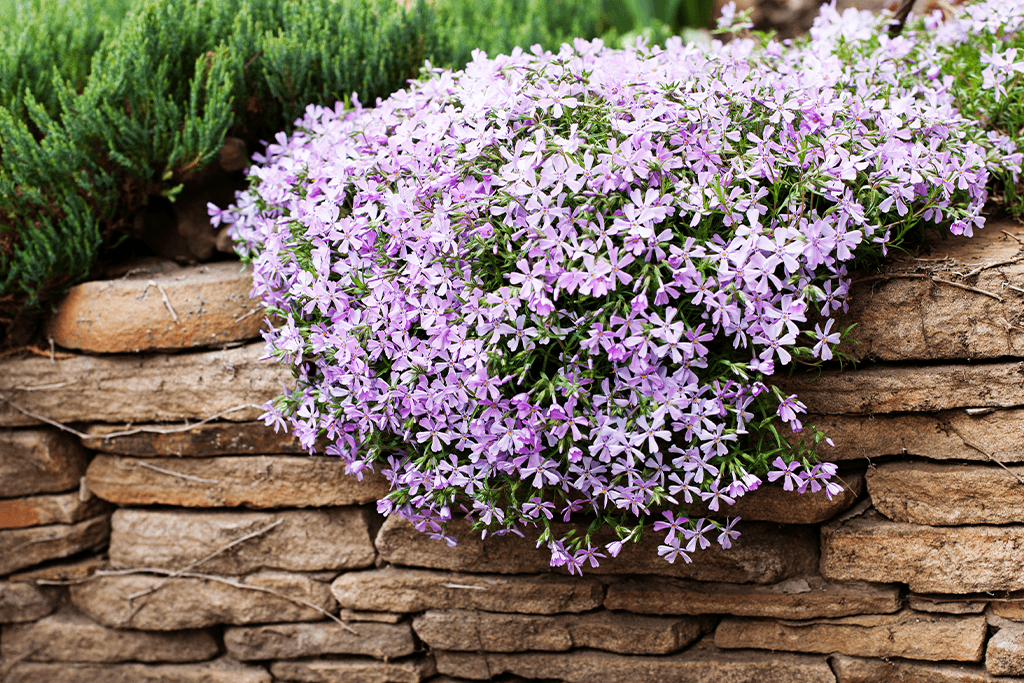
Creeping phlox is one of those plants that makes you feel like you did something big in the garden, even if all you really did was give it sun and a decent start. In early spring, it turns into a quilt of color that spills over rocks, softens hard edges, and lights up slopes where mowing is a headache. If you have a sunny bank, a retaining wall, or that awkward strip along a walkway, creeping phlox is an old-fashioned favorite for a reason.
This profile focuses on what actually works in real yards: how to plant it so it fills in, how to prune without stressing it, and how to keep that colorful mat dense enough to crowd out weeds.
Quick plant facts
- Common name: Creeping phlox, moss phlox
- Botanical name: Phlox subulata
- Type: Evergreen or semi-evergreen perennial groundcover (depending on winter)
- Height: 4 to 6 inches in bloom, foliage stays low
- Spread: 18 to 24 inches (often more over time)
- Bloom time: Early to mid-spring
- Light: Full sun is best, light shade is okay but bloom can thin
- Soil: Well-drained, average to lean soil
- Water: Regular while establishing, then drought-tolerant
- Hardiness: Commonly grown in USDA Zones 3 to 8 (sometimes 9 with excellent drainage and lower humidity)
Why it works on slopes
I learned to love creeping phlox the same way I learned to love a good apron pocket: it makes the messy parts of gardening easier. On a slope, it can help stabilize the soil surface, shade the ground so weeds struggle, and give you a reliable spring show without fussing over annuals. It will not stop a serious washout on its own, but for everyday banks and edges, it earns its keep. Along borders, it does the best kind of softening: it blurs the line between bed and hardscape so everything looks more settled and intentional.
Best uses
- Sunny slopes and banks where you want roots in the soil and color up top
- Retaining walls and rock gardens for that cascading, cottage-garden look
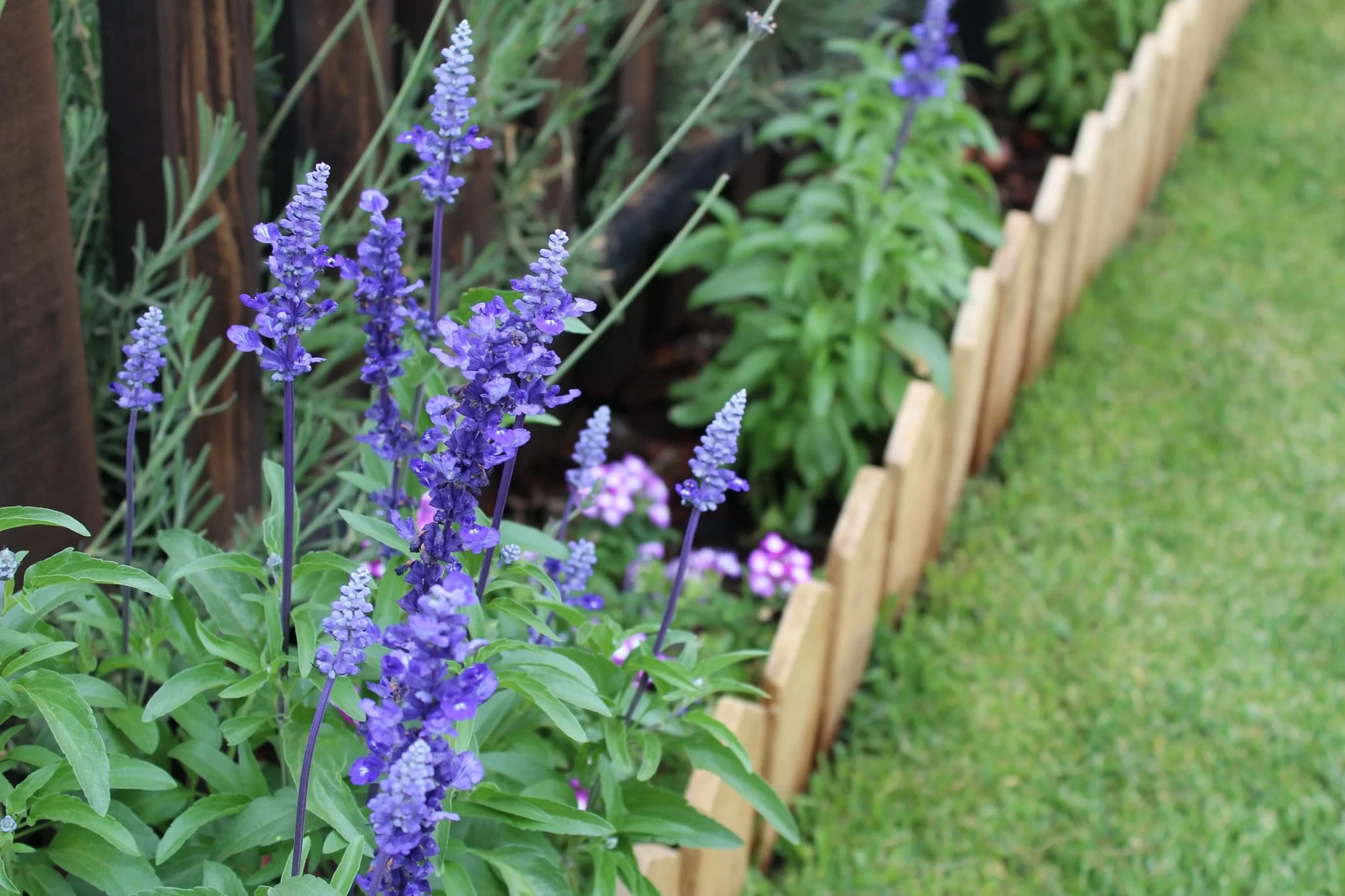
- Path edges to create a tidy living border
- Front-of-bed filler in perennial borders, especially with taller late-season plants behind it
Picking the right spot
If you remember nothing else, remember this: creeping phlox wants bright sun and sharp drainage. Give it those two things and it will reward you for years.
Light
Full sun (6+ hours) gives the thickest mats and the most flowers. In hot-summer areas, a touch of afternoon shade can prevent stress, but too much shade leads to leggy growth and thin bloom.
Soil and drainage
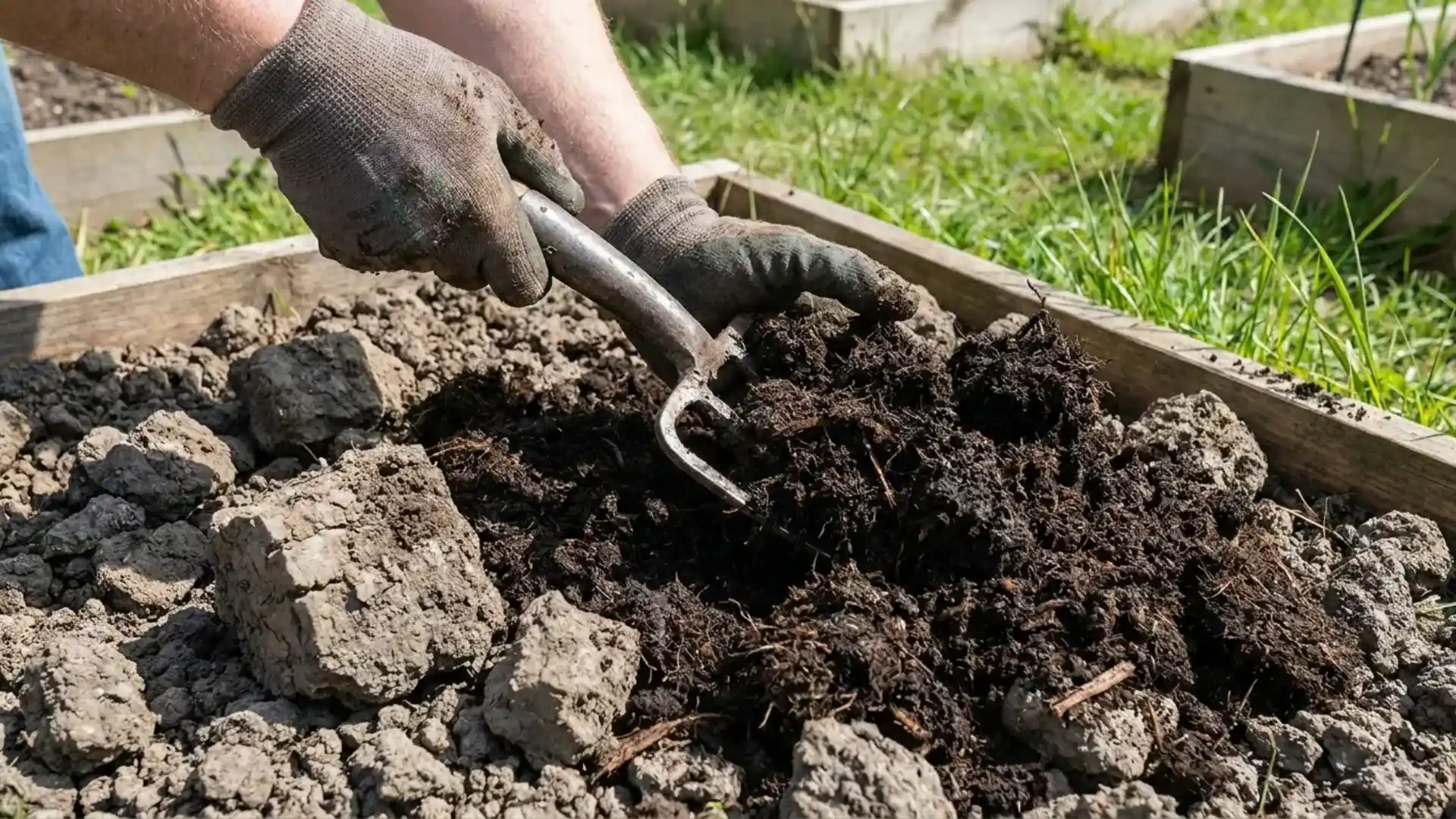
Well-drained soil matters more than rich soil. On heavy clay, creeping phlox can struggle in winter and during wet springs. If your soil stays soggy, improve drainage before planting by:
- Planting on a slight berm or the upper part of a slope
- Building a well-drained pocket using a gravelly planting mix, or amending broadly with compost and fine gravel for structure
- Avoiding small, token additions of sand to heavy clay, which can make the texture tighter
- Keeping mulch light and pulled back from the crown
Spacing and airflow
For a fast fill, space plants about 12 to 18 inches apart. For fewer plants and a slower knit, 18 to 24 inches apart works fine. Good airflow helps reduce mildew in humid climates.
How to plant for fill
The goal is simple: get roots out into the surrounding soil quickly. That is what turns a cute little pot into a mat that behaves like a groundcover.
Best planting times
- Spring: Great for colder zones. Plant after the worst freeze-thaw cycles have eased.
- Early fall: My favorite in many gardens. Warm soil helps roots grow, and the plant settles in before winter.
Planting steps
- Weed thoroughly first. Creeping phlox knits best when it is not competing with aggressive weeds during year one.
- Dig a wide hole. Wider than deep encourages spreading roots.
- Set the crown level. Plant at the same depth it was in the pot. Too deep invites rot.
- Backfill and firm gently. No stomping, just a snug fit so there are no air pockets.
- Water deeply. Then water again a few days later if the soil dries quickly.
- Mulch lightly. A thin layer of fine mulch or gravel is plenty. Keep it off the stems.
On slopes: a small trick
On a bank, I like to form a little soil donut on the downhill side of each plant so water soaks in instead of running right past the root ball. After a few weeks, the plant takes over and you will stop needing to baby it.

Watering and feeding
Watering
Year one: Water when the top inch of soil is dry, especially during hot spells. Deep, infrequent watering is better than daily sprinkles.
After establishment: Creeping phlox is fairly drought-tolerant. On slopes and in sandy soil, it will still appreciate a long drink during extended dry weather.
Fertilizer
This is not a heavy feeder. Too much nitrogen can make it lush and floppy with fewer flowers. If growth seems weak, use one of these gentle options:
- A light top-dressing of compost in early spring
- A slow-release, balanced fertilizer used sparingly in spring
Pruning and trimming
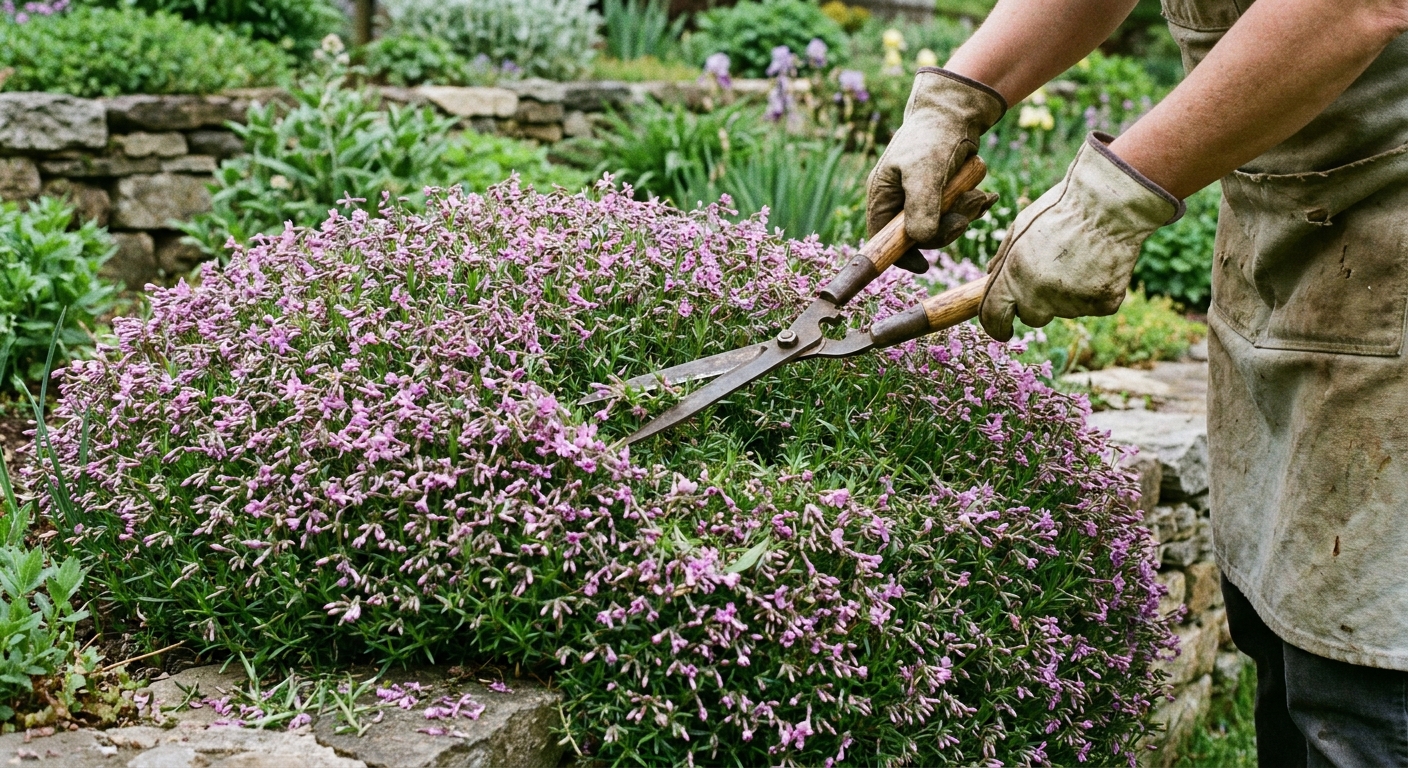
The easiest way to keep creeping phlox looking thick and tidy is to give it a quick haircut after it blooms. This one habit keeps the mat dense and helps it edge out weeds.
When to prune
Right after flowering is the sweet spot. You are removing spent blooms and encouraging fresh growth while the plant still has plenty of season ahead.
How to prune
- Hand shear method: Use hedge shears or sharp scissors to trim the top layer back by about 1 to 2 inches. Aim for an even, level finish.
- Selective tidy-up: If your patch is small, pinch or snip off flowered tips and any straggly runners that crept too far onto a path.
- Mower option (large patches): If you mow, do it immediately after bloom on the highest setting with sharp blades, and avoid turning hard on the mat. The goal is a clean trim, not torn stems.
What not to do
- Do not cut into old, woody centers if you can avoid it. Creeping phlox does not always re-sprout strongly from bare wood.
- Do not mulch heavily after pruning. New growth wants light and air, not a damp blanket.
Keeping it healthy
Weed control
Creeping phlox suppresses weeds best when it is dense. In the first season, you may need to hand-weed occasionally, especially at the edges. Once the mat knits together, weeds become much easier to spot and pull.
Refreshing older clumps
After a few years, some plantings develop a thinner center with stronger growth around the edges. You can refresh it by:
- Layering: Tuck a little compost under healthy outer stems and pin them down with a small rock. They often root where they touch soil.
- Dividing or replanting pieces: In early fall or early spring, lift a vigorous section, pull it into smaller pieces with roots attached, and replant into bare spots.
Propagation
If you want more plants without buying more plants, creeping phlox is generous. Peg down a few healthy stems so they stay in contact with soil, then cut and move the newly rooted pieces later. You can also take short tip cuttings in late spring to early summer, rooting them in a gritty potting mix kept lightly moist.
Winter care
In many climates the foliage stays green through winter, which is part of its charm. Avoid smothering it with thick mulch. If you get harsh winter sun and wind, a light covering of evergreen boughs can reduce drying, but keep it airy.
Common problems
Thin bloom
- Cause: Too much shade, too much fertilizer, or pruning at the wrong time.
- Fix: Increase sun if possible, go easy on feeding, and prune right after bloom rather than later in summer.
Bare spots in the mat
- Cause: Winter damage, poor drainage, or an aging patch.
- Fix: Improve drainage, then re-root stems into the area or replant small divisions in early fall.
Powdery mildew
- Cause: Encouraged by humid conditions and crowded growth. Overhead watering can add to leaf wetness in the wrong weather.
- Fix: Give more airflow, water at soil level when you can, and do the post-bloom trim to encourage fresh, less crowded growth.
Root rot
- Cause: Wet soil, especially in winter or during long rainy periods.
- Fix: Move or replant to a better-drained spot, use a gravelly planting mix, and avoid heavy mulch against the crown.
Spider mites
- Cause: Hot, dry weather can bring them on, especially where plants are stressed.
- Fix: Keep plants watered during drought, rinse foliage occasionally to knock mites back, and thin crowded areas to reduce stress.
Companion plants
I like pairing creeping phlox with plants that either bloom later (so the bed keeps going) or add contrasting foliage textures. A few easy, sunny companions:
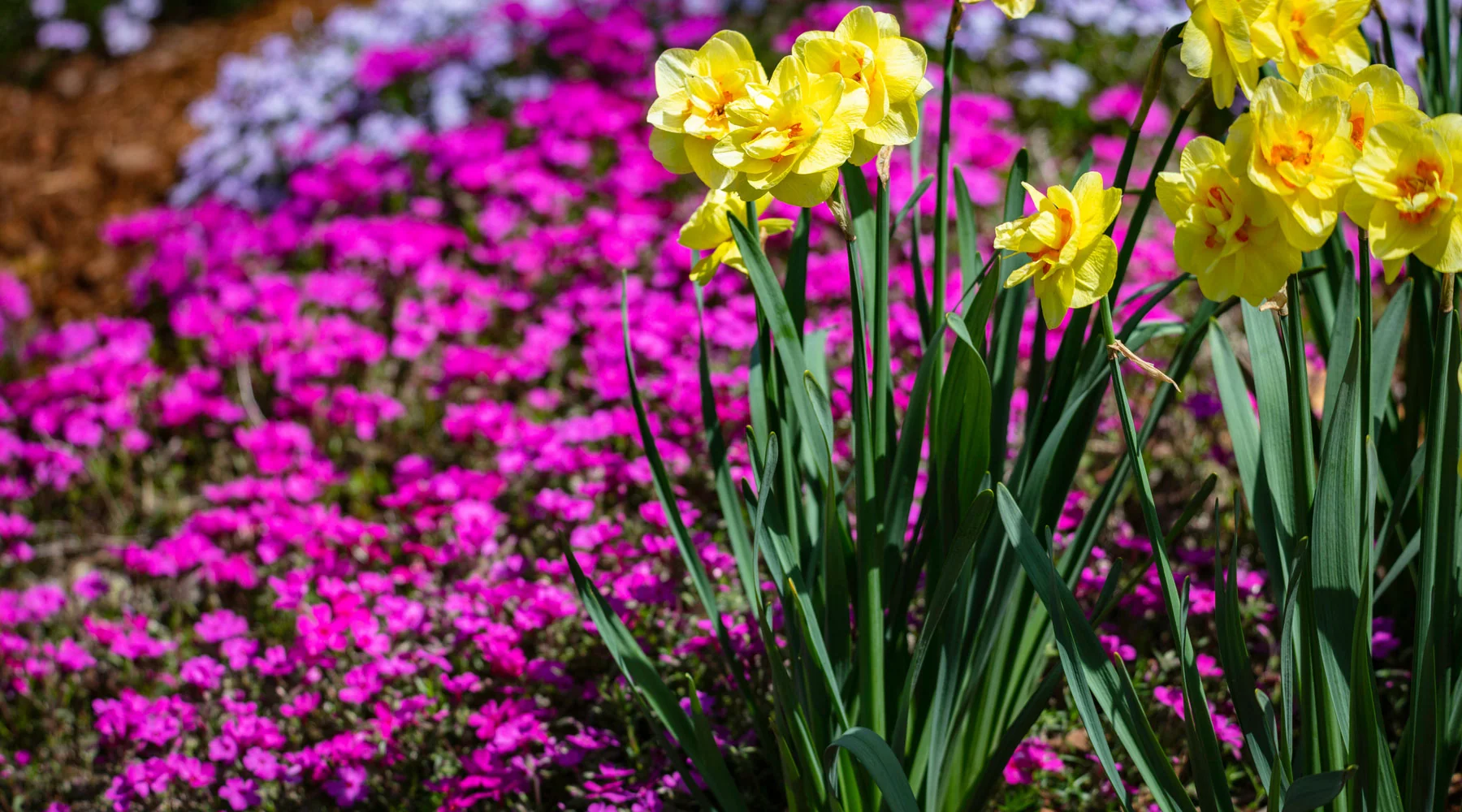
- Spring bulbs: Daffodils and species tulips poking up through the phlox look charming.
- Early perennials: Hellebores (if your site has some shade), hardy geraniums, basket-of-gold (Aurinia), and candytuft.
- Summer follow-up color: Catmint, salvia, coreopsis, yarrow, and coneflowers behind it.
- For rocky edges: Sedums and hens-and-chicks for drought-friendly texture.
Varieties to look for
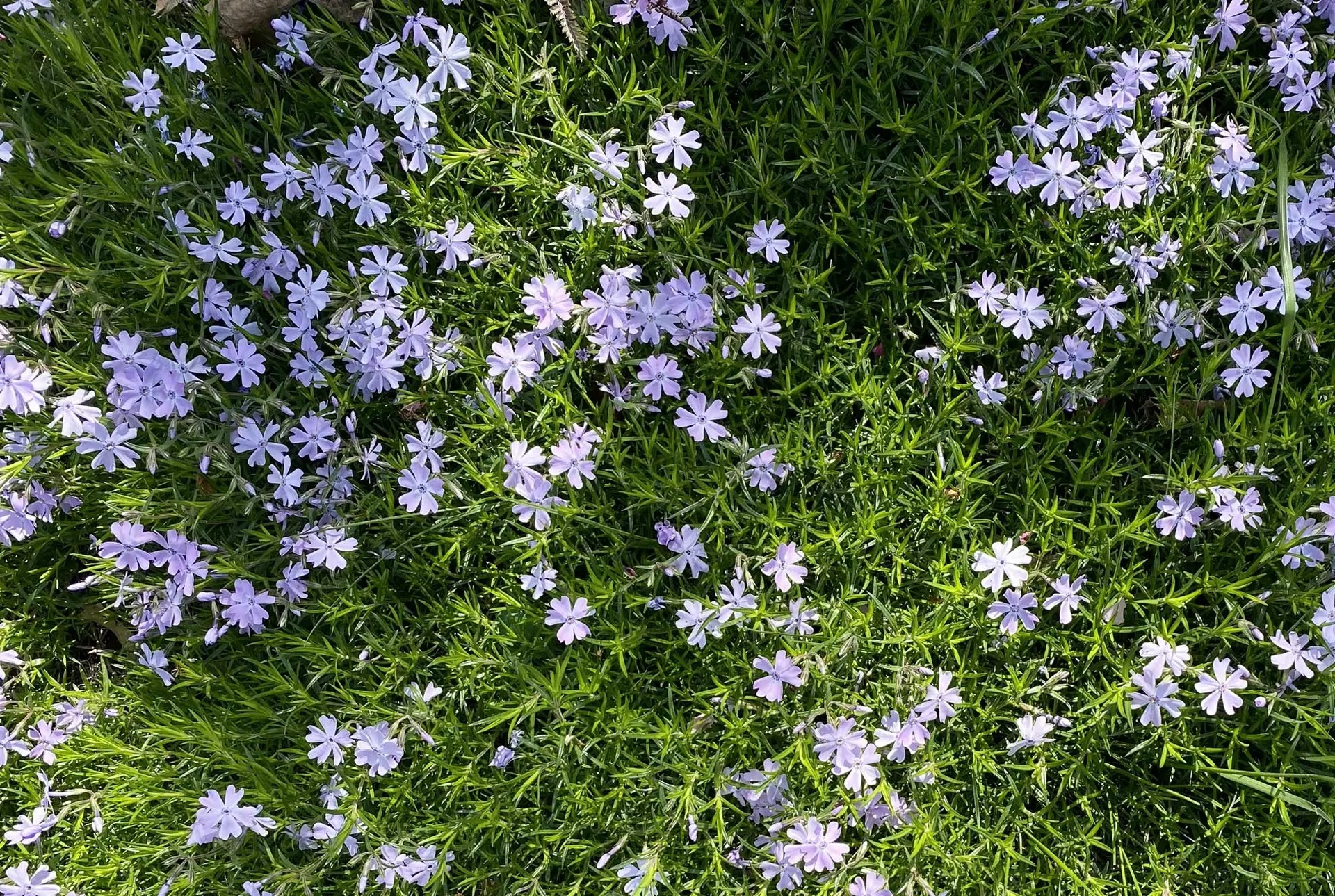
Nursery tags vary, but you will commonly see creeping phlox offered in bright pinks, magentas, soft lavender, purple-blue, and white. A few widely sold, easy-to-spot options include:
- ‘Emerald Blue’ for clear lavender-blue flowers
- ‘Candy Stripe’ for pink-and-white striped blooms
- ‘Scarlet Flame’ for hot pink to red-leaning color
- ‘Purple Beauty’ for deep purple tones
- ‘White Delight’ for crisp white carpets
When choosing, I look for plants that are:
- Dense at the crown with lots of healthy stems
- Not pot-bound (or at least not severely circling)
- Clean foliage without heavy spotting or mildew
If you are planting a large slope, sticking to one or two colors usually looks calmer from a distance. If you are edging a small bed, mixing colors can feel delightfully cottage-garden.
FAQ
How fast does creeping phlox spread?
In good sun and well-drained soil, it can start knitting together within one growing season, then broaden steadily each year. Expect the quickest fill when plants are spaced 12 to 18 inches apart and kept watered during their first summer.
Does creeping phlox choke out weeds?
It can, once established. The first year is the weeding year. After the mat thickens, it shades the soil and weeds have a harder time germinating.
Can I mow creeping phlox?
On a large patch, some gardeners do a very high trim right after bloom. If you try it, use sharp blades, keep the mower high, and avoid scalping or turning hard. Shears are slower, but gentler and more precise.
Will deer eat creeping phlox?
It is often listed as deer-resistant, but deer will sample many plants when food is scarce. If deer pressure is high in your yard, consider protection while plants are establishing.
Is creeping phlox the same as woodland phlox?
No. Creeping phlox (Phlox subulata) is a sun-loving groundcover. Woodland phlox (Phlox divaricata) prefers part shade and has a looser, taller habit.
First season plan
If you are new to creeping phlox, here is a simple approach that works in most sunny gardens:
- Plant in spring or early fall in a well-drained spot.
- Water consistently for 6 to 8 weeks so roots settle in.
- Hand-weed the first season so the mat can close up.
- Trim right after bloom to keep it dense and tidy.
Then let it do what perennials do best: return each year, a little fuller and a little more confident, like it has always belonged there.