
Some of the most charming gardens I know are built in the skinniest places: the little runway between a fence and the lawn, or that tight strip along a front walk where you pass close enough to brush the flowers with your sleeve. Narrow borders can feel tricky, but they are actually perfect for perennials because you can repeat a small cast of plants, keep maintenance simple, and still get a long season of color.
This is how I design perennial borders under three feet wide so they look full (not fussy), bloom for months, and stay friendly to feet, pets, and the occasional wheelbarrow.
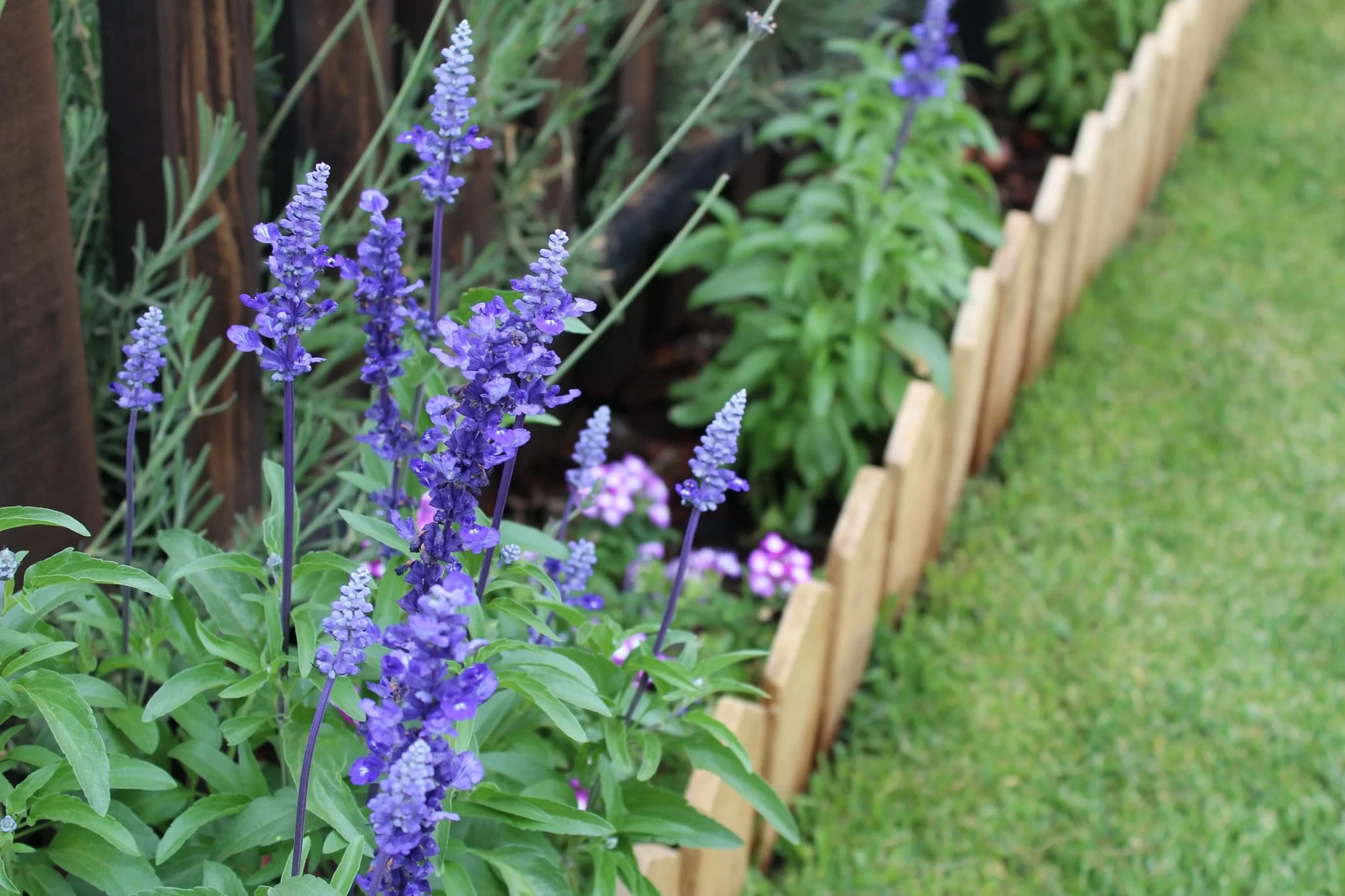
Start with a skinny-border mindset
When space is tight, the biggest design win is choosing a few plants that earn their keep and repeating them. Instead of trying to squeeze in one of everything, think in drifts and rhythm.
- Repeat, do not collect. In a 20-foot strip, repeating 2 to 4 “main characters” looks intentional and lush.
- Keep the footprint honest. If a perennial regularly hits 36 inches wide, it does not belong in a 30-inch bed unless you enjoy constant editing.
- Use vertical layers. Skinny borders look bigger when you stack heights: low edge, mid layer, and a few slim upright accents.
- Plan for the walkway. Along paths, give yourself a “no-flop lane” so plants do not spill into traffic after rain.
Know your site basics
Before you fall in love with a plant list, get clear on three things that matter extra in skinny borders:
- Sun: full sun, part shade, or deep shade.
- Moisture: does this strip bake dry, stay evenly moist, or sit soggy after rain?
- Hardiness: check your USDA zone (and your microclimate) before you commit to borderline perennials.
Two narrow-strip “special effects” to watch for:
- Heat and glare: fences, brick, and light-colored siding can reflect heat and make a sunny strip even hotter.
- Rain shadow and competition: eaves, solid fences, old hedges, and tree roots can keep soil drier than you think.
Measure the space and protect the path
Before you pick plants, measure two things:
- Total bed width (fence to path edge, or house to walk).
- Usable planting width after you reserve a little clearance.
My rule of thumb for walkway borders is to reserve 6 to 10 inches of the bed width as a buffer so stems and blooms can lean without turning your path into an obstacle course. Treat that as a guideline. The right buffer depends on the mature width of your plants, your local wind and rain, and how tidy you want the edge to stay.
If you are planting along a fence or wall, I also like to leave room for real life. If you need to paint, repair, or clean, make sure you can still access the fence line without turning every chore into a gymnastics routine.
Three layouts under 3 feet
Below are my go-to formulas. Use them as-is or mix and match depending on sun, soil, and your favorite color palette.
1) One-deep ribbon (18 to 24 inches)
This is the simplest, most walk-friendly design. You plant a single planting row (often two repeating plants mixed together) and let repetition do the heavy lifting.
- Structure: 1 main perennial repeated + 1 long-blooming filler repeated.
- Best for: tight sidewalks, driveway edges, or the narrowest fence strips.
- How to place: stagger plants slightly instead of a straight line to avoid the “soldiers” look.
Example pairing (sun): catmint (Nepeta) + threadleaf coreopsis (Coreopsis verticillata).
Example pairing (part shade): heuchera (coral bells) + hardy geranium (Geranium macrorrhizum).
2) Two-tier border (24 to 36 inches)
This is the sweet spot for most walkway and fence borders. You get a front edge and a back layer without crowding.
- Structure: low edging plant in front + mid-height bloomers behind + 1 to 3 vertical accents spaced out.
- Best for: front walks, side yards, fence lines you want to soften.
- How to place: repeat in modules of 3 to 5 feet so the whole strip feels cohesive.
Simple module idea: Front: 2 to 3 clumps of hardy geranium. Back: 2 clumps of coneflower. Accent: 1 upright grass every 6 to 8 feet.
3) Pocket planting (awkward strips)
If your strip has gate posts, hose spigots, or uneven width, build it in pockets. Each pocket is a tiny composition that repeats.
- Structure: 1 anchor plant per pocket + 2 supporting plants.
- Best for: long fences with interruptions, narrow beds that pinch and widen.
- Pocket size: I usually think in pockets about 3 to 5 feet long, then repeat that pocket down the line.
- How to place: keep the same anchor plant, then rotate supporting plants to extend bloom season.
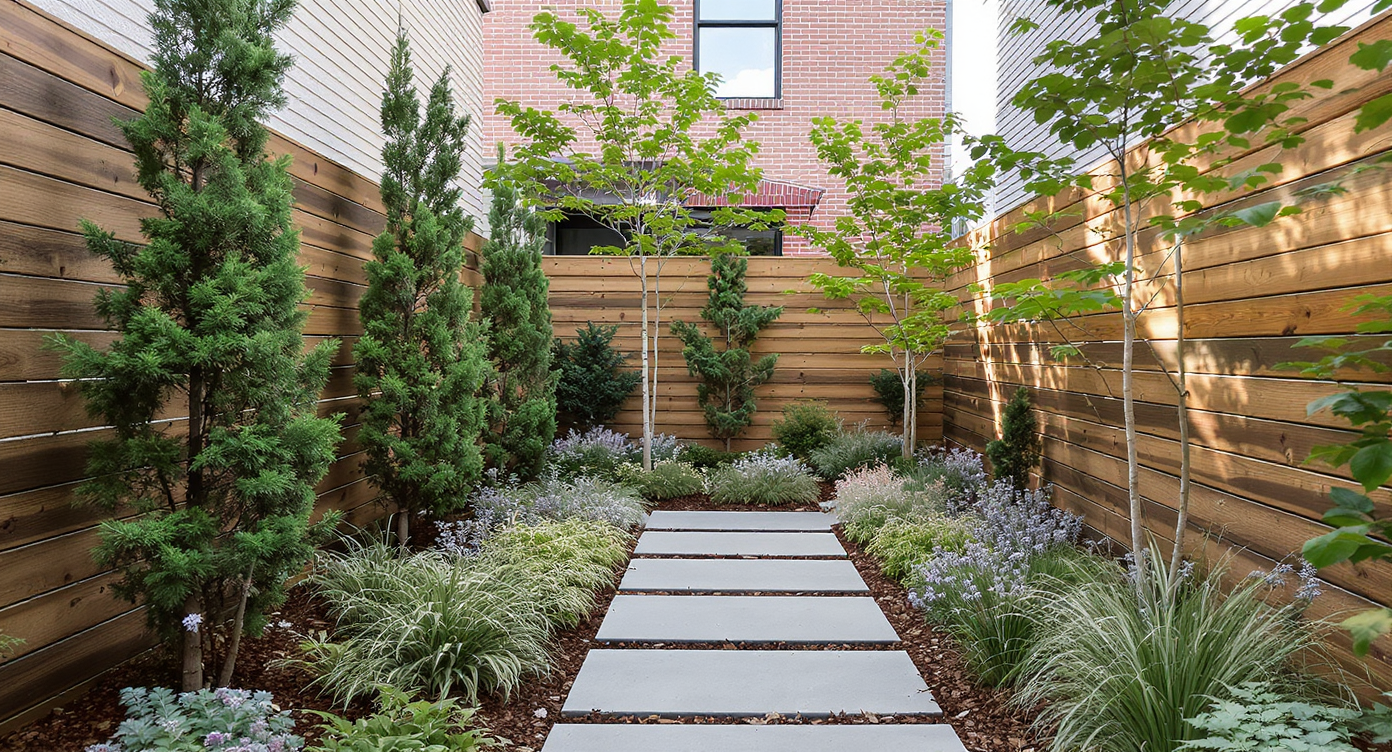
Placement that prevents flop
In narrow beds, good placement solves most problems before they start.
Put tall plants where they can lean
Along a fence, taller plants can lean into the fence without blocking a path. Along a walkway, tall plants should be set back and chosen for strong stems.
- Fence border: tall, slim plants can go closer to the fence line.
- Walkway border: I aim to keep tall plants at least 12 inches off the path edge. Call that a starting point, then adjust for your plant’s mature width and your tolerance for a little spill.
Use airy plants for depth
In a skinny space, dense shrubs can make the border feel like a hedge. Instead, mix in bloomers that let your eye travel.
- Great airy options: gaura (Oenothera lindheimeri) in warmer zones, verbena bonariensis where it is hardy, Russian sage (Salvia yangii, formerly Perovskia) in sun, Japanese forest grass (Hakonechloa) in part shade.
Stagger, do not stack
Rather than placing plants in perfect rows, offset them like bricks. You get fullness without creating a straight stop line that makes the bed look narrower.
Spacing: trust mature size
I know it is tempting to cram in extra plants because everything looks small on planting day. In tight borders, overcrowding shows up fast as mildew, flopping, and constant dividing.
- Space for mature width whenever possible.
- Underplant with polite fillers that can be edited easily, like creeping thyme in hot sun edges or small sedges in shade, instead of aggressive spreaders.
If you have battled the usual suspects, this is where you keep them out. In skinny borders, plants like mint, lemon balm, and goutweed can turn “groundcover” into “garden takeover” fast.
Perennial building blocks
These are the plants I reach for again and again when I need color without chaos. Think of this as a menu of reliable shapes for skinny designs.
Edge plants (6 to 14 inches)
- Hardy geranium (Geranium macrorrhizum or G. sanguineum): tidy mounds, long bloom, great path edge.
- Heuchera (coral bells): foliage color that lasts all season, especially in part shade.
- Low sedum (stonecrop): sun, drought tolerance, clean edging.
- Lavender (where hardy): fragrant edging in full sun, needs sharp drainage.
Mid-layer color (14 to 28 inches)
- Nepeta (catmint): long bloom, soft shape, pollinator favorite.
- Salvia nemorosa: strong vertical bloom spikes, easy repeat plant.
- Echinacea (coneflower): summer into fall, sturdy stems if given sun.
- Coreopsis: bright, long-blooming, especially strong in sunny narrow strips.
- Daylily: tough as nails, great foliage structure. Some reblooming cultivars repeat well, but performance can vary by climate, so buy with your region in mind.
Vertical accents (narrow footprint)
- Feather reed grass (Calamagrostis ‘Karl Foerster’): upright, tidy, four-season structure.
- Blazing star (Liatris): vertical purple spikes that stay narrow.
- Iris (bearded or Siberian): sword-like foliage that reads clean and narrow.
- Yarrow (Achillea): choose a sturdier, more upright cultivar if you want it as an accent. It can widen over time and can flop in rich soil, so treat it as a “select carefully” plant in tight beds.
Part shade heroes
- Brunnera: spring blue flowers, glowing leaves.
- Tiarella (foamflower): lovely spring bloom and groundcover habit.
- Astilbe: feathery summer plumes, especially where soil stays evenly moist.
- Hellebores: early flowers, evergreen structure in many climates.
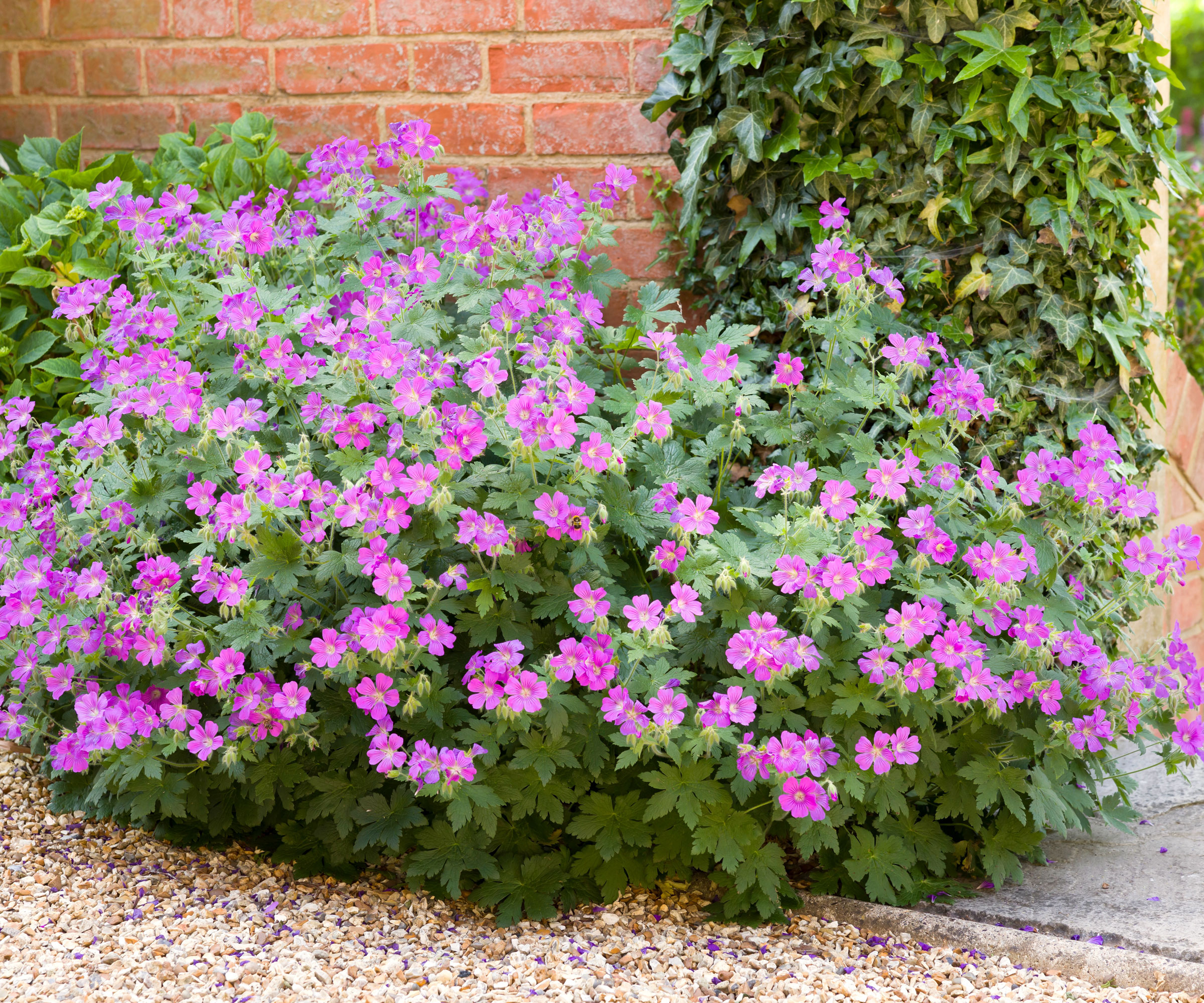
Color that lasts
In a narrow border, you are looking at the same strip every day, which means gaps feel bigger. The trick is layering bloom times and leaning on foliage that looks good even when nothing is flowering.
Use a three-season checklist
- Spring: bulbs (tucked between perennials), hellebores, brunnera, creeping phlox (sun).
- Summer: salvia, coneflower, coreopsis, daylily, catmint.
- Fall: asters, sedum ‘Autumn Joy’ types, ornamental grasses, anemone (where it behaves and has room).
Bulbs are a secret weapon
Bulbs take up almost no space by midsummer, and they deliver big early color before perennials fill out. The main catch is foliage: bulb leaves need time to recharge the bulb for next year.
I tuck clusters of:
- Crocus at the very front edge
- Daffodils set back so fading foliage is hidden by emerging perennials (and I leave the leaves to yellow naturally before I cut them)
- Allium for that clean vertical pop between mid-layer plants
Pick one unifying color
If the space is skinny, a rainbow mix can look busy fast. I like to pick one unifying color (purple, soft pink, white, or yellow) and then vary the shades within it. Foliage does the rest: silver leaves, burgundy heucheras, chartreuse grasses.
Ready-to-plant combos
These combos are designed specifically for narrow borders. They rely on repeat plants, sturdy forms, and long bloom windows. Adjust varieties to your sun, soil moisture, and USDA zone.
Sunny walkway strip (about 2 feet)
- Front edge: low sedum (or hardy geranium if you prefer softer)
- Mid layer: Salvia nemorosa (repeat every 2 to 3 feet)
- Color extender: coreopsis threaded between salvias
- Accent every 6 to 8 feet: liatris or a narrow grass
Sunny fence line (2.5 to 3 feet)
- Front: nepeta (catmint) repeated
- Back: coneflower repeated
- Accent: feather reed grass at intervals for vertical structure
Part shade side yard (2 to 3 feet)
- Front: heuchera in repeating clumps (choose two leaf colors and alternate)
- Mid: brunnera or tiarella for spring and foliage
- Back accents: astilbe for summer plumes, plus a few hellebores for early bloom
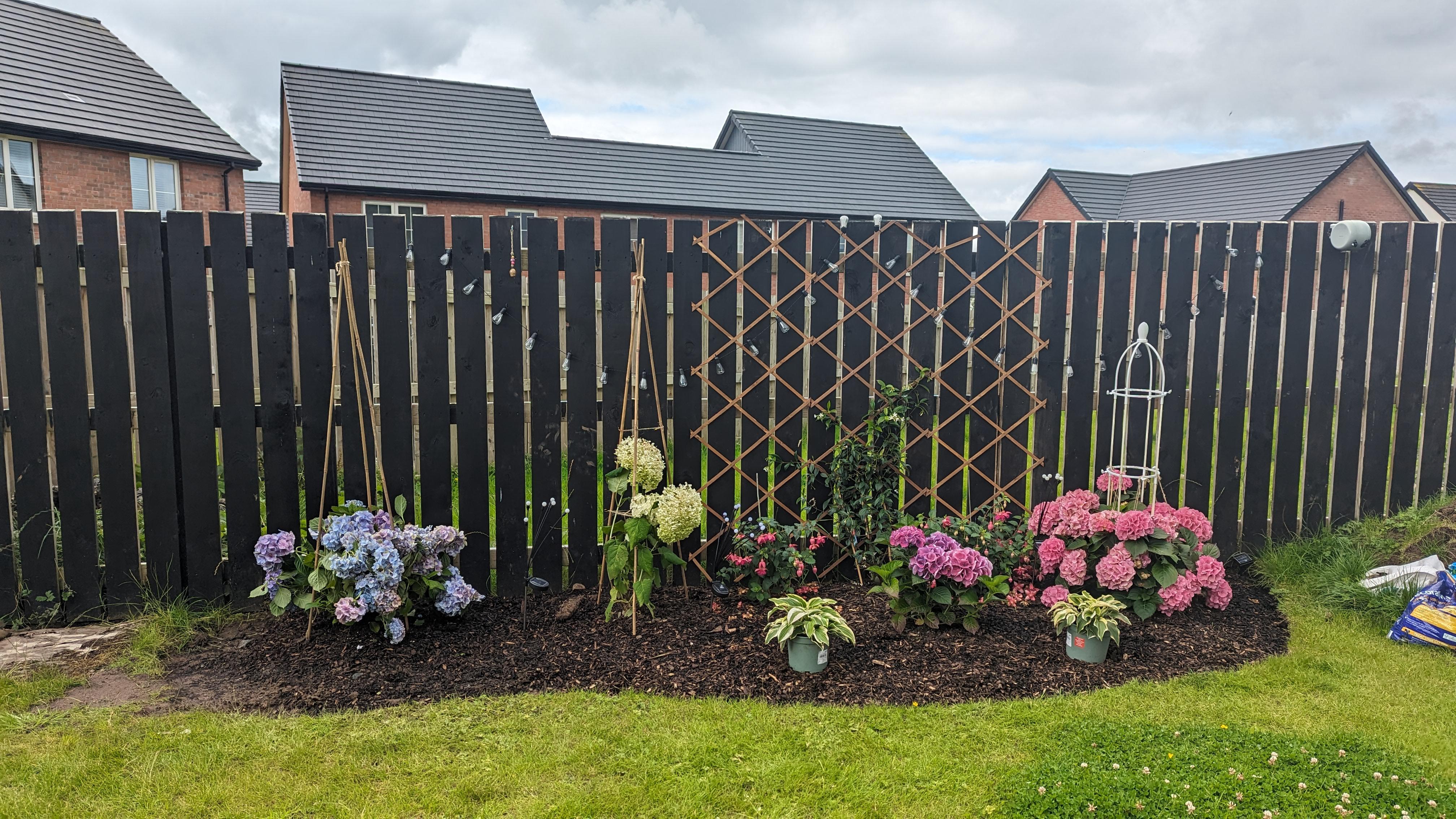
Make it easy to maintain
Narrow beds are wonderfully quick to maintain when you set them up for it.
Mulch smarter
A 2 to 3-inch mulch layer helps retain moisture and keeps weeds from stealing the show. In very narrow strips, I avoid piling mulch against crowns. Keep it slightly pulled back so perennials do not stay too wet.
Stake early and pinch on time
- Pinch asters and tall garden phlox in late spring (when about 6 to 8 inches tall) to encourage bushier growth.
- Stake early with discreet rings or twiggy supports before plants flop. In a walkway border, waiting is how you end up with a plant leaning into ankles.
Deadhead with a purpose
In skinny borders, deadheading is less about perfection and more about keeping the border blooming and preventing plants from sprawling. I focus on the repeat plants first (salvia, coreopsis, catmint) because refreshing those keeps the whole strip looking lively.
Think about water and hoses
If you are adding drip irrigation, lay it before you plant, and keep emitters slightly back from crowns. If you hand-water, leave yourself one small access point so you are not yanking a hose through stems all summer.
Divide before it is a wrestling match
Plants in narrow borders tend to grow outward. Divide every few years (or sooner for fast growers) so you do not lose your walkway buffer.
Common problems
“It looks like a line, not a garden.”
Stagger plant placement, repeat in small drifts, and add a few vertical accents. Even one upright grass every several feet creates depth.
“Everything flops into the path.”
Reserve that buffer, choose sturdier varieties, and stake early. Also check fertility. Overfed plants grow fast and weak, especially with high-nitrogen lawn runoff.
“It dries out fast along the fence.”
Add compost, mulch, and water deeply but less often. Drought-tolerant perennials like nepeta, yarrow (chosen carefully), sedum, and lavender do well in these rain-shadow strips.
“The base of my fence is bare.”
Use a repeating mid-height plant plus an edging groundcover, and let them knit together. A fence looks softer when foliage touches it in places, but keep a little airflow to prevent mildew and rot.
FAQ
How many perennials should I use?
For a border under three feet wide, I aim for 3 to 6 perennial types total, then repeat them. You can always tuck in a few seasonal bulbs for extra spring color without adding summer crowding.
Can I skip shrubs entirely?
Yes, and it is often easier. If you want structure, use ornamental grasses, iris foliage, or evergreen-ish perennials like hellebores and certain heucheras instead of bulky shrubs.
What is the fastest way to make it look full?
Repeat one strong bloomer (like salvia or nepeta), add a foliage edge (hardy geranium or heuchera), and include one vertical accent every several feet. That combination reads “designed” even in the first year.
Should I plant right against a fence?
Leave a few inches for airflow and maintenance. I like to keep crowns about 4 to 8 inches off the fence line, then let foliage soften the gap naturally.
A gentle final nudge
If you are staring at a skinny strip and thinking, “This will never look like much,” I want to reassure you: narrow borders can be some of the prettiest parts of a garden because you experience them up close. Keep your plant list short, repeat what works, and give every plant just enough elbow room to be its best self. A season from now, you will be the one leaning over the fence, telling someone else that the small spaces are where the magic hides.