
Japanese beetles have a way of showing up right when the garden is hitting its stride. One day your coneflowers look like a postcard, the next day the leaves are lacy and the blooms are covered in shiny bronze backs. The trick is to respond early and steadily, not just once in a panic.
This is my go-to integrated pest management approach for protecting summer-blooming perennials: start with hand-picking to immediately cut damage, support the long game with grub control where it actually makes sense, and treat traps like a tool that can help or harm depending on placement.
Know what you're dealing with
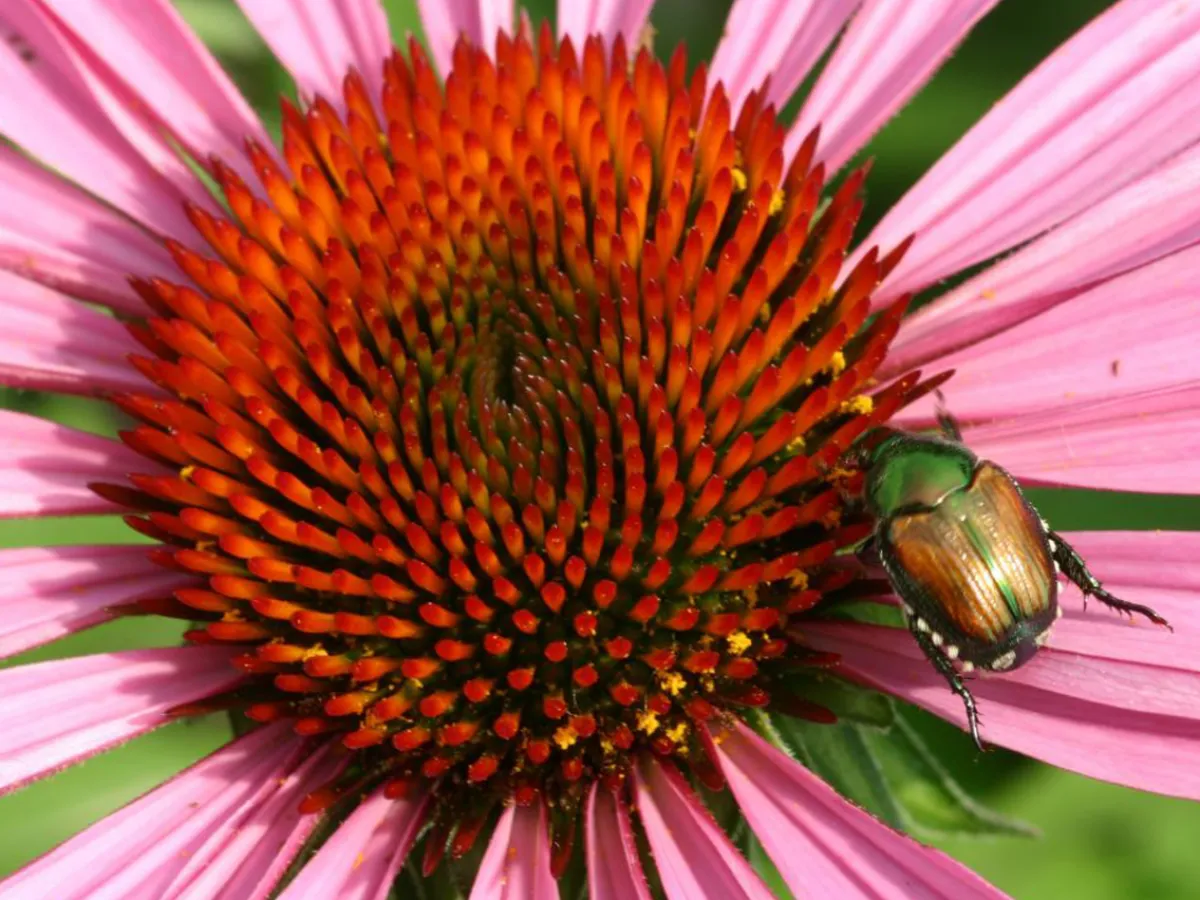
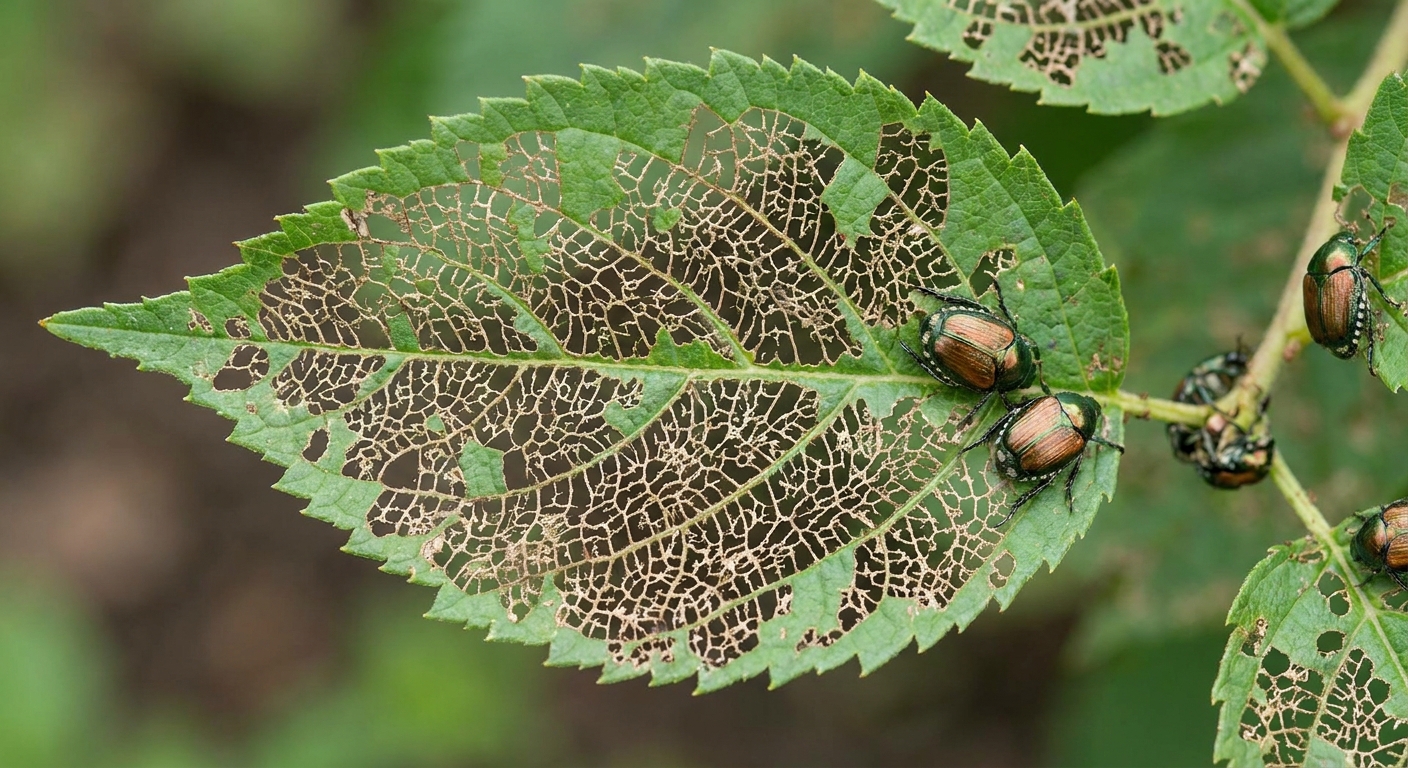
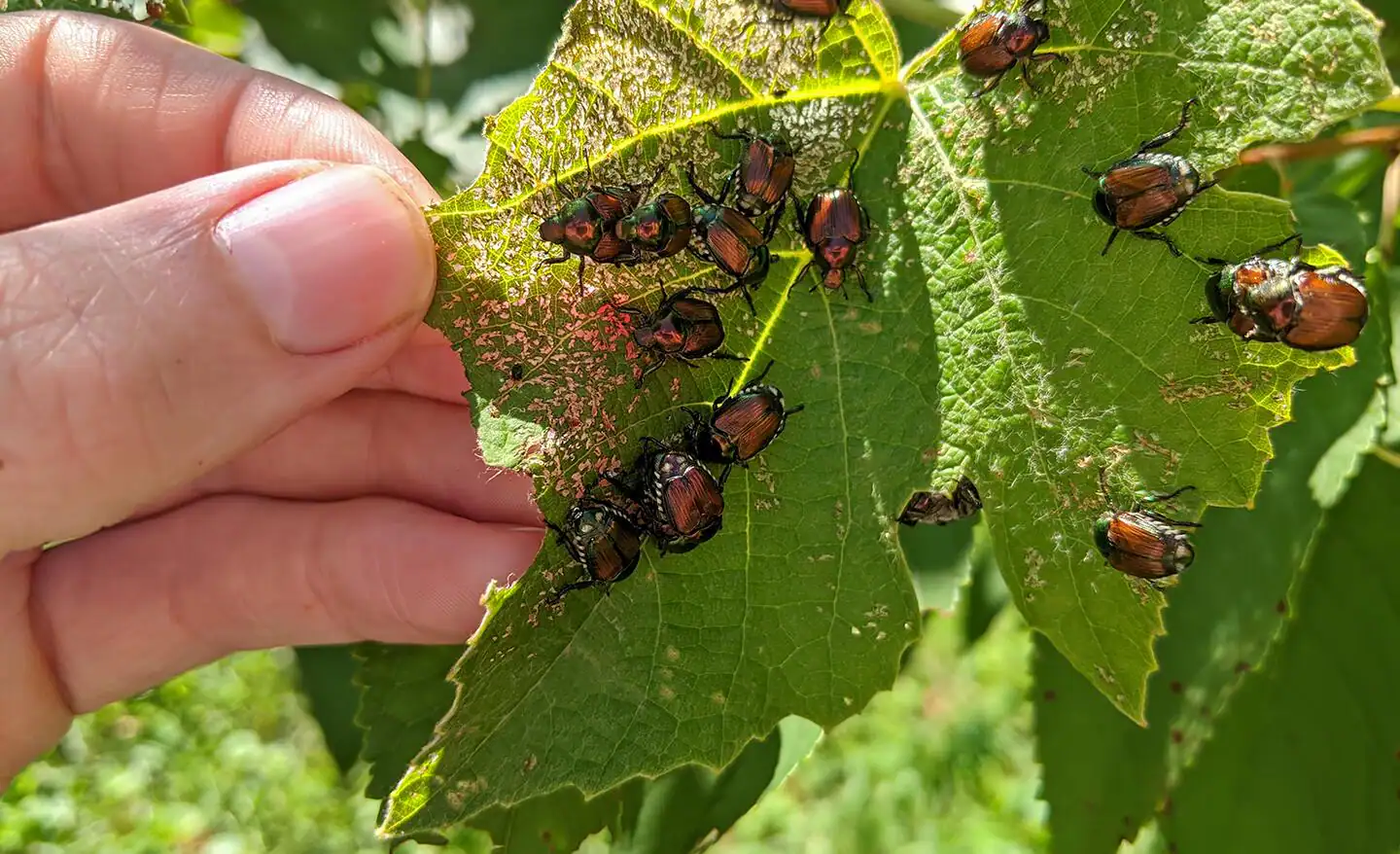
Adult Japanese beetles are easy to recognize once you have seen them: metallic green head and thorax, coppery wing covers, and little white tufts along the sides of the abdomen. They feed in groups, and that group behavior matters because beetle pheromones and the plant odors released by feeding damage can attract more beetles to the same spot.
Common signs on perennials
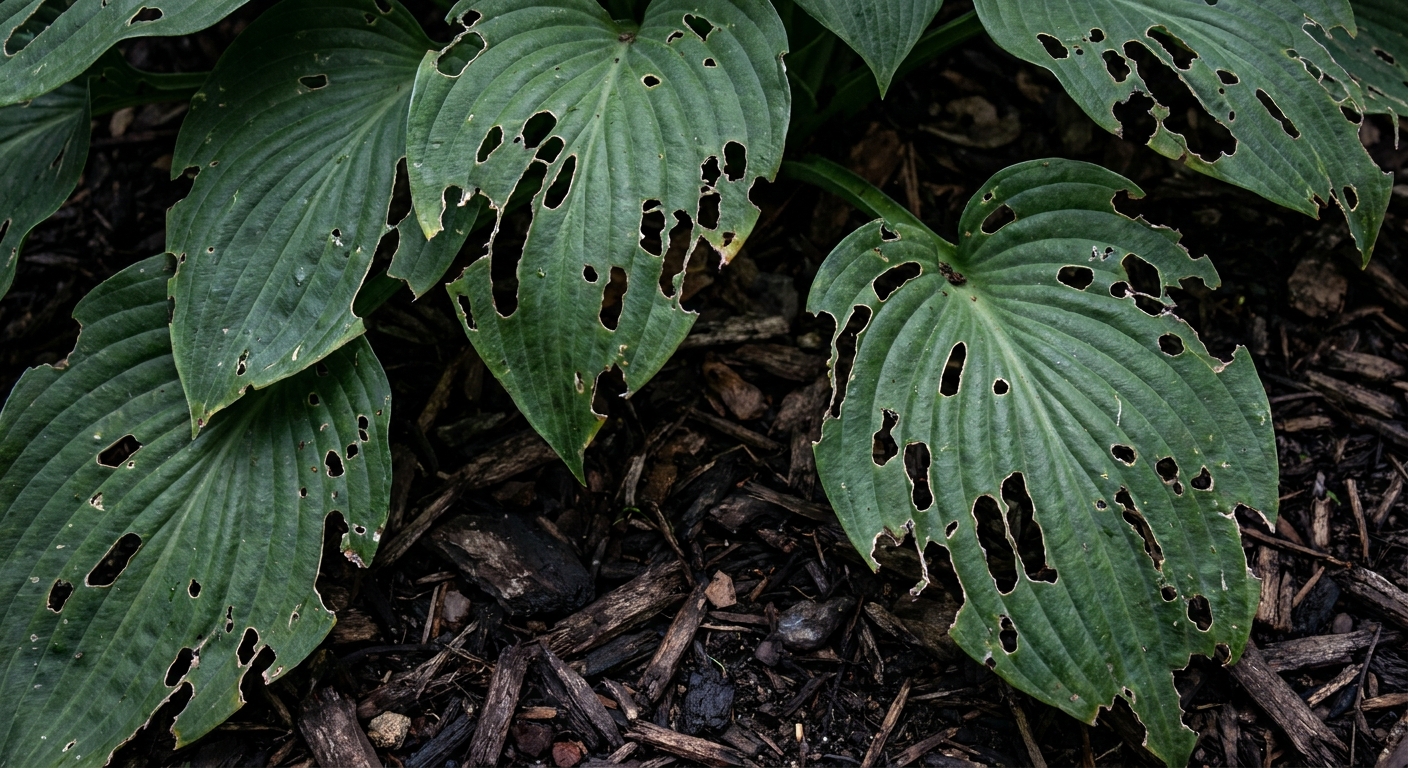
- Skeletonized leaves where the tissue between veins is eaten first
- Ragged petals and chewed buds on blooms like roses, zinnias, and sometimes coneflowers
- Clusters of beetles piled together on a favorite plant
Favorite summer targets in perennial beds
They are not picky, but they do have favorites. Many gardeners most often report heavy feeding on roses, grapes, lindens, and many fruit trees. In perennial borders, they are commonly seen on bee balm, hollyhock, dahlias, and sometimes hardy geraniums and coneflowers. If you have one of their “party plants,” that is usually where your defense should start.
IPM basics: fast, steady, targeted
Integrated pest management sounds technical, but in a home perennial garden it really means three simple things:
- Act early when you first notice chewing or the first few beetles
- Use the least disruptive tools first so you do not wipe out helpful insects
- Focus your effort where it pays off like the plants they love most and the times of day they are easiest to remove
For Japanese beetles, I treat the adults as a “right now” problem and the grubs as a “next season” project.
Hand-picking works
If you only do one thing, do this one. Hand-picking sounds old-fashioned until you see how quickly it drops feeding pressure in a small to medium garden. Because beetles attract more beetles, removing the first wave early can prevent that snowball effect.
When to pick
Go out in the early morning or on a cool, overcast stretch. Beetles are sluggish then and drop easily.
How to pick without a wrestling match
- Hold a container of soapy water under the beetles. A quart jar or small bucket works well.
- Tap the beetles or the stem. They tend to let go and fall straight down.
- Empty and refresh daily during peak season. Ten minutes a day beats one exhausting hour after the damage is done.
Where to focus first
Start with your “magnet” plants, the ones that always get hit first. In many gardens that is roses, grapes, linden, or hibiscus. In perennial borders, it is often bee balm, hollyhock, and anything with big, tender leaves. Reducing beetles there helps protect nearby perennials that are only mildly appealing.
A realistic expectation
You are not trying to achieve zero beetles. You are trying to keep your perennials leafy enough to photosynthesize, bloom, and store energy for next year. A little nibbling is annoying. Defoliation is what sets plants back.
Milky spore: long game for grubs
Milky spore is often talked about like a quick fix for Japanese beetles. It is not quick. Think of it as a slow-building, longer-term option aimed at the grub stage in soil.
What it does and does not do
- It targets Japanese beetle grubs in the soil.
- It does not stop adult beetles from flying in and feeding this summer.
- It works best in lawns and other grassy areas where grubs feed on grass roots.
When it can make sense for perennial gardeners
If your garden is surrounded by lawn, or you have a big grassy strip nearby, milky spore can be part of reducing pressure over time. If you garden in a dense, mulched, heavily planted space with little turf, milky spore may not move the needle much, because Japanese beetle grubs are usually concentrated in grass roots.
How to use it wisely
Follow your product label closely, since application rates and timing depend on formulation. In general, milky spore needs:
- Warm soil to establish well
- Moisture after application so it moves into the soil
- Patience, since it builds gradually rather than acting overnight
I like milky spore as a “supporting actor” if your property has a history of grubs and you want an approach that can persist, but I never rely on it alone for protecting blooms.
Other grub options
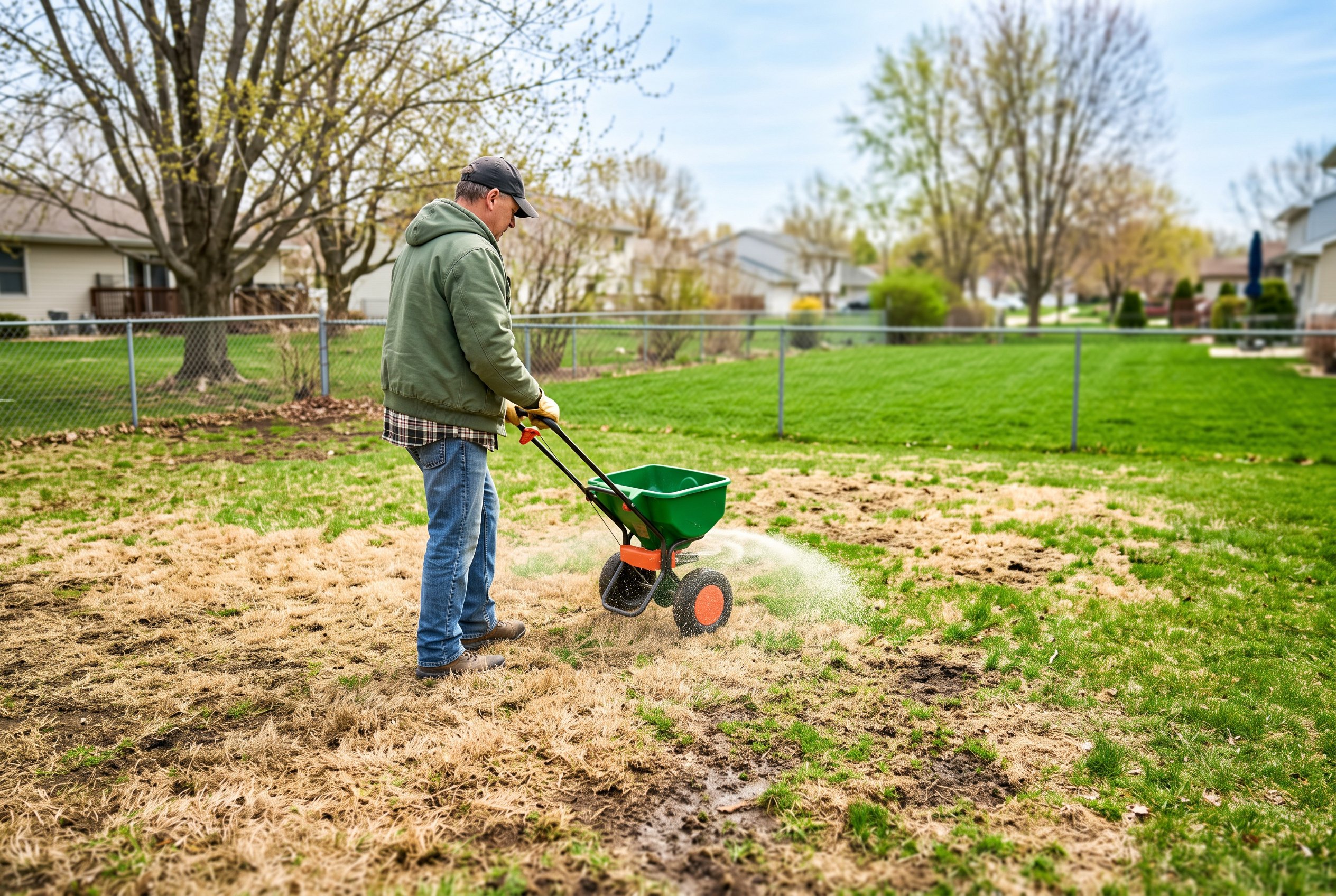
If you want to round out the IPM toolbox beyond milky spore, there are a couple of lower-impact options many gardeners use successfully, especially in turf:
- Beneficial nematodes (often Heterorhabditis bacteriophora) can help reduce young grubs when applied correctly. They need moist soil, protection from sun during application, and good timing to be effective.
- Bt galleriae is another biological option sold for Japanese beetles and, in some products, for grubs. Use only products labeled for your specific site and follow timing directions closely.
For any grub treatment, confirm grubs are present first. Treating soil “just in case” is usually money down the drain.
Traps: right place or wrong place
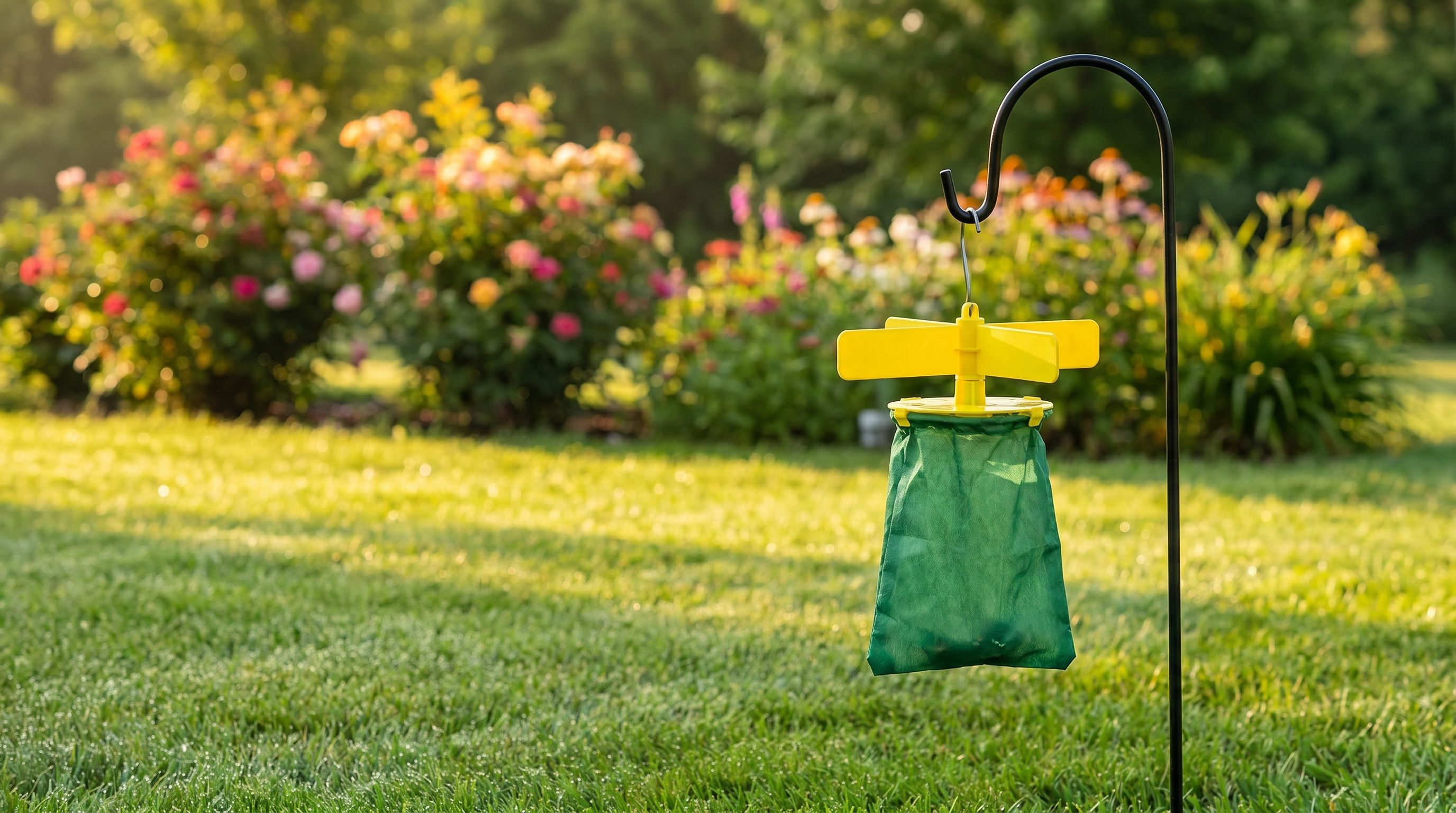
Japanese beetle traps are powerful. They use scent and pheromone lures to pull beetles from a wide area. That strength is exactly why traps can backfire in home gardens.
Why traps can make damage worse
If you place a trap near your perennials, you can end up inviting more beetles into your yard than you would have had otherwise. Not all of them will make it into the trap. Many will stop for a snack on the way.
If you use a trap, placement is everything
- Place traps far away from the plants you want to protect, not at the edge of the bed. Many gardeners aim for 30 feet or more when space allows.
- Put them downwind if you can, so the scent pulls beetles away from the garden.
- Choose an area you do not mind being a “collection zone,” like a far corner of the property.
My rule of thumb
I only recommend traps if you have space to place them well away from the garden, and you are willing to empty them regularly. In small yards where everything is close together, hand-picking and plant protection usually outperform traps.
Protect plants without wrecking the garden
When beetles are heavy, you may want a barrier or a targeted treatment on a few high-value plants, especially if you are growing showy summer perennials for bloom. The goal is to protect the plant while preserving pollinators and beneficial insects as much as possible.
Physical protection
- Tulle or lightweight netting can protect prized blooms if you secure it so beetles cannot crawl underneath.
- Row cover is tricky on ornamentals, but for a short peak window it can save a plant that is getting hammered.
Spot treatments, used carefully
Some gardeners use foliar sprays labeled for Japanese beetles. If you go this route, treat it like a scalpel, not a sprinkler system. Also know that many broad-spectrum insecticides can harm pollinators and beneficial insects, especially when sprayed on flowering plants.
- Spray in the evening when pollinators are less active, and avoid spraying open blooms whenever possible.
- Target only the plants under active attack, not the whole bed.
- Read the label for the active ingredient, the plants it is safe to use on, and the re-application interval. Common products include pyrethroid-based sprays, which can knock beetles down but are not selective.
In my own beds, I lean heavily on hand-picking and only add other measures for repeat offenders that are at risk of serious defoliation.
Grubs: what to do and when
This is the part that trips many of us up. We see adults and immediately want to treat the soil. Grub control can be useful, but timing matters.
When grub control helps most
Grubs are most vulnerable when they are small and actively feeding near the soil surface. That window varies by region and climate, but it is often late summer into early fall for newly hatched grubs. If you want to add a grub-focused step, this is the season to pay attention to, not necessarily the moment you see adult beetles chewing your flowers.
Signs you may have a grub problem
- Chunks of turf that lift like a loose carpet
- Increased digging from skunks, raccoons, or birds hunting grubs
- Brown patches that do not respond to watering
Even then, remember that adult beetles can fly in from elsewhere. Reducing grubs on your property can lower local pressure over time, but it rarely eliminates adults entirely.
Lawn habits that help
If your beetle pressure is tied to a lawn-heavy neighborhood, basic turf care can make your yard a less welcoming nursery for grubs:
- Water wisely: avoid frequent, shallow irrigation during peak egg-laying season. Deep, less frequent watering is generally better for turf and less inviting for egg-laying.
- Go easy on nitrogen: excessive nitrogen can push tender growth and can contribute to a lawn that needs constant babying.
- Mow higher: taller grass supports deeper roots and resilience, which helps turf tolerate some grub feeding.
Simple weekly plan
If Japanese beetles are an annual visitor, having a routine keeps you from feeling like you are constantly playing catch-up.
Daily, 5 to 10 minutes
- Morning hand-pick from your top 3 to 5 “magnet” plants
- Quick scan of nearby perennials for fresh clusters
Weekly
- Deadhead and remove heavily chewed petals so plants keep blooming
- Water deeply as needed, since stressed plants show damage more
- Check trap bags if you use traps and empty before they overflow
Late summer to early fall
- Decide whether grub control makes sense for your yard setup
- If you apply milky spore or nematodes, stay consistent and follow the label for timing and watering
FAQ
Will Japanese beetles kill my perennials?
Most established perennials survive, but heavy defoliation can weaken plants, reduce bloom, and make them more vulnerable to winter stress or drought. Young plants and newly divided perennials are at higher risk.
Why are they worse some years?
Weather patterns, soil moisture, and local grub success all influence population swings. Also, if you have one highly attractive plant, it can make a normal year feel like an invasion because beetles congregate.
Do coffee grounds, dish soap sprays, or homemade repellents work?
Some home remedies can discourage feeding briefly, but they rarely hold up through rain and heavy pressure. For reliable results, I put my effort into hand-picking, smart trap placement if used, and longer-term grub strategy where appropriate.
Should I remove my “magnet” plants?
Not necessarily. I think of magnet plants as early warning systems. If you love the plant, keep it and manage it. If you have something you do not care about that always turns into a beetle buffet, replacing it can reduce stress and workload.
What should I avoid doing?
Avoid spraying flowering plants in the middle of the day, and avoid applying soil insecticides when you have not confirmed grubs are present. For this pest, well-timed, targeted action beats blanket treatments.
A calm reminder
Japanese beetles can make you feel like you are losing control of your garden, especially when your summer perennials are the whole show. The good news is that steady, small actions work. Hand-picking really does help. Milky spore can be part of a longer plan when the conditions are right. And traps can be useful when they are placed to pull beetles away, not into your flower bed.
If you want, start tomorrow morning with one jar of soapy water and your worst-hit plant. Ten minutes. Then do it again the next day. Your perennials will thank you, and you will feel the tide start to turn.